
Table of Contents
Understanding Alcohol Rehab in Irvine: Your Path to Recovery
When considering alcohol rehab Irvine, understanding your options is the first step toward a healthier future. Alcohol rehab is a structured treatment process that addresses the physical, psychological, and behavioral aspects of alcohol use disorder through a personalized continuum of care.
In Irvine, this continuum typically includes outpatient programs, an intensive outpatient program (IOP), a partial hospitalization program (PHP), and residential treatment. Participating in an outpatient alcohol rehab program in Irvine allows individuals to receive structured therapy while maintaining their daily responsibilities, offering flexibility without compromising the quality of care.
Effective treatment also requires addressing co-occurring mental health conditions through a dual diagnosis treatment center in the area, which integrates psychiatric care with addiction therapy. Our facility, Blue Coast Behavioral Health Irvine, is dedicated to providing this individualized continuum along with strong family support services, ensuring that both the individual and their loved ones are engaged throughout the recovery process.
For those unsure where to begin, the Substance Abuse and Mental Health Services Administration (SAMHSA) offers a free, confidential, 24/7 National Helpline as a government resource to help you find immediate support. In the following sections, we explore each program in detail to help you find the right path forward. Get Help Today.
Types of Alcohol Rehab Programs Available to Irvine Residents
For Irvine residents exploring their options, finding the right alcohol rehab Irvine CA can start with understanding the levels of care available. To meet this need, there are several types of alcohol rehab programs available to Irvine residents, each designed to address different stages of recovery and personal circumstances. The right path depends on an individual’s medical needs, the severity of their alcohol use, and their daily responsibilities at home or work. By exploring these distinct treatment settings, individuals can better understand what will support their first steps toward lasting wellness.
Outpatient Programs: Flexible Recovery Close to Home
Outpatient care is a flexible option for individuals in Irvine who have a stable, supportive home environment and can regularly commute to a treatment facility. This type of care allows clients to attend structured therapy sessions during the day while returning home in the evenings, making it possible to maintain work, school, or family obligations. A key component of this is an Intensive Outpatient Program (IOP), which requires a time commitment of several hours per week, typically centered on group therapy, skill-building, and relapse prevention. For those needing more support, a Partial Hospitalization Program (PHP) offers a higher level of medical supervision and a more intensive weekly schedule, serving as a bridge between residential care and independent living. For many, outpatient rehab Irvine offers the flexibility needed to practice recovery skills in real time while staying connected to their community.
At Blue Coast Behavioral Health, we structure our outpatient programs to provide a seamless continuum of care. Our individualized approach allows clients to step down from PHP to IOP as they gain stability, ensuring they receive the appropriate level of clinical and peer support at every stage. This model is designed to help individuals build confidence in their ability to navigate daily life without alcohol, supported by consistent therapeutic guidance.
Inpatient and Residential Detox Options
For individuals experiencing moderate to severe alcohol withdrawal symptoms, an inpatient detox program provides a crucial foundation of safety and comfort. This level of care offers 24/7 medical supervision in a structured setting, where healthcare professionals can monitor vital signs and administer medications to manage the potentially dangerous physical effects of withdrawal. Residential treatment extends beyond the initial detox phase, immersing individuals in a therapeutic environment where they can participate in intensive individual and group therapy away from everyday triggers. This period of focused, round-the-clock care allows the mind and body to stabilize, creating a solid platform from which to transition into a less intensive outpatient alcohol rehab program. Many Irvine residents begin with this immersive level of care before stepping down to a PHP or IOP to continue their recovery work while reintegrating into their daily lives.
Dual Diagnosis Care: Treating Alcohol and Co-Occurring Disorders
Dual diagnosis care is an integrated treatment approach that simultaneously addresses alcohol use disorder and a co-occurring mental health condition, such as anxiety, depression, or trauma. Research indicates that failing to treat both conditions at the same time can hinder the recovery process, as they are often deeply intertwined. An integrated plan at a single facility allows for a unified treatment strategy, where a coordinated team addresses all aspects of an individual’s health, significantly improving long-term outcomes.
At Blue Coast Behavioral Health, we function as a dual diagnosis treatment center, weaving mental health support directly into our outpatient programming. Our clinical team is experienced in identifying how co-occurring disorders influence substance use and tailoring interventions accordingly. By treating the whole person, not just the addiction, we help our clients build a more resilient and self-aware foundation to Pursue the Freedom of Recovery.
If you are in crisis or having suicidal thoughts call 9-1-1 or local emergency services immediately.
Why Choose Outpatient Rehab for Alcohol in Orange County
For Irvine residents considering alcohol rehab Irvine, outpatient care provides a structured, evidence-based path to recovery that fits around the demands of everyday life. At Blue Coast Behavioral Health, we design our programs to offer effective treatment without requiring an extended stay away from home. The decision to seek help is deeply personal, and understanding the distinct advantages of outpatient care can make that first step feel more manageable. From scheduling flexibility to clinical effectiveness and insurance coverage, our approach removes common barriers so you can focus on what matters most: your health and lasting sobriety.
Flexibility to Maintain Work, School, and Family Life
One of the most compelling reasons to choose an outpatient alcohol rehab program is the ability to continue meeting your daily responsibilities while receiving intensive care. A typical outpatient schedule requires a commitment of roughly 9 to 15 hours per week, a stark contrast to the 24/7 structure of residential treatment. This means you can attend therapy sessions in the morning or evening, remain present for your family, and keep up with your professional or academic obligations. There is no need to request extended leave or explain a prolonged absence.
We understand that for many people in Orange County, the fear of putting life on hold can become a reason to delay treatment. Our Intensive Outpatient Program and Partial Hospitalization Program are built around that reality. Clients attend structured group and individual therapy sessions several days a week while returning home each night. This design reinforces recovery skills in real time, as you practice coping strategies in your actual living environment with the support of your clinical team. This flexibility makes it easier to stay committed to recovery without pausing your life.
Effectiveness of Outpatient Programs for Heavy Drinking
Beyond the practical benefits, the clinical effectiveness of structured outpatient care for heavy drinking is well-supported. According to industry standards, programs like IOP and PHP, which combine evidence-based therapy with medical oversight, are recognized as appropriate for moderate to severe alcohol use. Clients receive the same therapeutic interventions found in residential settings, including cognitive behavioral therapy, dialectical behavior therapy, and relapse prevention planning, delivered in a concentrated format.
At Blue Coast Behavioral Health, we further strengthen these outcomes by treating the whole person. Many individuals struggling with alcohol use also face co-occurring conditions like anxiety or depression. As a dual diagnosis treatment center, we integrate mental health support directly into every recovery plan, addressing the underlying drivers of substance use rather than just the symptoms. For those whose challenges involve multiple substances, our continuum of care extends to drug rehab Irvine services, ensuring that complex needs are met under one coordinated team. For those seeking a focused path, alcohol outpatient Irvine treatment keeps your recovery rooted in your community while providing the structure needed for lasting change.
Affordability and Insurance Coverage for Outpatient Care
Financial considerations should never prevent someone from pursuing recovery, and outpatient alcohol treatment is often more affordable than residential care. This is largely because it eliminates the costs associated with room, board, and 24-hour facility staffing. For most people, a significant portion of treatment is covered by their existing health plan. We work with a wide range of PPO and HMO insurance providers, and our admissions team verifies your benefits before you begin, so there are no surprises.
The Substance Abuse and Mental Health Services Administration (SAMHSA) National Helpline serves as a free, confidential resource where individuals can verify coverage and locate outpatient options. To directly check your benefits with us, you can use our form on the Verify Insurance page or call our team. We accept most major insurance plans and are committed to helping you understand your coverage clearly. Financial accessibility removes a key barrier, allowing more people to pursue care at Blue Coast Behavioral Health. Where you are, we are–ready to help you take that next step and Start Your Sobriety Journey Today.
How Alcohol Rehab Works: IOP vs PHP and Recovery Timelines
For individuals seeking alcohol rehab Irvine CA, understanding the levels of care is crucial to a successful recovery. If you or a loved one are considering an outpatient alcohol rehab program in Irvine, Blue Coast Behavioral Health offers a structured, compassionate path forward. We provide a full outpatient continuum that meets you where you are and supports your progress through each phase of healing.
After a supervised medical detox, clients often transition directly into our Partial Hospitalization Program, a high-structure daytime option that stabilizes early recovery. The following table clarifies the key differences between our two primary outpatient levels, helping you determine the right starting point.
| Feature | PHP | IOP |
|---|---|---|
| Hours per week | 20+ hours | 9-12 hours |
| Supervision | Daily medical & clinical | Several days/week clinical |
| Best for | High support needs, transition from detox | Stable clients with home support |
| Typical duration | 4-6 weeks | 6-12 weeks |
PHP provides the most robust structure for individuals who need consistent daily oversight. With 20 or more hours of therapy each week, it is ideally suited for clients stepping down from inpatient care or for those whose home environment presents significant challenges to recovery.
Partial Hospitalization Program (PHP) Overview
According to SAMHSA, a Partial Hospitalization Program is an intensive, structured service delivered in an outpatient setting. True to that definition, our PHP gives clients daily medical and clinical supervision while they return home or to a sober living residence in the evening. This level of care is particularly beneficial in early recovery, where routine, accountability, and multi-modal therapy build a critical foundation. Our team integrates dual diagnosis care into PHP, addressing co-occurring mood disorders alongside addiction. For a resident in Irvine, a local PHP option means accessing this comprehensive support without needing full-time residential placement, which helps maintain family and community connections while pursuing the freedom of recovery.
Intensive Outpatient Program (IOP) Overview
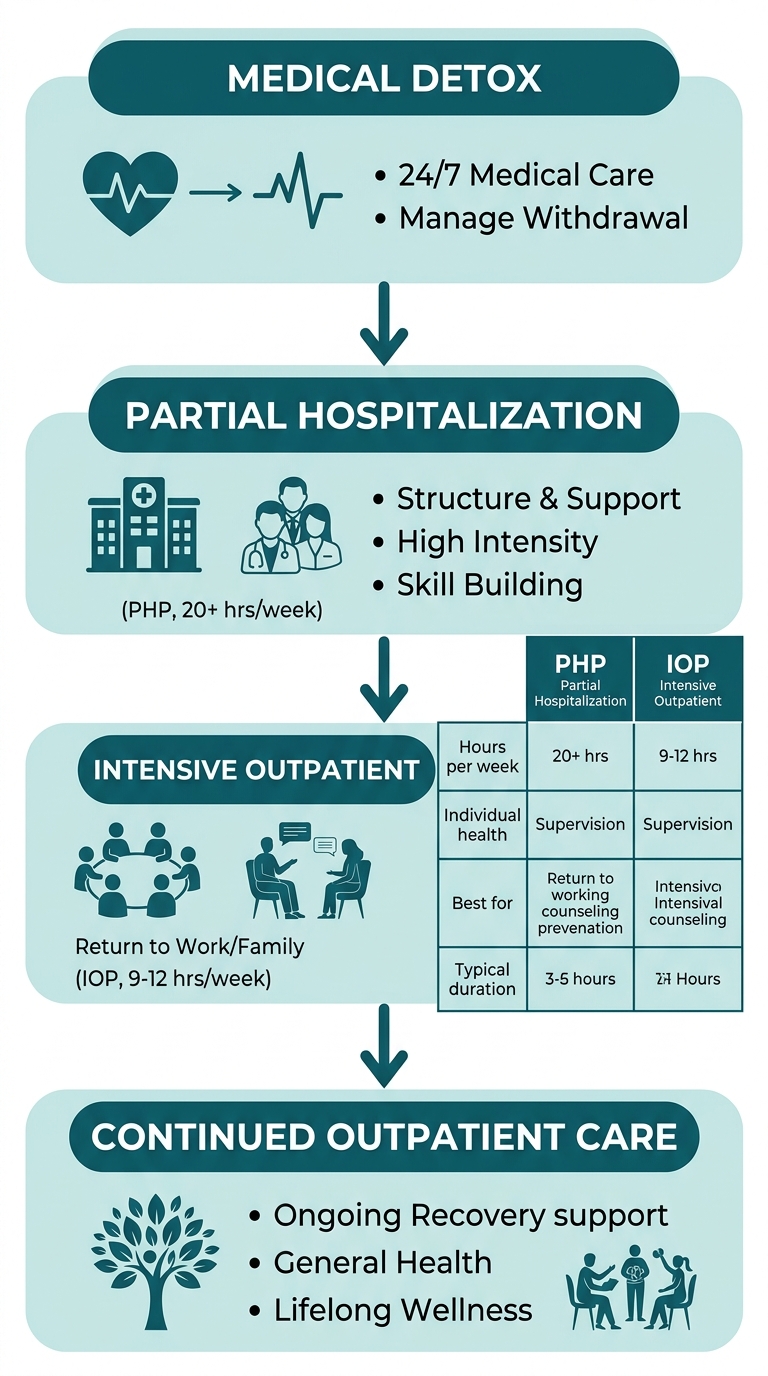
Continuum of alcohol recovery care from detox to outpatient support
Our Intensive Outpatient Program is often the next step after PHP or a direct entry point for stable clients with a supportive home environment. Running 9 to 12 hours per week across several days, IOP focuses heavily on relapse prevention, coping strategies, and family programming. Clients practice applying new skills in real-world situations while still maintaining structured clinical contact several times per week. This balance makes IOP an effective bridge between the immersive support of PHP and the autonomy of continued outpatient care. Because we are a dual diagnosis treatment center, our IOP also provides integrated therapy for any co-occurring conditions, ensuring that every aspect of a client’s well-being is supported during this pivotal stage of alcohol rehabilitation in Irvine.
Typical Timeline and Progression Through Levels of Care
The recovery journey is highly personal and varies from one client to the next. A typical timeline for alcohol rehab in Irvine might begin with a 5- to 10-day medical detox to safely manage withdrawal, though this step depends on a clinical assessment. From there, clients generally transition to PHP for approximately 4 to 6 weeks, receiving the intensive structure needed to prevent early relapse. As therapeutic gains solidify and stability increases, the next progression is into IOP, which commonly lasts between 6 and 12 weeks.
Several factors influence the exact duration and program selection for clients in our Orange County programs. The presence of dual diagnosis, the strength of family support, personal goals, and clinical progress all play significant roles. Our team conducts ongoing assessments to determine the right time for stepping down care, always prioritizing safety and long-term wellness. After completing IOP, clients move into continued outpatient support with less frequent therapy, robust aftercare planning, and 24/7 counselor access, continuing the support they need to sustain their recovery over the long term.
Best Practices for Choosing an Alcohol Rehab Program in Orange County
We believe choosing the right treatment program is one of the most important decisions in the recovery journey. For those seeking alcohol rehab in Irvine, the process should begin with a careful evaluation of practical factors that directly impact the quality and accessibility of care. Taking a structured approach empowers you to find a program that fits your unique needs.
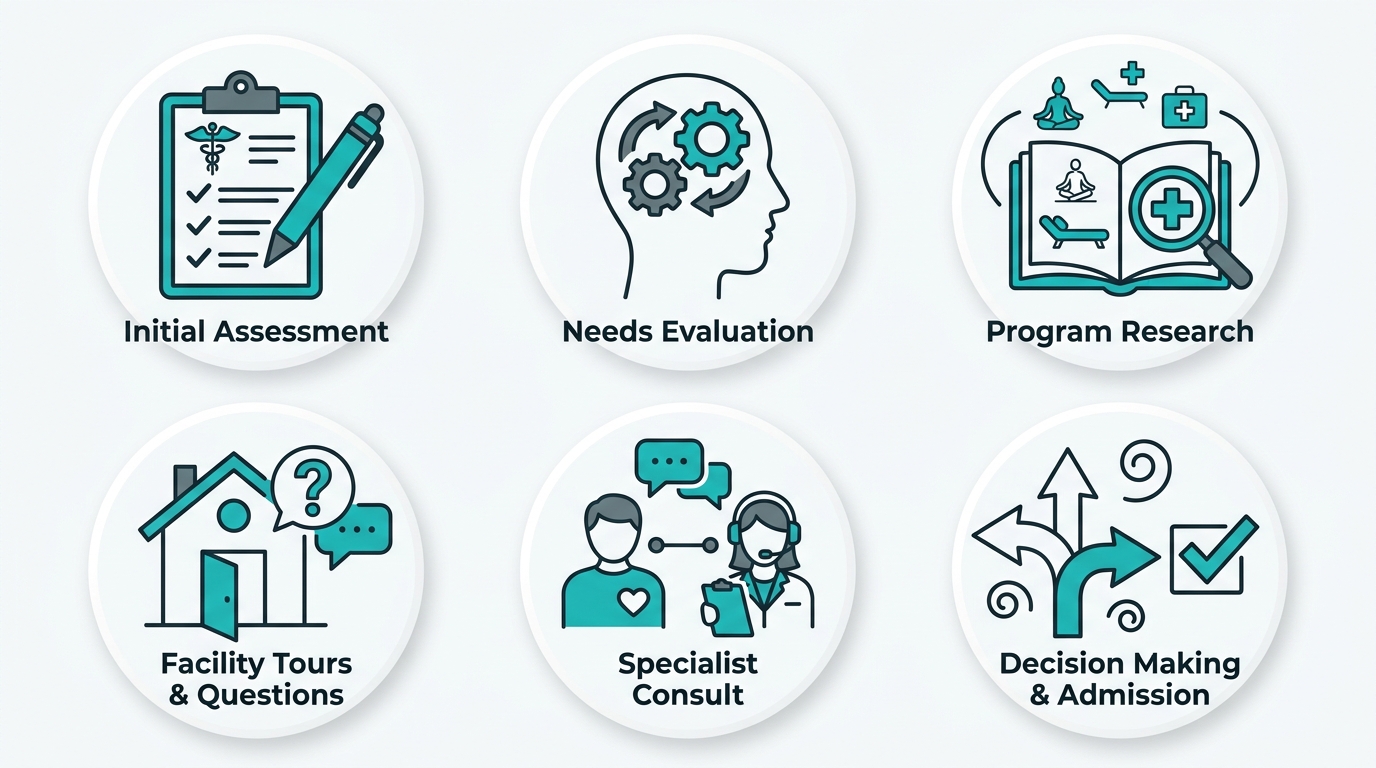
Six key icons for best practices in choosing an Orange County alcohol rehab program.
These foundational steps provide a framework for making an informed choice with confidence.
Verify Insurance and Accreditation First
The first actionable step is to call any alcohol addiction treatment in Orange County facility you are considering and verify that they accept your specific insurance plan. We recommend starting here because coverage details can vary significantly, and many centers, including Blue Coast Behavioral Health, offer free insurance verification to clarify your benefits upfront. This immediately removes financial uncertainty from the decision-making process.
Beyond insurance, accreditation is a non-negotiable marker of quality and safety. We urge you to confirm that any program holds credentials from independent bodies like CARF or The Joint Commission. You can use the official government directory at FindTreatment.gov to validate a facility’s certifications. This step ensures that the program adheres to rigorous clinical standards, providing peace of mind that you are entering a legitimate and professionally monitored environment.
Look for Dual Diagnosis Expertise
Lasting recovery from alcohol rehab in Irvine often requires addressing more than just substance use. A dual diagnosis treatment center explicitly treats alcohol addiction alongside co-occurring mental health conditions such as anxiety, depression, or PTSD. Because about half of individuals with a substance use disorder also experience a serious mental illness, integrated care is not a luxury–it is a clinical necessity.
We look for centers where licensed clinicians assess for mood disorders as part of the initial intake. This site and its content are not a substitute for professional medical or psychiatric care, but we can emphasize how vital it is to ask a program directly about its dual diagnosis capabilities. Comprehensive care that treats the whole person, rather than just the symptoms of addiction, creates a stronger foundation for sustained healing.
Evaluate Program Structure and Aftercare Support
Once you have verified insurance, accreditation, and dual diagnosis expertise, compare the actual structure of the recovery program. Different levels of care exist for different stages of healing. A Partial Hospitalization Program (PHP) provides intensive, full-day treatment for those needing strong medical oversight, while an Intensive Outpatient Program (IOP) offers more flexibility for those transitioning back to work or family life. We recommend asking what type of program intensity best matches your current clinical needs. For example, an alcohol outpatient irvine setting can provide a crucial step-down after completing a more intensive level of care.
Best practice also demands a clear aftercare plan. We evaluate programs based on their commitment to relapse prevention groups, ongoing case management, and life skills development. A quality program does not see discharge as the end but as the start of a new, supported chapter. A robust aftercare strategy is a measurable sign of a program’s dedication to your long-term success. Pursue the Freedom of Recovery with a team that stands beside you every step of the way.
Pursue the Freedom of Recovery in Irvine
Choosing an alcohol rehab in Irvine means beginning your recovery in one of Southern California’s most serene communities. At Blue Coast Behavioral Health, we make evidence-based care accessible right where you need it through a full outpatient alcohol rehab program that fits into real life.
Our Irvine location provides a complete outpatient continuum including IOP and PHP, so you can step into structured treatment while staying close to home, work, and family. Because addiction rarely travels alone, we treat each individual through a dual diagnosis treatment center model that addresses co-occurring mood and anxiety disorders at the same time as substance use.
Family support is built directly into the treatment week–we provide regular updates and dedicated family programming because lasting recovery is a team effort. For immediate crisis support separate from our program, the Substance Abuse and Mental Health Services Administration (SAMHSA) offers a 24/7 National Helpline at 1-800-662-4357, a free, confidential government resource.
Pursue the Freedom of Recovery today. Reach out to our team at blue coast behavioral health irvine and start building a future that centers on your well-being.
Call 911 or visit your nearest emergency room immediately if you or someone you know is experiencing a mental health emergency. If you are experiencing a substance use disorder crisis, the SAMHSA National Helpline is available 24/7 at 1-800-662-4357.
This article was researched and written with the assistance of AI tools.
Resources

Newport Beach
CA
92660