
Table of Contents
Medical Detox in Newport Beach: What You Need to Know
Medical detoxification, or detox newport beach, is a medically supervised process that manages acute withdrawal symptoms when someone stops using substances. This critical first step typically lasts 5 to 7 days, depending on the substance and the individual’s severity of use, and is designed to stabilize the body in a safe, controlled environment.
The Substance Abuse and Mental Health Services Administration (SAMHSA) provides evidence-based guidance through its Treatment Improvement Protocol TIP-45, which establishes that withdrawal from certain substances–particularly alcohol and benzodiazepines–can be life-threatening without medical oversight. A comprehensive alcohol detox newport beach program therefore requires a multidimensional assessment covering medical, psychological, and social factors before admission.
It is important to understand that medical detox alone does not constitute complete substance use treatment. It is only the stabilization phase. For lasting recovery, a supervised inpatient detox newport beach program must be followed by a full continuum of care, including therapy and aftercare. Our Newport Beach center emphasizes this seamless transition.
To find verified treatment options, SAMHSA’s online Treatment Locator serves as the official U.S. government resource, though it does not endorse any specific facility. We encourage you to learn more about our medically supervised detox in newport beach program. Take the first step toward healing with a trusted newport beach detox provider. Pursue the Freedom of Recovery by exploring our programs designed to meet you where you are.
Understanding Medical Detox in Newport Beach
Understanding the process of medical detox is the first step toward recovery. For those seeking medically supervised care, detox newport beach provides a structured entry point that prioritizes safety and comfort from the very beginning. Medical detoxification is not simply about stopping substance use; it is a professionally managed intervention designed to stabilize the body and mind during withdrawal.
What Is Medically Supervised Detox?
Medically supervised detox is a process where licensed medical professionals monitor and manage withdrawal symptoms in a safe, controlled environment, typically using medications to ease discomfort and prevent complications. Unlike quitting “cold turkey” or attempting an unsupervised withdrawal at home, this level of care is defined by continuous oversight and immediate access to clinical interventions. The goal of medical oversight is not just comfort but also preventing dangerous health events, such as seizures, severe dehydration, or delirium tremens (DTs) during alcohol withdrawal. According to the Substance Abuse and Mental Health Services Administration (SAMHSA), medically managed inpatient detoxification represents the highest intensity of care for withdrawal management, ensuring that patients are stabilized before entering the next phase of treatment.
The Role of Medical Detox in Recovery
Medical detox serves as the foundational first phase of a comprehensive substance use disorder treatment program, not a standalone solution. By clearing substances from the body under clinical supervision, we create a stable physiological baseline that makes it possible for patients to engage meaningfully in behavioral therapies and counseling. For those entering an inpatient detox in Newport Beach, this initial stabilization directly supports the transition into intensive therapeutic work, whether that is a Partial Hospitalization Program (PHP) or residential treatment. Once detox is complete, patients can seamlessly move into the next level of care with improved clarity, physical stability, and a reduced risk of immediate relapse.
Inpatient vs. At-Home Detox: Understanding the Difference
Choosing between a structured inpatient program and an at-home attempt is a critical decision. For individuals facing alcohol withdrawal, an alcohol detox in Newport Beach program offers 24/7 access to medical staff who can administer Medication-Assisted Treatment (MAT) and adjust protocols in real time based on clinical response. At-home detox lacks this essential layer of safety; a person attempting to withdraw alone relies on self-monitoring and cannot access emergency interventions if severe complications arise. The absence of a professional support structure at home also increases the likelihood of relapse before the detox process is truly complete.
The following table contrasts these two approaches across the dimensions that matter most for safety and successful completion.
| Factor | Inpatient Medical Detox | At-Home Detox |
|---|---|---|
| Medical Supervision | 24/7 supervision by licensed medical staff | No direct medical supervision; relies on self-monitoring |
| Safety | High — emergency interventions available immediately | Variable — risk of severe withdrawal complications without medical support |
| Medication Management | Medication-Assisted Treatment (MAT) administered by clinicians | Limited to over-the-counter aids unless prescribed; no real-time adjustment |
| Typical Duration | 5-10 days depending on substance and severity | Varies widely; no structured timeline |
| Success Rate for Completion | Higher due to structured environment and support | Lower due to lack of accountability and risk of relapse |
Supporting data based on SAMHSA TIP-45 guidelines and clinical best practices for medically managed withdrawal.
At-home detox carries significant risks that can outweigh any perceived convenience, particularly the absence of emergency intervention and the elevated probability of relapse during the most vulnerable period of withdrawal. In contrast, our inpatient detox program provides a structured environment with 24/7 medical supervision and medication management that is tailored to each patient’s evolving needs. This level of care typically lasts between 5 and 10 days, establishing a clear, safe timeline that at-home attempts simply cannot replicate.
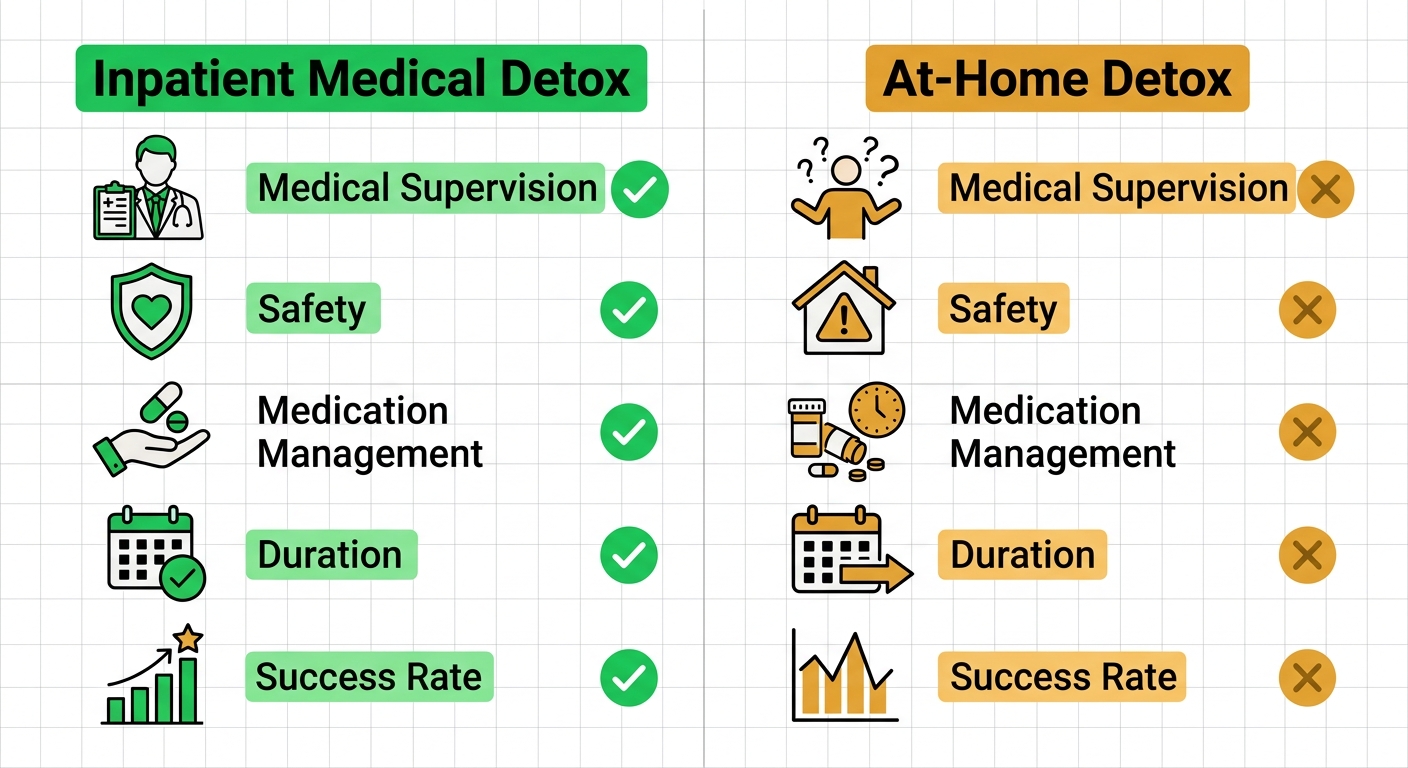
Side-by-side comparison of medical detox settings and their key treatment factors.
Building on these comparisons, it becomes clear that medical detox is more than a first step–it is the essential bridge between active dependence and a structured recovery plan. For anyone navigating substance use disorder, beginning treatment in a medically supervised setting protects physical health and creates the stability needed for the emotional and psychological work that follows.
Key Benefits of Professional Medical Detox in Newport Beach
Choosing a professionally supervised detox in Newport Beach represents a critical decision that prioritizes safety, comfort, and clinical effectiveness. When facing alcohol or substance dependence, attempting to quit without medical assistance significantly increases the risk of dangerous complications, including seizures and delirium tremens, and often leads to a cycle of relapse. The Substance Abuse and Mental Health Services Administration (SAMHSA), the leading federal authority on behavioral health, sets strict standards for withdrawal management that demonstrate how medical oversight dramatically reduces these risks. Enrolling in a detox newport beach facility means you are not just stopping substance use; you are beginning a carefully managed rehabilitation process designed to stabilize your health and prepare you for long-term success. Here are the key benefits you can expect from a professional medical detoxification program in Newport Beach.
Safety and Medical Oversight During Withdrawal
The primary advantage of a 24/7 medical supervision program is the immediate availability of clinical staff to manage and respond to withdrawal symptoms as they evolve. Without intervention, symptoms can escalate unpredictably from mild discomfort to life-threatening conditions. According to SAMHSA guidelines, a supervised detox in Newport Beach ensures routine monitoring of vital signs–such as heart rate, blood pressure, and temperature–while providing immediate pharmacological and supportive interventions when distress occurs. This level of care offers protection from the physical dangers of withdrawal and creates a therapeutic environment where you can feel secure.
In our Newport Beach detox center, this safety translates into a daily reality of personalized attention. Our team anticipates common symptoms like nausea, anxiety, and insomnia, and is prepared for rapid de-escalation should severe issues arise. This protective setting, where you are, we are, allows the body to purge toxins with minimized distress, establishing a stable medical and psychological baseline.
Medication-Assisted Options for Alcohol and Substance Detox
A key differentiator of an inpatient detox newport beach program is the evidence-based use of medications to manage withdrawal and reduce cravings, following clinical best practices outlined in SAMHSA’s TIP-45 guidelines. Medication-assisted detox is not a substitution of one drug for another; it is a clinically managed taper under strict medical supervision designed to restore stability to your brain chemistry.
- For alcohol withdrawal, benzodiazepines are the standard of care, effectively calming the central nervous system to prevent agitation and seizures.
- For opioid withdrawal, buprenorphine helps reduce the intensity of symptoms, such as muscle pain and gastrointestinal distress, making the stabilization phase more tolerable.
- Naltrexone is often introduced later in the process to help block the euphoric effects of alcohol and opioids, significantly reducing cravings.
This pharmaceutical stabilization phase, guided by SAMHSA protocols, effectively interrupts the addictive cycle without the agony of unmanaged withdrawal, paving the way for a successful drug rehab newport beach program. The goal is to ensure you are physically and mentally present to engage with the therapeutic work that follows.
Seamless Transition to Ongoing Treatment Programs
Completing an alcohol detox newport beach program is a vital achievement, but it is merely the first step on the continuum of care. We recognize that detox alone, without a structured therapeutic aftercare plan, rarely supports long-term recovery. The true value of our medically supervised program is the immediate and seamless connection it provides to the next appropriate level of treatment.
At Blue Coast Behavioral Health, when you stabilize physically, your treatment plan immediately activates to bridge you into our Partial Hospitalization Program (PHP), Intensive Outpatient Program (IOP), or a step-down into a structured rehab in newport beach that integrates individual therapy, group work, and family support. This seamless connection is what sets a comprehensive recovery center apart. It ensures that the momentum gained during detox is not lost, but instead is channeled into the deep psychological and life-skills work needed to Pursue the Freedom of Recovery. Start your sobriety journey today with a medically supervised detox that does not end at stabilization, but opens the door to a new life.
How Medical Detox Works in Newport Beach
Once an individual decides to pursue medical detox, the process at our Newport Beach facility typically begins with a comprehensive assessment. Medical detox in Newport Beach provides a safe, licensed setting where withdrawal is managed under 24/7 clinical supervision, ensuring patients are stabilized physically and psychologically before entering the next phase of treatment. At Blue Coast Behavioral Health, we view medical detox as the critical first step in a full continuum of care, not as a standalone service. According to SAMHSA’s TIP-45 guidelines, effective detoxification incorporates thorough evaluation, symptom management, and preparation for ongoing substance use disorder treatment.
Assessment and Intake Process
During our assessment and intake process, we conduct a detailed medical and psychological evaluation to understand each patient’s unique needs. A licensed clinician reviews the individual’s substance use history, including the type, amount, and duration of substance use, as well as any prior withdrawal experiences. We also screen for co-occurring mental health conditions–often referred to as a dual diagnosis–because untreated anxiety or depression can complicate the detoxification process in Newport Beach. Per the SAMHSA Treatment Improvement Protocol for detoxification, this initial evaluation is essential for identifying risk factors and planning appropriate medical interventions.
Alongside the clinical assessment, our admissions team verifies insurance benefits and discusses any potential out-of-pocket expenses. Medical clearance may be required if the patient has underlying health conditions such as cardiovascular disease or liver impairment. Once all information is gathered, our medical director approves a personalized detox protocol, and the patient is admitted to our residential detox unit where they will receive around-the-clock monitoring. This systematic intake ensures that no detail is overlooked before the medically supervised detox program in Newport Beach begins.
Stages of Medically Supervised Withdrawal
The withdrawal process unfolds in recognizable phases, and our clinical team uses standardized tools to track symptom severity at every stage. Early withdrawal, which often begins within hours of the last substance use, may involve anxiety, agitation, and autonomic instability. As symptoms progress into the acute phase–typically peaking within 24 to 72 hours–patients may experience more intense physical and psychological discomfort. Throughout this period, our nursing staff conducts regular assessments using the Clinical Institute Withdrawal Assessment for Alcohol (CIWA-Ar) for alcohol withdrawal or the Clinical Opiate Withdrawal Scale (COWS) for opioid users. According to SAMHSA’s TIP-45, these validated instruments guide medication decisions and help prevent complications such as seizures or delirium tremens.
Medications are administered based on objective scoring thresholds, not on patient request alone. For alcohol withdrawal, benzodiazepines are typically given on a symptom-triggered schedule to stabilize the central nervous system. For opioid withdrawal, medications such as buprenorphine or clonidine may be introduced to reduce cravings and autonomic symptoms. Patients with benzodiazepine dependence require a gradual, often weeks-long taper managed by a psychiatrist. Our 24/7 medical and nursing supervision ensures that any emerging crisis–whether physical or emotional–is addressed immediately. By the late withdrawal phase, symptoms begin to subside, and the patient transitions from acute medical management toward preparation for ongoing treatment.
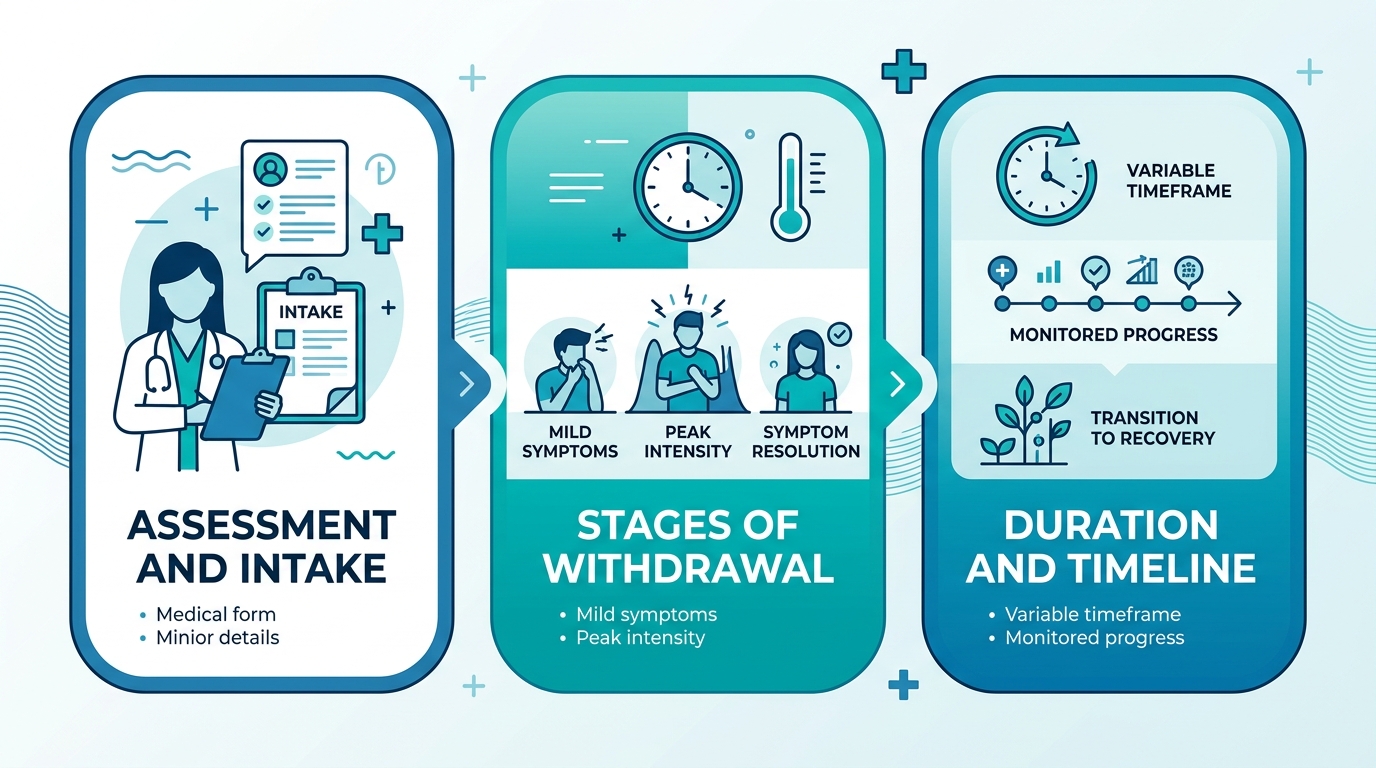
Three-stage medical detox process visualization
Duration and Timeline for Detox Completion
How long detox takes depends heavily on the substance used and individual patient factors. Alcohol detox, for instance, generally lasts between three and seven days, though post-acute withdrawal symptoms such as sleep disturbance or mood swings can persist for weeks. During an alcohol detox in Newport Beach, patients receive daily medical monitoring and comfort medications to manage symptoms as they arise. For individuals requiring ongoing support after detox, our facility also provides a comprehensive newport beach alcohol rehab program that continues the recovery journey with structured therapy and group support.
Opioid withdrawal timelines are often extended when medication-assisted treatment is utilized. With buprenorphine or methadone stabilization, acute withdrawal management typically spans five to ten days before the patient is ready for a maintenance or tapering plan. Benzodiazepine detox differs markedly–owing to the risk of protracted withdrawal, tapers may require two to four weeks or longer under close medical oversight. Per SAMHSA’s TIP-45, factors that influence length of stay include polysubstance use, severity of physiological dependence, and the presence of co-occurring medical or psychiatric conditions. No two detoxification timelines are identical, and we adjust each plan in real time based on the patient’s clinical response.
After detox is complete, patients move into the next phase of treatment, which may include residential care or an intensive outpatient program. Our team works with each individual to ensure a seamless transition, because withdrawal management in Newport Beach is only the beginning of a sustainable recovery. With proper medical support, the acute discomfort of withdrawal can be safely navigated, opening the door to meaningful therapeutic work.
This content is not a substitute for professional medical advice. Consult a healthcare professional for diagnosis and treatment.
Best Practices for Selecting a Newport Beach Detox Center
Given the need for careful evaluation, here are the evidence-based criteria to apply when selecting a facility. Choosing a detox Newport Beach program requires looking beyond amenities to verify the core clinical standards that ensure safety and long-term recovery potential. We recommend focusing on three pillars: verified credentials, financial clarity, and a concrete discharge plan.
Verify Licensing, Accreditation, and Medical Credentials
State licensing confirms that a facility meets basic safety and operational standards, but accreditation signals a commitment to rigorous, high-quality care. We guide our clients to look for accreditation from nationally recognized bodies such as The Joint Commission or the Commission on Accreditation of Rehabilitation Facilities (CARF). These certifications indicate that a program adheres to the clinical best practices detailed in the federal TIP-45 guidelines published by the Substance Abuse and Mental Health Services Administration (SAMHSA).
Beyond the facility itself, the makeup of the medical team is paramount. A safe detox program must have a staff composed of a board-certified physician specializing in addiction medicine or psychiatry, registered nurses available around the clock, and licensed counselors. For any detox Newport Beach facility, we advise confirming that a physician will oversee the intake assessment and the creation of a personalized withdrawal management protocol. SAMHSA provides a treatment locator tool that can be used to independently verify the licensing and services of local detox options.
Confirm Insurance Coverage and Admissions Criteria
Avoiding financial surprises during treatment is critical for focusing on recovery. We explain to our clients that verifying benefits is a straightforward process. A step-by-step checklist to follow includes:
- Call the member services number on the back of your insurance card.
- Specifically ask to verify your coverage for an inpatient detox Newport Beach level of care.
- Request any prior authorization details required before admission.
- Confirm clearly whether the facility is in-network or out-of-network.
Many centers, including our team, offer a professional benefits verification process to handle this on your behalf. When you call, you should ask pointed questions about your financial responsibility. We recommend inquiring about daily co-pay amounts, how your annual deductible applies to inpatient detoxification, and any contractual limits on the length of stay for detox. This site and its content are not a substitute for professional medical or psychiatric care. Understanding these details provides peace of mind and lets you focus entirely on the healing process ahead.
Evaluate Continuity of Care and Aftercare Planning
Detox is a critical first step, not a standalone cure. A quality center builds a clear bridge from medical stabilization to ongoing treatment. The difference between receiving a simple discharge summary and experiencing a warm handoff is substantial. A warm handoff involves the detox team directly scheduling the first appointment at the next facility and formally introducing you to the new provider.
For an effective alcohol detox Newport Beach program, we ensure the aftercare planning is comprehensive. A robust plan should be documented and include the following components:
- Scheduled intake sessions for an Intensive Outpatient Program (IOP) or Partial Hospitalization Program (PHP).
- Enrollment in a structured relapse prevention group.
- Regular check-in appointments with a dedicated case manager.
- A personalized crisis plan to implement during moments of high craving or stress.
Once you have confirmed a center meets these three criteria, understanding the daily treatment process will help you prepare further. This level of proactive coordination bridges the gap from residential detox back to everyday life, allowing you to truly Pursue the Freedom of Recovery.
Take the First Step Toward Recovery at Blue Coast Behavioral Health
Deciding to seek detox in Newport Beach is a deeply courageous act — one that can feel overwhelming yet holds the potential to transform your life. We recognize the uncertainty that comes with this moment, and we want you to know that you do not have to navigate it alone. At Blue Coast Behavioral Health, we meet you where you are, offering a private, supportive space to explore your options without pressure or judgment.
A medically supervised inpatient detox in Newport Beach provides the safest foundation for lasting recovery. Whether you need alcohol detox in Newport Beach or support for other substances, our team follows nationally recognized protocols, including those outlined in SAMHSA’s TIP-45 guidelines, to manage withdrawal symptoms and stabilize your health. This clinical foundation is the critical first phase that prepares you for the deeper therapeutic work of our outpatient and residential programming. For those wanting to verify treatment options independently, the SAMHSA treatment locator serves as a trusted government resource, but the most direct path begins with a confidential conversation.
If you are ready to move from reading to action, we encourage you to reach out. Contacting us does not commit you to anything — it simply opens a dialogue about what your personalized path might look like. Our team is available to answer your questions, discuss your concerns, and help you determine if our continuum of care aligns with your needs. Call us today for a confidential, no-obligation assessment and pursue the freedom of recovery.
This article was researched and written with the assistance of AI tools.
Resources

Newport Beach
CA
92660