
Can You Get High From Computer Duster? Inhalant Risks and Emergency Warning Signs
Yes. Some people misuse keyboard cleaner, computer duster, and refrigerant products for their mind-altering effects, but this is not a harmless or short-lived experiment. Intentional inhalation can suddenly interfere with breathing and heart rhythm, leading to collapse, seizure, or cardiac arrest. A person does not need a long history of use for a life-threatening reaction to occur.
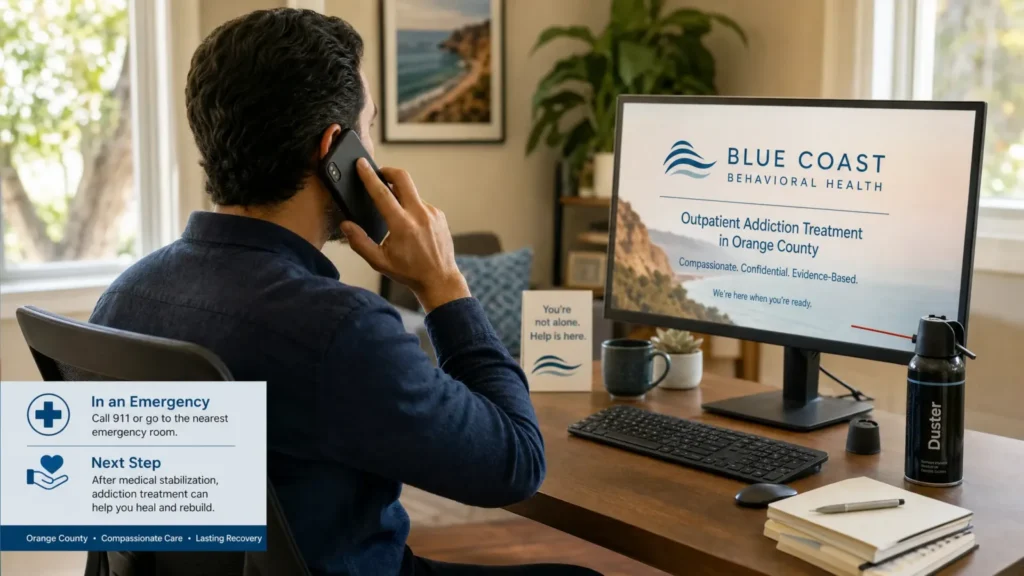
Call 911 immediately if someone has collapsed, is unresponsive, has chest pain, is having trouble breathing, or has a seizure after inhaling a duster or refrigerant product. Do not wait to see whether they “sleep it off.” Once urgent medical needs have been addressed, Blue Coast Behavioral Health can help Orange County residents assess repeated misuse and identify an appropriate outpatient treatment plan. Call 949-776-2127 24/7 for a confidential addiction-treatment assessment.
Why Keyboard Cleaner Abuse Can Cause Sudden Collapse
Keyboard cleaner abuse can cause a rapid and unpredictable medical crisis because many compressed-gas products contain volatile chemicals that affect the brain, lungs, and cardiovascular system almost immediately. These chemicals are inhalants: substances that produce vapor or gas and can be absorbed through the lungs into the bloodstream.
The danger is not limited to someone who uses frequently. A brief episode can sensitize the heart to stress hormones such as adrenaline. If the person becomes startled, frightened, physically active, or agitated, their heartbeat may become dangerously irregular. This reaction is often called sudden sniffing death syndrome. Despite the name, it is not limited to traditional solvents or to people with a long pattern of inhalant use.
Computer duster inhalant abuse can also reduce oxygen delivery, impair coordination and judgment, and cause a person to fall or become unable to protect their airway. The cold gas released from pressurized products may add another injury risk if it contacts the mouth, throat, or skin. The immediate effects can pass quickly in some cases, but the medical danger may not be obvious from how alert a person appears in the moment.
For a family member in Irvine, Huntington Beach, or elsewhere in Orange County, it can be alarming to discover empty cans, chemical odors, unexplained dizziness, or sudden behavior changes. It is important to respond with urgency rather than accusation. Shame may cause someone to hide what happened, while a calm, direct response can help them accept medical and behavioral health support.
Many household products can be misused in dangerous ways. For broader education about concealed risks in ordinary settings, read our guide to household items people misuse to get high. If there is any possibility of acute inhalant exposure, however, emergency safety comes before a conversation about treatment.
Can someone die the first time they inhale keyboard cleaner or computer duster?
Yes. A fatal heart-rhythm problem or breathing emergency can occur during a first-time or seemingly brief inhalation episode. There is no reliable way to predict who will have a severe reaction, based on age, physical fitness, prior use, or how “fine” they appear at first. This is why intentional inhalation should never be treated as a low-risk behavior or something that can be safely monitored at home after serious symptoms appear.
What Is in Computer Duster and Refrigerant Products?
Products sold for cleaning electronics are designed to remove dust from keyboards, vents, and other equipment. They are not breathable air or oxygen. Their labels, warnings, and safety data sheets may identify compressed gases or volatile fluorinated chemicals. The exact ingredients vary by product, manufacturer, age of the product, and region.
Some duster products contain hydrofluorocarbon or hydrocarbon-based propellants. Refrigerant products used in cooling systems also vary widely and may involve compressed or volatile gases with serious inhalation hazards. A person should never assume that a product is safe to intentionally inhale because it is marketed for computers, home cleaning, automotive work, or appliance maintenance.
Product safety warnings commonly state that the contents are under pressure, should be used only as directed, and should not be inhaled. In addition to the risk of intoxication and heart-rhythm changes, compressed-gas products can create hazards related to oxygen displacement, extreme cold, and impaired coordination.
It is not necessary for a loved one to identify every chemical on a can before getting help. If possible, bring the container or take note of the product name for emergency personnel or Poison Control. Do not spend time searching labels while someone is unconscious, struggling to breathe, or having chest pain; call 911 first.
Why the product category matters less than the symptoms
Families sometimes wonder whether one brand, formula, or type of refrigerant is “less dangerous.” In an emergency, that question can delay needed care. The practical issue is that inhaling any unknown pressurized or volatile chemical can affect consciousness, oxygenation, heart rhythm, and breathing. The person’s current symptoms determine the immediate response.
For non-emergency exposure questions, Poison Help at 1-800-222-1222 can provide product-specific guidance. Poison Control specialists may ask about the product label, the time of exposure, symptoms, age, and medical history. Their guidance does not replace 911 when severe symptoms are present.

How Inhalants Affect the Heart, Brain, and Breathing
Inhalants can produce a short period of dizziness, disorientation, euphoria, slurred speech, or loss of coordination. Those effects can make the behavior look less serious than it is. The same exposure may also create risks that are not visible from across the room.
Effects on heart rhythm
Volatile chemicals can disrupt the electrical signaling that keeps the heart beating steadily. They may make the heart more vulnerable to dangerous rhythm changes, especially when the body releases adrenaline during fear, excitement, physical exertion, or agitation. A fatal arrhythmia can develop suddenly, which is the central concern behind sudden sniffing death syndrome.
Chest pain, palpitations, fainting, extreme weakness, or sudden collapse after duster exposure should be treated as emergency warning signs. Even if the person wakes up, medical evaluation may be needed because a serious heart-related event can occur without a long history of keyboard cleaner abuse.
Effects on the brain and nervous system
Inhalants can depress the central nervous system. A person may seem confused, detached, unusually sleepy, irritable, unsteady, or unable to follow a conversation. They may make unsafe decisions, fall, or become unable to explain what they used. In more serious situations, a person may lose consciousness or have a seizure.
Repeated exposure may also contribute to cognitive problems, mood changes, memory difficulty, and worsening mental health. When a person is already living with anxiety, depression, trauma symptoms, or another behavioral health concern, substance misuse can make those concerns harder to manage. Treatment should address both the substance use and the emotional or situational factors connected to it.
Effects on breathing and oxygen
Inhalation can interfere with normal breathing. A person may breathe slowly, shallowly, irregularly, or with visible effort. They may cough, choke, become blue or gray around the lips, or have trouble staying awake. Some gases can displace oxygen in the lungs, and loss of consciousness increases the risk that a person cannot keep their airway clear.
Breathing problems are never something to wait out after suspected computer duster inhalant abuse. Call 911 if there is trouble breathing, blue or gray skin color, loss of consciousness, severe confusion, or a seizure.
Emergency Warning Signs: When to Call 911 Immediately
Call 911 right away after suspected duster or refrigerant inhalation if the person has any of the following symptoms:
- Collapse, fainting, or inability to remain awake
- Unresponsiveness or inability to wake the person normally
- Trouble breathing, slow or irregular breathing, gasping, or choking
- Chest pain, a racing heartbeat, skipped beats, or severe weakness
- A seizure, uncontrolled shaking, or sudden loss of awareness
- Blue, gray, or very pale lips, face, or fingertips
- Severe confusion, disorientation, agitation, or inability to speak clearly
- Repeated vomiting, especially with drowsiness or altered consciousness
- Burn-like injuries, swelling, or intense pain around the mouth or throat after contact with a pressurized product
Do not assume a person is safe because they are young, have used before, say they feel better, or seem embarrassed about the incident. A dangerous reaction may develop quickly. Emergency professionals are there to protect health and safety, not to judge someone for substance use.
What should I do if someone collapses after using a duster product?
Call 911 immediately. If the area is safe to enter, move the person away from the source and into fresh air without putting yourself at risk. Check whether they are responsive and breathing. Follow the dispatcher’s instructions. If the person is not breathing normally, the dispatcher may guide you in CPR. Use an automated external defibrillator (AED) if one is available and you can do so safely.
Do not leave the person alone. If they are breathing but unconscious, follow 911 dispatcher instructions about positioning and monitoring while help is on the way. Tell responders that you suspect a compressed-gas duster, keyboard cleaner, or refrigerant exposure. If it can be done without delaying care, keep the product container available for emergency personnel.
In Orange County, calling 911 is the appropriate first step for collapse, breathing difficulty, chest pain, a seizure, or unresponsiveness. Addiction treatment is important after stabilization, but outpatient care is not a substitute for emergency evaluation during an acute event.
What to Do and What Not to Do After Duster Inhalation
When someone may have inhaled keyboard cleaner, the goal is to reduce immediate danger and get qualified guidance promptly. A calm approach is especially important. Arguing, threatening, or forcing a detailed explanation can increase stress and agitation at a time when heart-rhythm risks may already be elevated.

What to do
- Call 911 for any severe symptom, including collapse, chest pain, breathing difficulty, seizure, or unresponsiveness.
- Move to fresh air only if it is safe. Avoid exposing yourself to fumes or entering an enclosed space that may contain a high concentration of gas.
- Keep the environment calm. Speak quietly, reduce stimulation, and discourage unnecessary movement while waiting for help.
- Monitor the person closely. Watch for changes in breathing, consciousness, skin color, and responsiveness.
- Provide accurate information. Tell emergency responders what product may have been involved, when it happened if known, and what symptoms you observed.
- Call Poison Help at 1-800-222-1222 for exposure guidance when there is no immediate emergency, while following their recommendations and escalating to 911 if symptoms worsen.
What not to do
- Do not wait for the effects to wear off when severe symptoms are present.
- Do not encourage exercise, walking around, running, or other exertion to “wake up” the person.
- Do not give alcohol, caffeine, energy drinks, medications, food, or drinks in an attempt to counteract the exposure.
- Do not induce vomiting.
- Do not drive the person yourself if they have serious symptoms or may become unconscious; call 911.
- Do not shame or interrogate the person during the crisis. Focus on safety and clear information for responders.
After the person has received medical care and is medically stable, it is reasonable to begin a more thoughtful conversation. A supportive opening may sound like: “I’m relieved you are safe. I’m concerned because this could have been life-threatening. Can we talk with a treatment professional about what support would help prevent another emergency?”
This approach recognizes the seriousness of the behavior without defining the person by it. It can also make it easier to learn whether the incident was isolated, part of a pattern, connected to stress or trauma, or occurring alongside alcohol or other drug use.
When Repeated Keyboard Cleaner Misuse May Signal Addiction
One dangerous event warrants concern. Repeated episodes, cravings, concealment, or returning to use after harmful consequences can indicate that professional substance-use treatment is needed. Inhalant addiction can affect people of different ages and backgrounds, including adults who are managing work, family responsibilities, school, grief, trauma, or mental health symptoms.
Signs that someone may need an addiction assessment include:
- Using keyboard cleaner, duster, refrigerant, or other inhalants more than once
- Strong urges to use or difficulty stopping despite wanting to stop
- Hiding cans, purchasing products unexpectedly, or becoming defensive when asked
- Using alone or in situations where a medical emergency could go unnoticed
- Missing work, school, family obligations, or social activities because of use or recovery from use
- Continuing after an injury, emergency visit, frightening physical symptom, or conflict at home
- Changes in mood, sleep, memory, concentration, or behavior
- Using alcohol or other substances at the same time or as part of the same pattern
Not every person who misuses a product will need the same level of care. An assessment can clarify the frequency of use, overdose or emergency history, co-occurring mental health needs, home environment, current safety risks, and whether outpatient treatment is clinically appropriate. It also helps identify when a higher level of care, medical evaluation, or more intensive monitoring may be needed first.
Recovery conversations often happen at different points of readiness. One person may be frightened and ready to stop after an emergency; another may deny the risk or agree to help mainly to reassure family members. Both situations can be addressed without confrontation. Understanding the stages of change in addiction treatment can help loved ones respond with concern, boundaries, and practical next steps rather than repeated arguments.
Trauma-informed, non-stigmatizing care matters
People may misuse inhalants to escape emotional pain, numb distress, cope with loneliness, manage overwhelming anxiety, or seek a rapid change in how they feel. Those reasons do not make the behavior safe, but they do matter in treatment. A trauma-informed approach asks what may be driving the behavior and creates a plan that supports safety, dignity, and sustained recovery.
For women, treatment may also need to account for trauma history, relationship stress, caregiving responsibilities, body-image concerns, depression, anxiety, or other mental health needs. Blue Coast Behavioral Health offers behavioral health and addiction treatment with attention to the individual circumstances that can make recovery feel difficult to begin.
Outpatient Addiction Treatment Options in Orange County
After emergency stabilization, outpatient treatment may be an appropriate next step for a person who is medically stable and can participate safely in care while living at home. Outpatient services allow many people to continue work, school, or family responsibilities while building a structured recovery plan.
For someone in Orange County, Irvine, Huntington Beach, or nearby Southern California communities, the right recommendation depends on more than the product involved. A clinician should consider recent inhalant-related symptoms, whether emergency care occurred, the frequency and intensity of use, co-occurring alcohol or drug use, mental health symptoms, suicide risk, available support at home, and the ability to avoid further exposure.
What an outpatient assessment can help determine
A confidential assessment can help answer practical questions, including:
- Is outpatient addiction treatment appropriate now, or is a higher level of care needed?
- Are there withdrawal, medical, psychiatric, or safety concerns that should be addressed first?
- What situations, emotions, or relationships tend to come before the misuse?
- How can the person reduce access to products without relying only on willpower?
- Would individual counseling, group support, family involvement, trauma-informed care, or dual-diagnosis treatment be helpful?
- What relapse-prevention plan is realistic for home, work, school, and social settings?
At Blue Coast Behavioral Health, outpatient drug and alcohol rehab can support individuals whose inhalant misuse occurs alongside alcohol use, prescription drug misuse, other substances, anxiety, depression, or trauma-related symptoms. Treatment planning should be individualized, with a clear understanding that a recent medical emergency needs medical follow-up before or alongside behavioral health care.
Learn more about addiction treatment in Orange County, California and the support available through outpatient drug and alcohol rehab in Orange County.

When is outpatient care appropriate after an inhalant-related emergency?
Outpatient care may be appropriate after the person has been medically evaluated and stabilized, is not experiencing an immediate medical crisis, and has a safe plan for attending treatment and avoiding continued misuse. It can be especially useful when someone needs ongoing counseling, relapse-prevention skills, mental health support, and accountability but does not require round-the-clock medical supervision.
Outpatient treatment may not be enough on its own when a person remains medically unstable, continues to have severe confusion or breathing symptoms, has repeated recent collapses, has active suicidal thoughts, cannot stay safe outside a structured setting, or is using multiple substances in a way that increases risk. A professional assessment can identify the safest level of care without making assumptions.
What treatment can include
Inhalant addiction treatment is not simply a request to “stop using.” Effective care may include individual therapy to understand triggers, education about emergency risks, coping skills for cravings and stress, behavioral health treatment for anxiety or depression, trauma-informed counseling, family communication work, and a detailed plan for preventing return to use.
For a loved one, family involvement can be valuable when it is safe and welcomed by the person in treatment. Families may need help setting boundaries, responding to a lapse without enabling it, reducing easy access to misused products, and recognizing when a new emergency requires 911 rather than a treatment appointment.
Will insurance help cover outpatient addiction treatment in Orange County?
Insurance coverage for outpatient addiction treatment varies by plan, benefits, network status, authorization requirements, and the services recommended after assessment. It is reasonable to ask for help understanding coverage before making decisions about care. Blue Coast Behavioral Health can discuss treatment options and practical next steps, while your insurer can confirm plan-specific benefits and out-of-pocket responsibilities.
For helpful questions to ask about benefits, authorizations, and treatment coverage, review our guide to addiction treatment health insurance.
Frequently Asked Questions About Computer Duster Inhalation
Can a person recover from computer duster or inhalant addiction with outpatient treatment?
Yes, many people can make meaningful progress with outpatient treatment when that level of care is clinically appropriate. Recovery generally involves more than avoiding a specific product. It may include addressing cravings, emotional distress, trauma, other substance use, family conflict, mental health symptoms, and the environments where misuse has occurred. The first step is an assessment that identifies the person’s safety needs and recommends the right level of support.
Should I call Poison Control or 911 after suspected keyboard cleaner inhalation?
Call 911 for collapse, unresponsiveness, trouble breathing, chest pain, a seizure, blue or gray skin color, or severe confusion. For a non-emergency exposure question, Poison Help at 1-800-222-1222 can provide immediate product-specific guidance. If you are unsure whether symptoms are serious, it is safer to treat the situation urgently and seek professional direction.
What if the person says they only did it once?
Take the report seriously. One episode can still cause a dangerous heart or breathing emergency. After medical concerns are addressed, a calm assessment can help determine whether there have been prior episodes, hidden use, other substances involved, emotional stressors, or a risk of repeating the behavior.
Can family members help without making the person feel ashamed?
Yes. Focus on observable facts and safety: “You collapsed after using a chemical product, and I am worried because it can affect breathing and heart rhythm.” Avoid labels, insults, or debates about whether the behavior was “bad enough.” Offer to sit with them during a call, help arrange an assessment, or join a treatment conversation if appropriate. Compassion and firm safety boundaries can exist together.
What public-health sources support these warnings?
Information from the National Institute on Drug Abuse describes inhalants as chemicals whose vapors can produce mind-altering effects and cause serious harm. Poison Control provides emergency guidance for inhalation exposures, and product safety data sheets and manufacturer warnings emphasize that compressed-gas dusters are not intended for inhalation. Substance Abuse and Mental Health Services Administration resources also support treatment for substance-use and co-occurring behavioral health concerns.
A Clear Next Step After the Immediate Crisis
Keyboard cleaner abuse is not something to minimize because a person looks better after a few minutes. Duster and refrigerant inhalation can affect heart rhythm and breathing without warning, and sudden collapse can happen even without a long history of misuse. If someone has collapsed, is struggling to breathe, has chest pain, is having a seizure, or is unresponsive, call 911 now.
When emergency medical needs have been addressed, the next step is to understand what happened and what level of treatment can help prevent another crisis. Blue Coast Behavioral Health offers confidential addiction-treatment assessments for people in Orange County and nearby Southern California communities. Call 949-776-2127 24/7 to discuss the pattern of use, current safety concerns, behavioral health needs, and whether outpatient care is an appropriate recommendation.