
Table of Contents
Outpatient Rehab Options in Newport Beach, California
For individuals seeking comprehensive addiction treatment without the structure of an overnight stay, rehab newport beach ca offers a flexible and effective path forward. For those who do not require 24/7 supervision or who are stepping down from residential care, we offer flexible outpatient rehab options in Newport Beach that allow clients to live at home or in a sober living environment while receiving structured therapeutic support. Our programs are designed to address substance use disorders at varying levels of intensity, ensuring each person receives the appropriate care for their stage of recovery.
Our outpatient rehab Newport Beach programs provide a structured schedule of therapy and group sessions, typically meeting three to five days per week at our Newport Beach facility. The Partial Hospitalization Program (PHP) offers a higher level of care with more intensive daily programming, acting as a direct step-down from detox or residential treatment. The Intensive Outpatient Program (IOP) provides a more flexible schedule for those transitioning to greater independence or managing less severe addictions. Both levels of care integrate evidence-based therapies such as cognitive behavioral therapy and the Matrix Model to build coping skills and prevent relapse.
Our comprehensive rehab in newport beach provides flexible levels of care that fit your schedule. These Newport Beach outpatient programs are ideal for clients who have completed a higher level of care or for those whose life circumstances do not permit a residential stay.
We understand that addiction rarely occurs in isolation, which is why dual diagnosis treatment Newport Beach is integrated into every level of our outpatient care. Our clinical team is experienced in treating co-occurring mental health conditions, such as anxiety, depression, and trauma, alongside substance use disorders. This integrated approach ensures that the underlying psychological factors contributing to addiction are addressed, leading to more sustainable recovery outcomes.
The convenience of our location provides a significant advantage for local residents. Accessing outpatient rehab Newport Beach eliminates long commutes that can be a barrier to consistent attendance. Being rooted in the Newport Beach community allows us to connect clients with local support networks and resources, reinforcing the principle that where you are, we are. These outpatient programs are supported by our full range of therapeutic services, from individual counseling to family programming.
Contact our Newport Beach team today to learn which outpatient level is right for you. This information does not replace professional medical advice — consult our clinical team for a personalized assessment.
Understanding Levels of Outpatient Care in Newport Beach
When considering rehab Newport Beach CA, it is essential to recognize that outpatient care exists on a continuum of intensity, designed to meet individuals exactly where they are in recovery. Our blue coast behavioral health outpatient treatment programs in Newport Beach offer a full spectrum of care, from daily structured support to weekly maintenance sessions. These levels are grounded in the national ASAM criteria established by the Substance Abuse and Mental Health Services Administration (SAMHSA) and are aligned with California Department of Health Care Services (DHCS) standards, ensuring that care is both clinically sound and properly regulated.
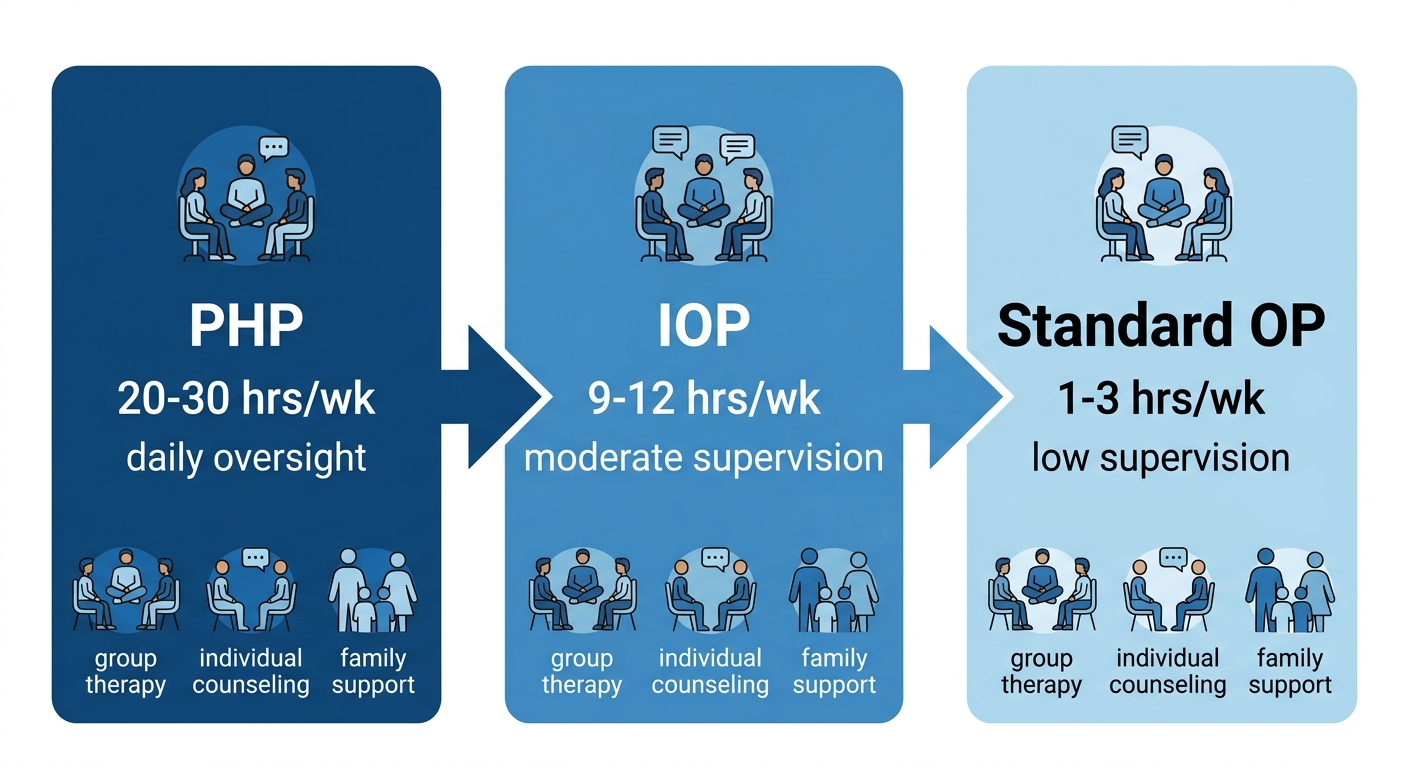
Continuum of outpatient addiction care offered at Blue Coast Behavioral Health in California.
The Partial Hospitalization Program (PHP) represents the most structured outpatient treatment options in Newport Beach. It requires a commitment of 20 to 30 hours per week, typically five days a week, and features a high level of daily medical and clinical oversight. The comprehensive curriculum integrates individual therapy, group therapy, and family programming to create a robust support system. Per SAMHSA guidelines, this level of care is ideal for individuals stepping down from inpatient detox or residential treatment who still require significant daily support, and it typically lasts between 4 to 8 weeks.
Our Intensive Outpatient Program (IOP) provides a moderate level of structure for those who need substantial therapeutic support but can manage responsibilities at home or work. For outpatient rehab Newport Beach, this option involves 9 to 12 hours of therapy per week, spread across 3 to 4 days. With therapist-led groups, individual counseling, and skill-building sessions under moderate supervision, the program is designed to reinforce coping mechanisms and relapse prevention strategies. The typical duration for this phase of treatment is 8 to 12 weeks, allowing for deep, transformative work.
Standard Outpatient care offers the greatest flexibility, making it suitable for those with mild symptoms or for long-term maintenance after completing a more intensive program. Requiring only 1 to 3 hours per week, usually one or two days a week, this level focuses primarily on weekly individual counseling with a lower level of clinical supervision. It serves as a critical step-down in the continuum, often extending over 8 to 24 weeks to provide consistent, ongoing support as individuals solidify their recovery.
A key differentiator of programming at our facility is the integration of dual diagnosis treatment Newport Beach for co-occurring mental health conditions across all these levels of care. We treat the whole person, not just the addiction, by addressing underlying mood disorders, trauma, and anxiety within every outpatient track. Understanding these structured options is the first step to Pursue the Freedom of Recovery.
The following table compares the key features of each level of outpatient care based on ASAM criteria.
| Feature | IOP | PHP | Standard Outpatient |
|---|---|---|---|
| Hours per week | 9-12 hours (3-4 days/week) | 20-30 hours (5 days/week) | 1-3 hours (1-2 days/week) |
| Therapy types | Group, individual, family, skills training | Group, individual, family, medical monitoring | Individual counseling (weekly) |
| Supervision | Moderate (therapist-led groups, check-ins) | High (daily medical/clinical oversight) | Low (weekly therapist visits) |
| Typical duration | 8-12 weeks | 4-8 weeks | 8-24 weeks (ongoing) |
| Best for | Those who need structure but can manage home/ work | Those stepping down from residential or needing daily support | Those with mild symptoms or long-term maintenance |
These standards are derived from SAMHSA guidelines and align with DHCS requirements for facilities in California, ensuring therapeutic integrity and patient safety.
Our clinical team will help you determine which level is right for you, taking into account your clinical needs, daily responsibilities, and personal recovery goals.
How Dual Diagnosis and Evidence-Based Therapies Support Recovery
To effectively address co-occurring conditions, treatment must rely on proven approaches. At Blue Coast Behavioral Health, we use evidence-based therapies at our rehab Newport Beach facility to treat both substance use and mental health disorders simultaneously. This integrated approach, known as dual diagnosis treatment, forms the foundation of our outpatient rehab in Newport Beach programs.
What Is Dual Diagnosis and Why It Matters
Dual diagnosis refers to the simultaneous presence of a substance use disorder and a mental health condition, such as depression, anxiety, or bipolar disorder. According to the National Association of Addiction Treatment Providers (NAATP), treating both conditions through integrated programs produces significantly better outcomes than addressing them separately. When someone struggles with both addiction and a mood disorder, the two conditions often reinforce each other, creating a cycle that makes recovery more challenging without comprehensive care.
Integrated treatment matters because substance use and mental health symptoms are deeply interconnected. For example, someone experiencing untreated anxiety may rely on alcohol to manage their symptoms, while prolonged substance use can worsen underlying depression. At our Newport Beach facility, our clinical team conducts thorough assessments to identify all co-occurring conditions before developing a treatment plan. The NAATP clinical guidelines for integrated treatment emphasize that addressing both conditions at the same time reduces relapse risk and improves long-term recovery outcomes.
We recognize that each client arrives with a unique history and set of challenges. Our licensed counselors use standardized diagnostic tools and clinical interviews to understand the full scope of each person’s needs. This comprehensive evaluation ensures that no underlying mental health condition goes unaddressed during treatment, which is essential for sustainable recovery. The NAADAC, the Association for Addiction Professionals, has established professional standards confirming that addiction counselors must be competent in identifying and treating co-occurring disorders alongside substance use.
Core Evidence-Based Therapies for Co-Occurring Disorders
Cognitive Behavioral Therapy (CBT) is one of the most widely researched and effective therapies for dual diagnosis treatment. CBT helps clients identify negative thought patterns that contribute to both substance use and mood disorder symptoms. Through techniques like cognitive restructuring and behavioral activation, individuals learn to challenge unhelpful beliefs and develop healthier responses to triggers. For someone struggling with depression and alcohol use, CBT might focus on recognizing thoughts that lead to drinking and replacing them with more balanced perspectives.
Dialectical Behavior Therapy (DBT) builds on CBT principles while placing greater emphasis on emotional regulation and interpersonal effectiveness. DBT teaches practical skills in four key areas: mindfulness, distress tolerance, emotion regulation, and interpersonal effectiveness. This approach is particularly effective for individuals whose substance use is connected to intense emotional experiences or relationship difficulties. The therapy helps clients accept their current emotions while simultaneously working to change harmful behaviors, a balance that supports recovery from both addiction and mood disorders.
The Matrix Model offers a structured, time-limited framework specifically designed for stimulant addiction treatment. This 16-week program combines intensive group therapy sessions, family education components, and regular urine testing to support accountability. While the Matrix Model primarily targets substance use behaviors, we supplement it with individual therapy sessions to address co-occurring mental health conditions. This integrated approach allows clients to benefit from the structure of the Matrix Model while receiving personalized support for mood or anxiety disorders.
Sources: NAATP clinical guidelines, NADAC certification standards, SAMHSA TIP 42 on substance use disorder treatment with co-occurring disorders.
Understanding these distinctions helps our clinical team match each client with the therapeutic approach best suited to their specific needs. While CBT provides a strong foundation for most clients, someone with significant emotional dysregulation may benefit more from DBT’s structured skill-building. Similarly, a client entering treatment for methamphetamine use might begin with the Matrix Model framework before transitioning to deeper individual work on underlying trauma or mood symptoms.
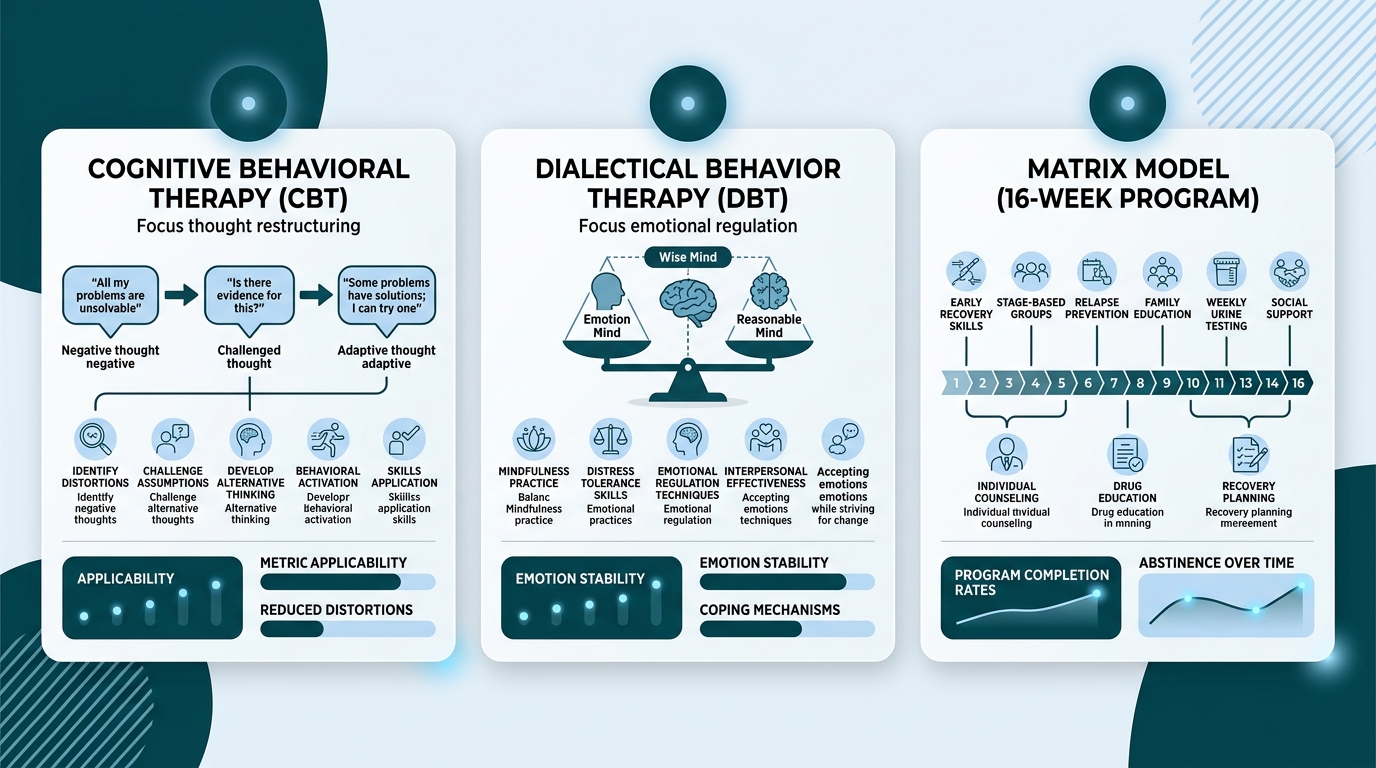
Evidence-based therapies for treating co-occurring disorders at Blue Coast Behavioral Health.
This combination of evidence-based modalities allows us to provide dual diagnosis treatment Newport Beach residents can rely on for comprehensive care. We personalize each treatment plan based on thorough clinical assessment, ongoing progress monitoring, and client feedback throughout the program.
Common Co-Occurring Mood Disorders Treated in Newport Beach
Depression is among the most common co-occurring conditions we treat, often manifesting as persistent sadness, loss of interest in activities, and fatigue that compounds the challenges of early recovery. Anxiety disorders, including generalized anxiety and social anxiety, frequently accompany substance use as individuals may have relied on alcohol or drugs to manage overwhelming worry. Bipolar disorder presents unique treatment considerations because the mood fluctuations between depression and mania require careful medication management alongside therapy. Trauma-related conditions, such as post-traumatic stress disorder, are also prevalent among clients seeking dual diagnosis care.
At our Newport Beach facility, we assess for these mood disorders through structured clinical interviews and evidence-based screening tools during the intake process. Our integrated treatment approach ensures that therapy targets both the substance use behaviors and the underlying mental health symptoms that contribute to the cycle of addiction. These therapies form the foundation of our dual diagnosis program, which we tailor to each client through flexible levels of care.
What to Expect from Outpatient Rehab: Costs, Insurance, and Daily Life
Entering rehab in Newport Beach, CA is a significant step toward lasting wellness, and understanding the practical aspects of treatment can make the decision less daunting. Whether you’re considering an Intensive Outpatient Program (IOP) or a Partial Hospitalization Program (PHP), knowing what a typical day looks like, how to manage costs, and whether you’ll need detox first can help you feel prepared and confident.
A Typical Day in an Intensive Outpatient Program
A structured yet flexible schedule defines the intensive outpatient experience. At Blue Coast Behavioral Health, we design daily routines in outpatient rehab in Newport Beach to balance powerful therapeutic work with your personal and professional responsibilities. A typical day in our IOP, which runs 3-4 hours per day, 3-4 days per week, begins with a mid-morning group check-in, fostering a supportive community from the start. The morning continues with a 90-minute group therapy session, followed by a 30-minute individual session where you work one-on-one with your counselor. After a structured lunch break, you return for a 30-minute skills group focused on practical tools like relapse prevention and coping strategies. For those with dual diagnosis treatment in Newport Beach, we integrate mental health support directly into these sessions, addressing co-occurring mood disorders alongside substance use.
The following table compares the daily life and time commitments of an IOP and PHP to help you visualize the differences.
| Feature | CBT | DBT | Matrix Model |
|---|---|---|---|
| Primary focus | Identifying and changing negative thought patterns | Emotional regulation and interpersonal skills | Structured 16-week program for stimulant addiction |
| Key techniques | Cognitive restructuring, behavioral activation, journaling | Mindfulness, distress tolerance, opposite action | Group sessions, family education, urine testing |
| Suitable for co-occurring | Yes – widely used for depression & anxiety with SUD | Yes – especially effective for borderline personality & mood disorders | Moderate – often supplemented with individual therapy |
A Partial Hospitalization Program offers a more intensive daily structure when a higher level of support is needed. The day begins at 8:00 a.m. with a medical check-in, followed by two 90-minute group therapy sessions, a 30-minute individual session, and a full hour of psycho-education. PHP clients spend 5-6 hours at our facility, 5 days per week, with evenings and weekends free. Our team follows industry standards promoted by the National Association of Addiction Treatment Providers to guide these program structures, and we adhere to all California Department of Health Care Services regulations for licensed treatment providers. Both levels of care allow you to apply recovery skills in real-world settings while receiving professional support.
How Much Does Outpatient Rehab in Newport Beach Cost?
Outpatient rehab in Newport Beach costs vary based on the level of care you need, the duration of your program, and your insurance coverage. An IOP is generally less expensive than a PHP due to the reduced number of treatment hours, and both options are more affordable than inpatient care because you live at home and manage some daily expenses independently. For a personalized cost estimate, explore our newport beach ca rehab programs. We work closely with major insurance providers and offer a free, no-obligation insurance verification to help you understand your coverage and any potential out-of-pocket expenses before you begin treatment. Our admissions team can also discuss sliding scale options and payment plans, ensuring that cost does not stand in the way of receiving high-quality care in Newport Beach.
Does Insurance Cover Drug and Alcohol Rehab in Newport Beach?
Yes, most health insurance plans provide coverage for substance use treatment. Under the federal Mental Health Parity and Addiction Equity Act, insurers are required to offer addiction treatment benefits that are comparable to their medical and surgical coverage. This means that outpatient services, therapy sessions, and other essential components of your plan are likely covered, though the specifics depend on your individual policy. We encourage you to verify your benefits by contacting Blue Coast Behavioral Health directly. Our team handles the insurance verification process at no cost, communicating with your provider to clarify deductibles, copays, and any authorization requirements so you can focus entirely on your recovery.
How to Know if You Need Detox Before Outpatient Treatment
Determining the appropriate starting point for treatment is a medical decision. If you experience significant withdrawal symptoms–such as anxiety, nausea, tremors, or, in severe cases, seizures–when you stop using substances, a medical detox or a brief residential stay may be necessary before stepping down to an outpatient program. Our newport beach drug rehab programs begin with a professional assessment to determine if detox is needed. Our clinical team evaluates your substance use history, physical health, and psychological state to recommend the safest and most effective level of care. We encourage you not to make this determination alone; a brief, confidential assessment with a qualified provider is the most reliable way to start your recovery on the right path. Start Your Sobriety Journey Today by reaching out for a free, no-pressure evaluation.
This site and its content are not a substitute for professional medical or psychiatric care.
Building Your Long-Term Recovery Plan After Outpatient Treatment
A long-term recovery plan is a personalized roadmap for maintaining sobriety–not a one-size-fits-all schedule. After completing a structured rehab newport beach ca program, such as the one at Blue Coast Behavioral Health, you will need a clear aftercare strategy to navigate the critical first 12 to 18 months of recovery.
While outpatient treatment equips you with essential coping tools, sustained sobriety requires a structured aftercare plan. According to NASADAD guidelines, continuing care is vital for preventing relapse and reinforcing the skills learned during formal treatment. Our clinical team works collaboratively with each client to design an individualized plan that provides a framework for long-term success.
Relapse Prevention Groups: These open-ended groups, typically meeting weekly or bi-weekly, provide a supportive environment to build accountability and peer support. They focus on shared experiences and practical strategies for managing triggers, and they are widely available as a low-cost or insurance-covered option.
Step-Down Programs: For clients transitioning from an Intensive Outpatient Program (IOP) to standard outpatient rehab in Newport Beach, a step-down program offers a gradual transition. Meeting one to two times per week for a defined period of 4 to 12 weeks, this structure reduces session frequency while maintaining clinical accountability.
Ongoing Individual Therapy: For deeper work, weekly or bi-weekly individual therapy supports advanced coping skill development, trauma processing, and the long-term management of co-occurring disorders. This is particularly important if you are continuing dual diagnosis treatment Newport Beach beyond the initial rehab phase. Our facility’s tele-therapy service also makes it possible to continue this work virtually.
The following comparison outlines these core aftercare options in greater detail.
| Aspect | IOP | PHP |
|---|---|---|
| Time at facility | 3-4 hours, 3-4 days per week | 5-6 hours, 5 days per week |
| Morning routine | Attend program mid-morning; start with group check-in | Start with medical check & group at 8:00 a.m. |
| Typical therapy mix | 1 group (90 min) + 1 individual (30 min) + skills group (30 min) | 2 groups (90 min each) + individual session (30 min) + psycho-education |
The most effective aftercare plans often combine two or three of these options over time. Your clinical team at Blue Coast Behavioral Health will help you design a personalized schedule.
Frequently Asked Questions About Rehab in Newport Beach, California
What types of programs do you offer? We provide a full continuum, including inpatient detox, residential care, PHP, IOP, and newport beach drug rehab. Our outpatient rehab in Newport Beach is designed to fit your daily life.
How much does treatment cost and do you take insurance? We accept most major insurance plans and offer flexible payment options. Please contact us directly for a confidential benefits verification.
How long does treatment last? The length of stay depends on your individual needs. Common durations are 30, 60, or 90 days.
What is dual diagnosis treatment? Our dual diagnosis treatment Newport Beach simultaneously addresses substance use and co-occurring mental health conditions like anxiety or depression.
Take the Next Step Toward Recovery
Take the next step toward healing with rehab in Newport Beach, CA. Call today or visit our admissions page to start your sobriety journey today and pursue the freedom of recovery.
This article was researched and written with the assistance of AI tools.
Resources
Find SAMHSA Crisis Support and Treatment Directory
Discover NAATP Directory of Trusted Treatment Providers
Explore NAADAC Continuing Education for Addiction Professionals
Discover NASADAD Block Grant Advocacy and Policy Briefs
Explore California DHCS Medi-Cal Enrollment and Licensing

Newport Beach
CA
92660