Benadryl Misuse: Warning Signs, Risks, and When to Seek Addiction Treatment
Many adults reach for an over-the-counter nighttime medicine during a stressful week, after travel, or when a cold makes sleep difficult. Occasional use as directed is not the same as misuse, and using a sleep aid does not automatically mean someone has an addiction. Still, patterns can change. Taking more than the label directs, using a medicine nightly for long periods, combining it with alcohol, or feeling unable to sleep without it can signal that it is time to take a closer look.
For people in Orange County, Irvine, Huntington Beach, and nearby Southern California communities, this can be an uncomfortable subject to raise. The goal is not to apply a label or create shame. It is to recognize safety risks early, understand what may be driving the pattern, and find practical support when sleep medication use is affecting health, relationships, work, or daily life.
Can Over-the-Counter Sleep Aids Become Habit-Forming?
Some over-the-counter (OTC) sleep aids contain sedating antihistamines, most commonly diphenhydramine or doxylamine. Diphenhydramine is the active ingredient in Benadryl and in many “PM” or nighttime products. Doxylamine is found in certain other sleep aids and nighttime cold products. These medicines can cause drowsiness, but they are generally intended for short-term, occasional sleeplessness rather than ongoing treatment of chronic insomnia.
It is important to use precise language. Misuse means using a medication in a way that differs from its directions or intended purpose, such as taking extra doses, taking it during the day for its sedating effects, or combining it with alcohol. Reliance may describe a psychological pattern in which a person feels they cannot sleep, relax, or function without taking the product. A substance use disorder involves a more persistent, clinically significant pattern of use despite harm or loss of control.
Antihistamine sleep aids are not typically associated with addiction in the same way as alcohol, opioids, or certain prescription sedatives. However, that does not make escalating use harmless. A person may begin to rely on a nighttime medication as a coping tool for anxiety, grief, trauma symptoms, racing thoughts, or untreated insomnia. They may take more over time because the original amount no longer seems to work as well, or worry that they will not sleep at all without it. This can create a difficult cycle even if the person does not meet criteria for an OTC sleep aid addiction.
When use is tied to alcohol, cannabis, opioids, benzodiazepines, or other substances, the assessment becomes more urgent. In that situation, care may need to address the whole substance-use pattern rather than focusing only on the sleep aid.
Which Nighttime Medicines Are Most Often Misused?
Not every product marketed for sleep contains the same ingredients. Reading the active-ingredient section matters, especially because a person may unintentionally take duplicate ingredients from more than one product. Common products involved in over the counter sleep aid misuse include:
- Diphenhydramine products: Benadryl and many generic nighttime sleep aids contain diphenhydramine. It may also appear in combination products marketed for nighttime cold, allergy, or pain relief.
- Doxylamine sleep aids: Doxylamine is another sedating antihistamine used in some OTC products for short-term sleep difficulty.
- “PM” pain relievers: Some nighttime pain products combine a pain reliever with a sedating antihistamine. Taking another antihistamine alongside one of these products can increase risk.
- Nighttime cold and flu medicines: These may contain multiple active ingredients. Using them solely for sleep, without cold symptoms, or taking additional sleep aids with them can create avoidable medication risks.
- Other household or OTC substances: Some people experiment with readily available products for sedation, dissociation, or intoxication. Blue Coast Behavioral Health discusses additional household items people may misuse to get high and why seemingly accessible substances can still cause serious harm.
“Natural” does not always mean risk-free, either. Supplements and products marketed for sleep can interact with medications or alcohol. A pharmacist or medical provider can help someone review products safely, particularly if they take other prescriptions or have a chronic health condition.

What Are the Warning Signs of OTC Sleep Aid Misuse?
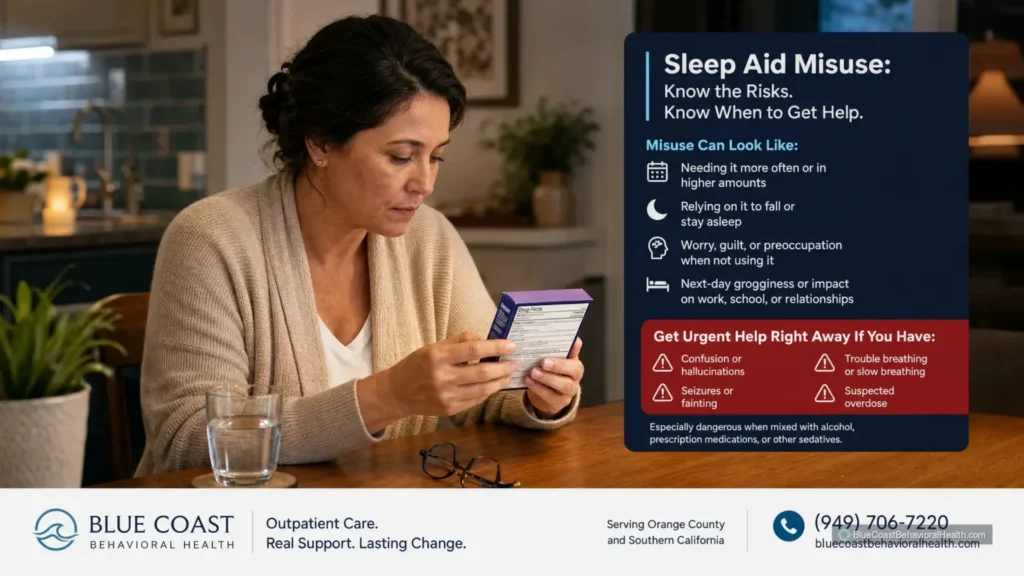
One isolated night of taking a labeled OTC sleep aid is usually not the concern. The concern is a repeated pattern of increasing use, unsafe combinations, or consequences that are becoming harder to ignore. Warning signs may include:
- Taking more than the recommended amount or taking doses earlier in the evening to feel sedated sooner.
- Using an antihistamine sleep aid every night or repeatedly extending use beyond short-term sleeplessness.
- Using the medication during the day to “check out,” manage anxiety, numb distress, or sleep through problems.
- Taking multiple nighttime products without checking whether they contain the same active ingredient.
- Feeling panicked, preoccupied, or unusually distressed at the thought of going to bed without the medicine.
- Experiencing morning grogginess, memory lapses, slowed thinking, falls, missed work, or driving problems but continuing to use the product.
- Hiding purchases, minimizing the amount used, running out early, or becoming defensive when a loved one asks about the pattern.
- Mixing sleep aids with alcohol, cannabis, opioids, benzodiazepines, or other sedating medications.
- Using the product despite worsening mood, confusion, agitation, or relationship conflict.
These signs do not prove that a person has a substance use disorder. They do indicate that the pattern deserves an honest conversation with a qualified professional. Frequent sleep-aid use can also be a sign that another concern needs attention, such as chronic insomnia, depression, anxiety, trauma-related hypervigilance, pain, grief, shift-work disruption, or alcohol use.
What Reliance Can Look Like in Daily Life
Reliance often starts quietly. Someone may tell themselves, “I only need it this week,” but the product remains on the nightstand for months. Another person may take it after drinking because they want to fall asleep quickly. A family member may notice that their loved one seems confused in the morning, falls asleep during conversations, or has become less reliable at work.
Rather than arguing over whether the person is “addicted,” it can be more helpful to ask practical questions: Is the medication being taken as directed? Is the amount increasing? Is alcohol involved? Is sleep getting worse without the product? Is the person safe to drive, work, care for children, or be alone after taking it? Answers to those questions can guide the next step.
Why Mixing Sleep Aids With Alcohol or Other Drugs Is Dangerous
Mixing sleep aids with alcohol can be dangerous even when the sleep aid was purchased without a prescription. Alcohol itself can impair judgment, coordination, memory, and breathing. Sedating antihistamines can add to drowsiness and mental impairment. Together, they may increase the risk of falls, accidents, blackouts, vomiting while overly sedated, confusion, and unsafe decisions.
The risk can be even greater when OTC sleep aids are combined with opioids, benzodiazepines used for anxiety or sleep, muscle relaxants, prescription sleep medications, or other sedating substances. These combinations can make a person profoundly drowsy and may interfere with normal breathing. People should not assume a combination is safe just because each product is legal or available at home.
Alcohol can also disrupt normal sleep architecture. It may seem to help someone fall asleep initially, but sleep is often more fragmented later in the night. This can reinforce a cycle of drinking, taking nighttime medication, waking poorly rested, and reaching for more substances the next evening.
If alcohol use is part of the concern, stopping suddenly without a medical assessment may not be safe for everyone. People who drink heavily or regularly, have had withdrawal symptoms before, or use alcohol with other sedatives should seek professional guidance. Blue Coast Behavioral Health can help families understand alcohol detox options in Orange County when withdrawal risk or alcohol-related medical needs may require a higher level of care.

When Is Medical Help or Emergency Care Needed?
Do not wait for an outpatient appointment if there is a possible overdose, severe reaction, or immediate safety concern. Call 911 or seek emergency medical care right away if someone has taken an excessive amount of a sleep aid, mixed it with alcohol or drugs, or has any of the following symptoms:
- Confusion, severe agitation, delirium, or hallucinations
- Seizures
- Fainting, collapse, inability to stay awake, or extreme weakness
- Breathing problems, slowed breathing, bluish lips, or choking/vomiting while very drowsy
- Chest pain, a very rapid or irregular heartbeat, or severe dizziness
- Severe overheating, inability to urinate, markedly blurred vision, or other alarming physical symptoms
- Suicidal thoughts, self-harm behavior, or taking medication with the intent to cause harm
For a suspected poisoning or medication overdose in the United States, Poison Control can also provide immediate guidance at 1-800-222-1222. If there is any doubt about breathing, consciousness, seizure activity, or an intentional overdose, emergency services are the appropriate first response.
For non-emergency but concerning patterns, a medical provider can review the person’s medication list, health history, and symptoms. This is especially important for older adults, people with certain medical conditions, and anyone experiencing repeated falls, confusion, or memory changes. No article can determine whether a specific person should continue, taper, or stop a medication; individualized medication decisions should be made with a qualified clinician.
Can Outpatient Drug Rehab Help With Sleep Aid Misuse in Orange County?
Yes. Outpatient treatment may be a helpful fit when OTC sleep aid misuse is recurring, when alcohol or other substances are involved, or when someone needs structured help changing a pattern while continuing to live at home, work, attend school, or care for family. It can also be appropriate for people who are not sure whether they have an addiction but know that their use and sleep have become unmanageable.
At Blue Coast Behavioral Health, outpatient drug and alcohol rehab in Orange County can be individualized around the actual factors sustaining the behavior. Treatment may address substance-use patterns alongside insomnia, anxiety, depression, trauma, relationship stress, or other behavioral health concerns. A trauma-informed approach recognizes that medication or alcohol use may have started as an attempt to cope, while still helping a person build safer and more sustainable ways to manage distress.
Outpatient care commonly begins with a confidential assessment. The purpose is to understand what is being used, how often, whether substances are being mixed, whether medical withdrawal or detox evaluation is needed, and what support would be realistic for the person’s life. Depending on clinical needs, a plan may include individual counseling, group support, relapse-prevention work, family involvement when appropriate, and coordination with medical or mental health providers.
When Outpatient Care May Not Be the First Step
Outpatient treatment is not a substitute for emergency care or medically supervised withdrawal management when those are needed. A person may need urgent evaluation, detox support, or a more intensive setting if they are medically unstable, experiencing severe confusion or withdrawal symptoms, using high-risk combinations, unable to remain safe, or dealing with substantial alcohol dependence.
For someone whose sleep-aid use is intertwined with ongoing alcohol use, it may be useful to compare outpatient care with available alcohol rehab centers in Orange County. The appropriate level of care depends on safety, withdrawal risk, substance-use history, home support, mental health needs, and the ability to participate consistently in treatment.

Frequently Asked Questions About OTC Sleep Aid Misuse
Can Benadryl or other antihistamine sleep aids cause addiction?
Benadryl and other sedating antihistamines are not generally described as addictive in the same way as alcohol, opioids, or benzodiazepines. However, people can misuse them, become psychologically reliant on them for sleep or emotional escape, and continue using them despite harmful effects. Taking increasing amounts, using them outside label directions, or combining them with alcohol or sedatives warrants professional attention.
What are the signs that someone is misusing over-the-counter sleep medicine?
Common signs include taking more than directed, using the medication nightly or during the day, mixing it with alcohol or other drugs, using multiple products with overlapping ingredients, hiding use, and continuing despite confusion, memory problems, falls, next-day impairment, or problems at home and work. Feeling unable to sleep without the product is also an important signal to discuss with a provider.
Is it dangerous to take nighttime sleep aids with alcohol, opioids, or anxiety medication?
Yes. Combining sedating substances can increase impairment and may raise the risk of falls, accidents, loss of consciousness, and breathing problems. Opioids and benzodiazepines are particularly concerning when mixed with alcohol or sedating sleep products. Severe drowsiness, confusion, slow breathing, fainting, or trouble waking someone should be treated as an emergency.
Should someone stop taking an OTC sleep aid suddenly if they have been using it every night?
A person should not rely on general online advice to make an individual medication decision. A medical provider or pharmacist can help assess the product, dose, length of use, other medications, alcohol use, and underlying sleep concerns. If alcohol, opioids, benzodiazepines, or other substances are also involved, professional assessment is particularly important because withdrawal and interaction risks may be present.
When is outpatient drug rehab a good fit for sleep aid misuse in Orange County?
Outpatient treatment can be a good fit when someone is medically stable but needs help interrupting a recurring misuse pattern, addressing substance mixing, rebuilding sleep and coping routines, or treating co-occurring anxiety, trauma, depression, or alcohol use. It is also appropriate when a family wants a clear clinical opinion before the situation worsens. If there are overdose symptoms, severe withdrawal concerns, or immediate safety risks, emergency or detox evaluation should come first.
A Supportive Next Step for You or Someone You Love
Relying on a nighttime medicine does not mean a person has failed, and it does not require certainty that they are “addicted” before asking for help. It may simply mean that sleep, stress, mental health symptoms, or substance use deserve more support than an OTC product can provide.
If you are concerned about Benadryl misuse, doxylamine sleep aid risks, nighttime medicine dependence, or mixing sleep aids with alcohol, Blue Coast Behavioral Health is available 24/7 for a confidential and practical conversation. Would it help to speak with someone directly about whether this pattern may need medical evaluation, detox support, or outpatient drug rehab in Orange County? Call 949-776-2127.