
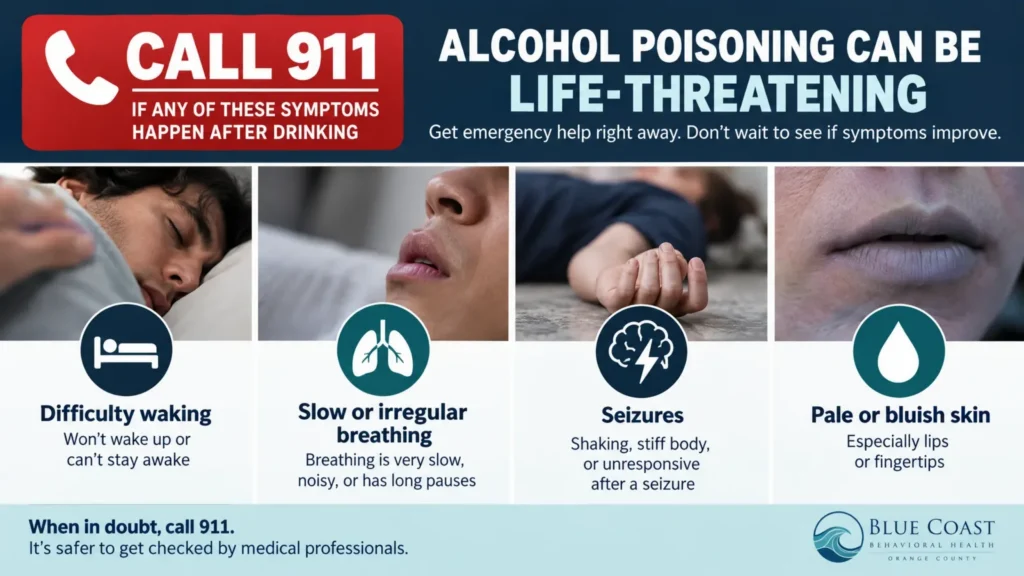
Could It Be Alcohol Poisoning? When to Call 911
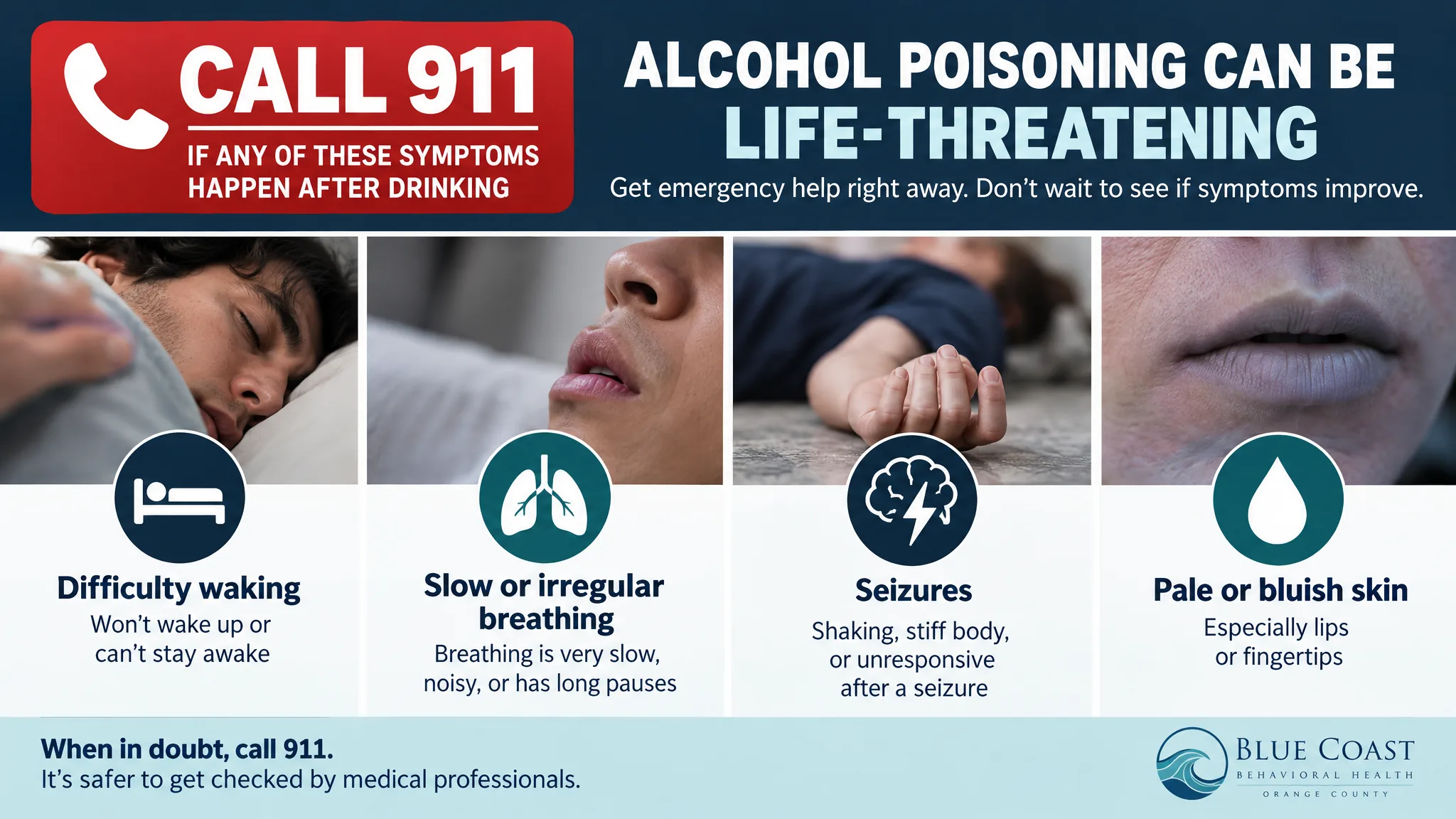
If you suspect alcohol poisoning, call 911 rather than trying to manage it as a hangover. Do not assume difficulty waking, slow or irregular breathing, a seizure, or severe confusion is something to sleep off. Describe what is happening to the dispatcher; you do not need to identify the cause before asking for emergency help.
Describe what you can observe
Start with your exact location and what concerns you most. Use plain descriptions rather than trying to diagnose alcohol poisoning or withdrawal:
- Responsiveness: Can you wake the person? Can they answer you and stay awake?
- Breathing: Does it seem slow or irregular? Are there pauses, or are they not breathing normally?
- Behavior: Are they confused, unable to explain where they are, or having a seizure?
- Other observations: Report vomiting, choking, or changes in skin color.
Do not delay the call to count drinks, find bottles, or decide whether enough symptoms are present. If you are worried about your own condition, call 911, explain that you have been drinking, and do not drive yourself.
Let the dispatcher guide the immediate response
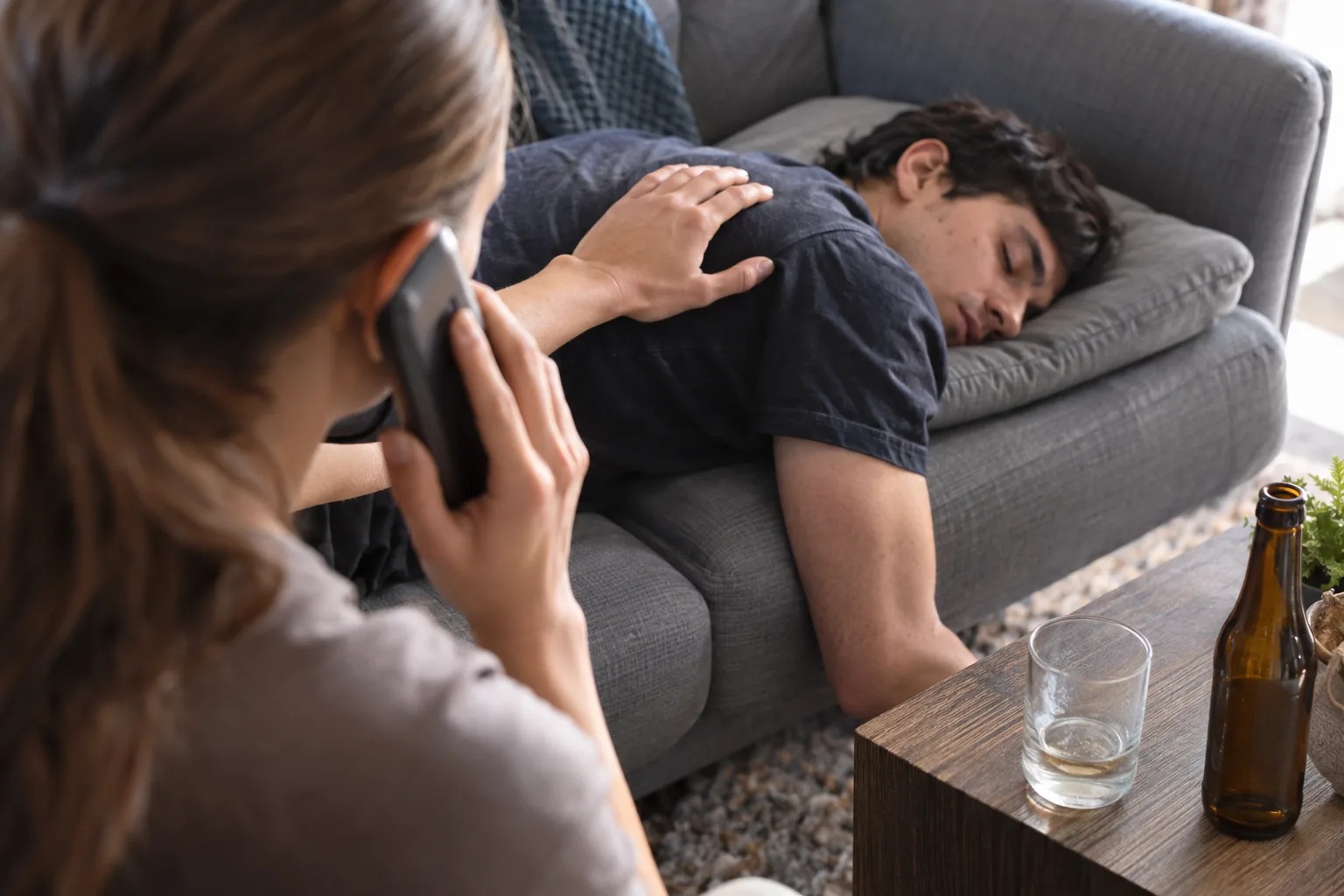
Put the phone on speaker if possible. Stay with the person when it is safe to do so, report changes in breathing or responsiveness, and follow the dispatcher’s instructions. Ask directly what to do about positioning, breathing support, or a seizure rather than improvising.
Do not postpone emergency help to try coffee, a cold shower, walking, or sleep. The immediate decision is not which home hangover remedy to use; it is how to get emergency assessment.
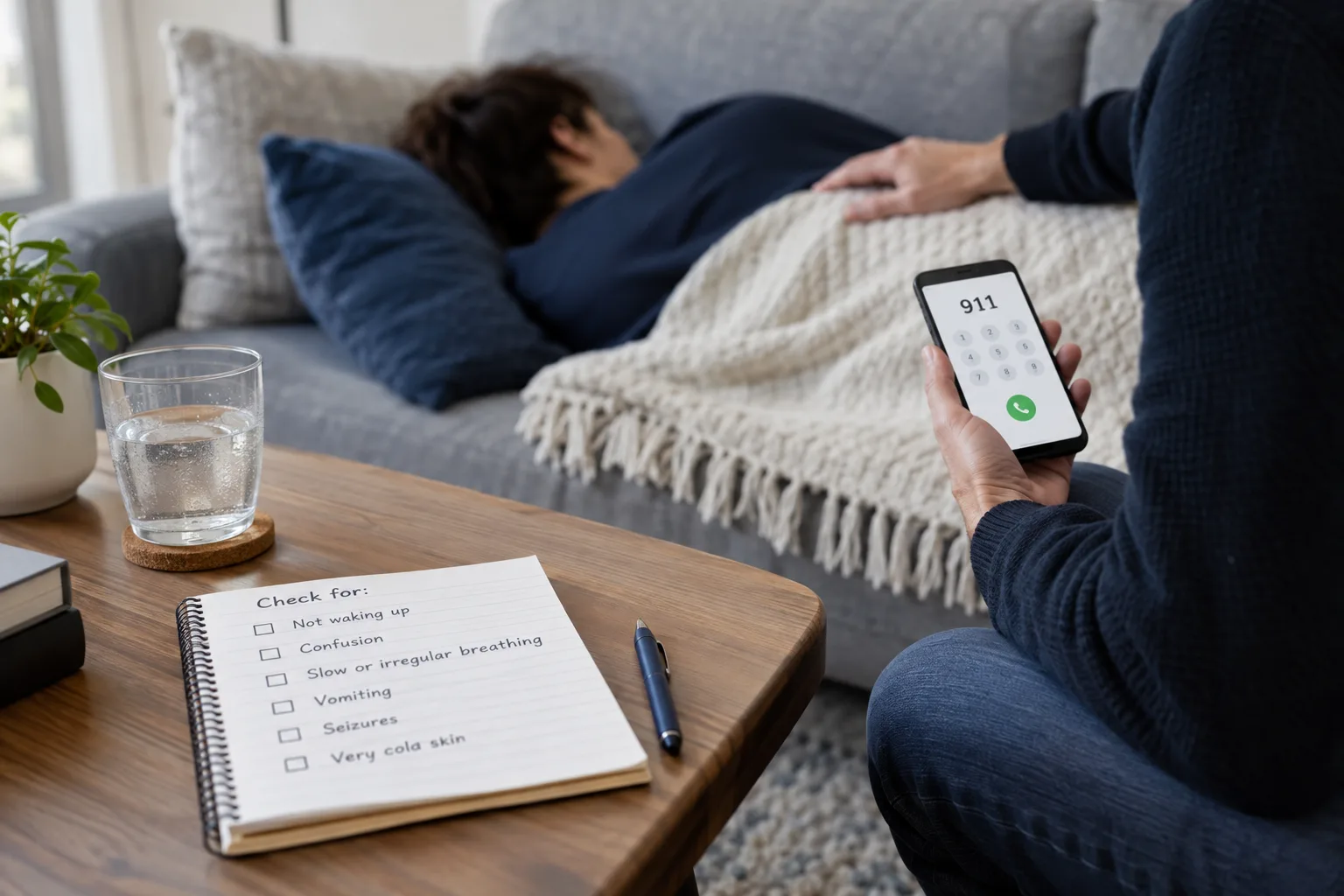
Tell responders what you know about alcohol, medicines, or other substances taken and approximately when. If the person recently reduced or stopped regular drinking, mention that too. Say when a detail is unknown rather than guessing.
Keep follow-up separate from the emergency
After emergency assessment, ask the treating clinician what monitoring or follow-up is needed. You can then review questions about medically supervised detox after emergency care and, if recommended, choosing outpatient alcohol treatment after assessment.
For a non-emergency follow-up discussion, call Blue Coast Behavioral Health at 949-776-2127 to ask about treatment options and guidance on detox levels of care. Use the emergency clinician’s recommendations to frame that conversation.