

Memory Gaps After Drinking: What to Tell a Clinician
If you cannot remember part of a drinking episode, arrange a professional assessment rather than deciding for yourself that you need rehab—or that nothing is wrong. Start with immediate safety, then describe the missing memories and any concerns about your drinking. Ask the clinician what needs evaluation and whether alcohol treatment is appropriate.
Separate missing memories from losing consciousness
When describing a “blackout,” distinguish between not remembering events afterward and passing out or being unresponsive at the time. Report each separately rather than using the same label for both.
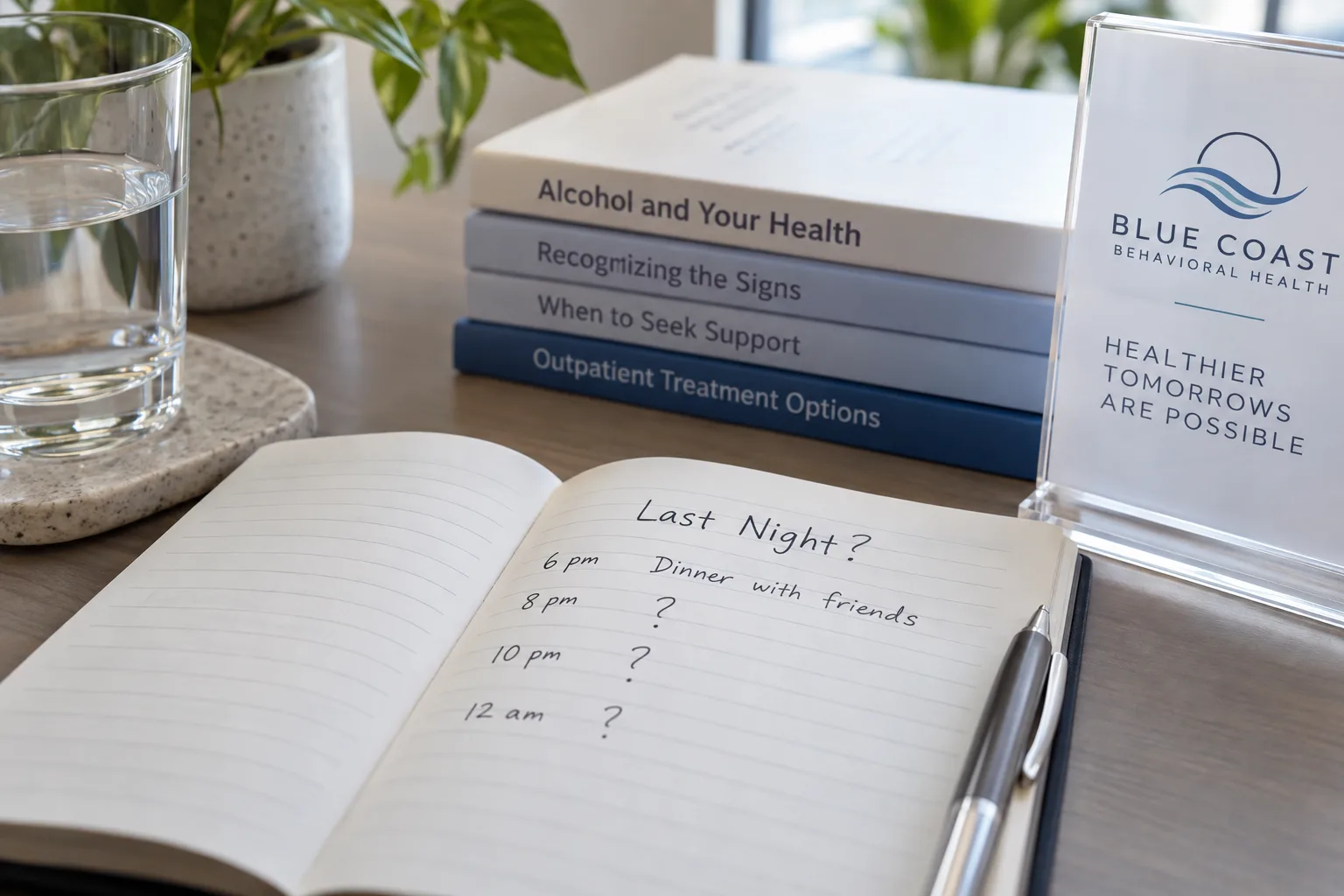
Write down what you remember before and after the gap. If someone was present, ask what they observed: Were you talking or responding? Did you fall? Were you difficult to wake? Keep their observations separate from your own recollections, and leave unknown details marked as unknown.

Include any concerns about injuries, driving, decisions you cannot account for, or other unsafe situations. Do not assume that someone appearing awake resolves those concerns, or that alcohol explains everything that happened.
Address immediate safety before treatment planning
If someone is unresponsive or having trouble breathing, call 911 now. Describe what you see and follow the dispatcher’s instructions. Do not delay the call to reconstruct the drinking episode or contact a rehab provider.
For related guidance, see signs of alcohol poisoning that require 911. If confusion continues or an injury is suspected after the episode, seek medical advice rather than waiting for a routine substance-use appointment.
Bring a short account—not a self-diagnosis
You do not need a complete reconstruction before asking for help. Prepare these details for an assessment:

- When the memory gap happened and whether there have been other episodes.
- What you drank, your best estimate of the amount, and any medicines or other substances taken.
- Injuries, missed responsibilities, unsafe situations, or concerns reported by others.
- Attempts to limit drinking and anything you notice when you reduce or stop.
Ask specifically whether withdrawal assessment is needed before making a plan to stop drinking. Review why alcohol withdrawal needs medical assessment.
Call Blue Coast Behavioral Health at 949-776-2127 to request a substance-use assessment and discuss whether outpatient alcohol treatment is appropriate. If recommended, consider these questions about fitting outpatient alcohol treatment into your schedule. Confirm available services, insurance coverage, and expected costs before scheduling.