

How to Help a Loved One After Relapse Without Taking Over Their Recovery
Offer practical help with getting care, but decline to hide substance use or supervise every recovery decision. Start with safety, suggest a calm conversation, and choose a boundary about what you will do—not a demand that you control someone else’s behavior.
Separate immediate safety from the recovery conversation
If anyone is in immediate danger, call 911 and follow the dispatcher’s instructions. Do not delay emergency help to discuss treatment or set conditions. For related guidance, see what to do during a suspected opioid overdose.
For non-emergency planning, ask a medical professional whether withdrawal assessment or detox care is needed rather than taking on home detox supervision yourself. Review these questions about alcohol withdrawal and medical assessment.

Offer help without offering a cover story
Choose a time when your loved one can participate safely. Describe the concern without demanding a confession: “I’m worried about the drinking since treatment ended. Would you contact your treatment team? I can sit with you while you call.”
Listen to their response rather than arguing about whether the use “counts” as relapse. Keep your offer specific:
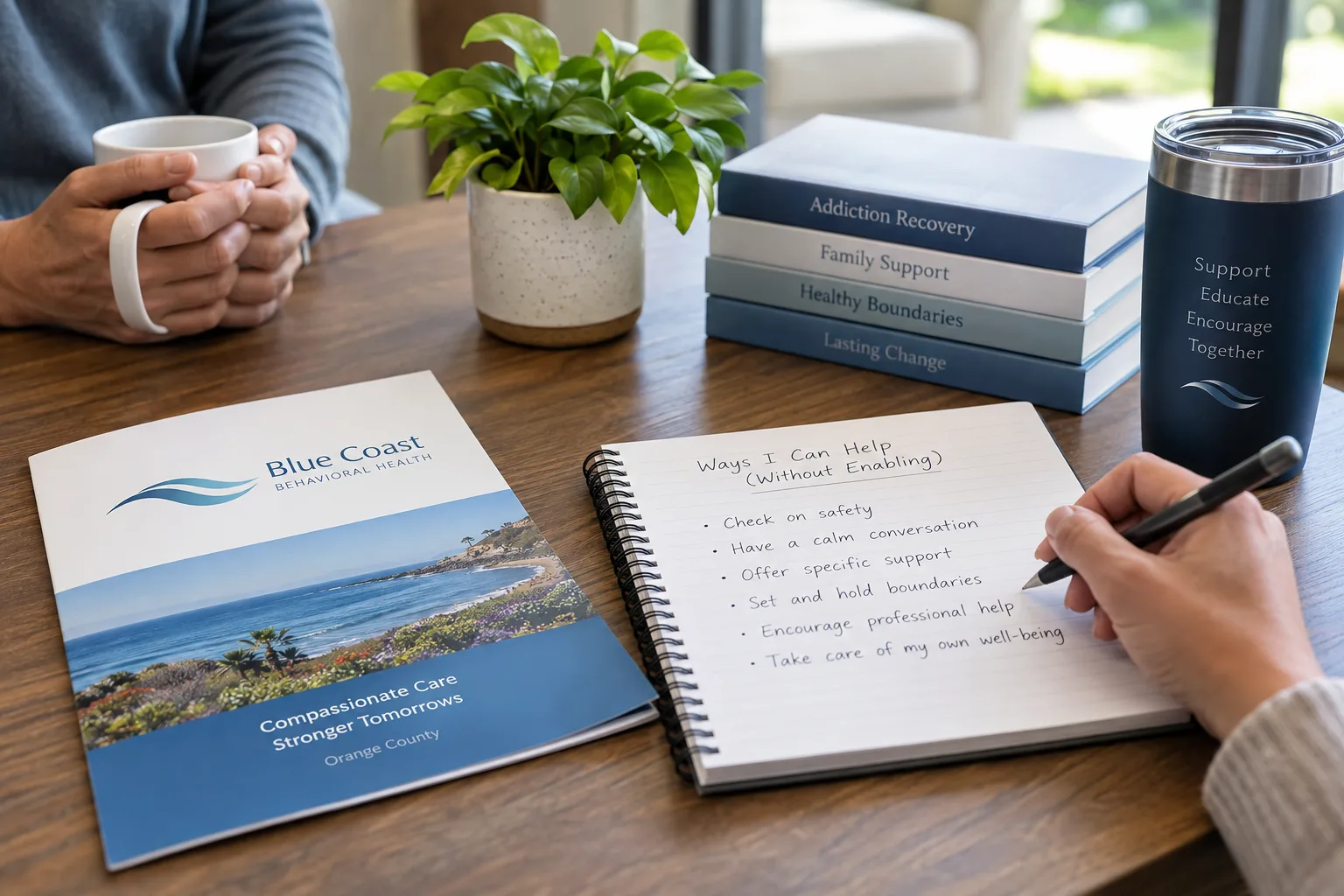
- Help with access: Offer a ride, help writing questions, or company during a call if they want it.
- Decline concealment: Do not offer to lie to an employer, invent excuses, or buy substances.
- Leave treatment decisions with them and their clinician: Offer assistance without making yourself responsible for attendance or monitoring every choice.
Pick one boundary you can keep
State your own action clearly: “I won’t give you cash. I can buy groceries or help with transportation to an appointment.” This names both a limit and an offer; it does not require a promise of sobriety in exchange.
Choose a limit you can follow through on safely, not a threat during an argument. Do not make emergency help conditional on accepting treatment. If a conversation becomes threatening, prioritize your safety. You can also seek counseling or family support for yourself, whether or not your loved one accepts help.

Next, encourage your loved one to reconnect with their treatment team and ask whether the care plan needs reassessment. If considering Blue Coast Behavioral Health, they can call 949-776-2127 to request a substance-use assessment and discuss available outpatient options. With their participation, help prepare questions for an insurance verification call and confirm coverage and expected costs before scheduling.