
Signs You May Need Alcohol Rehab Even If You Are Still Managing Work and Family
It is possible to keep showing up for work, parenting responsibilities, classes, social events, and other commitments while alcohol is creating growing problems behind the scenes. Many people in Orange County do not consider asking for help until there has been a visible crisis. But alcohol concerns do not have to reach that point before they deserve attention.
If you are questioning your drinking, the question is not whether you have “hit bottom” or whether others can see a problem. A more useful question is whether alcohol is taking up more space in your life, health, relationships, or peace of mind than you want it to. A private, individualized assessment can help clarify practical next steps without judgment.
What Does “Functional Alcoholic” Mean?
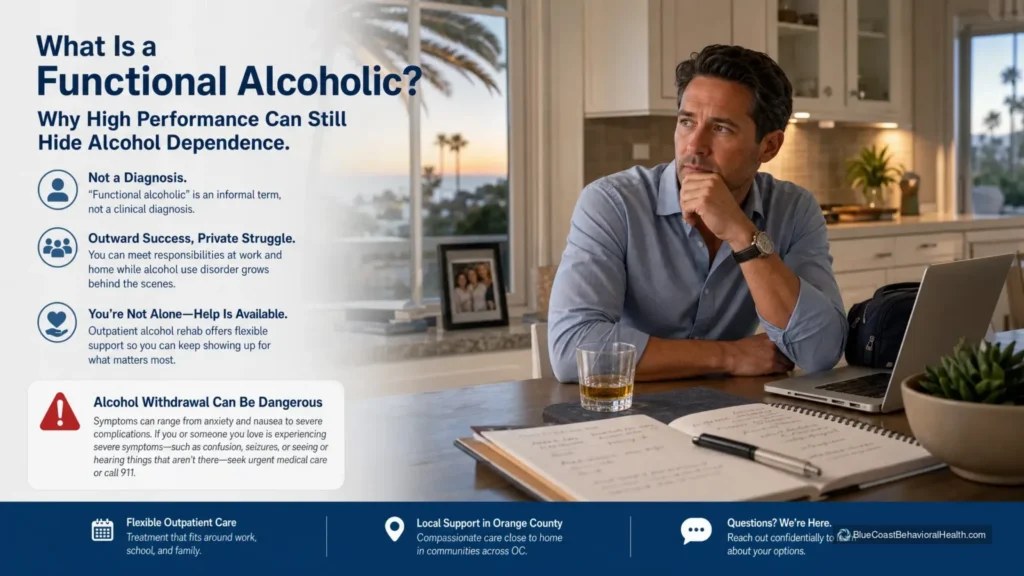
“Functional alcoholic” is a common informal term, but it is not a clinical diagnosis. People may use it to describe someone who drinks heavily or regularly while still appearing successful or stable from the outside. They may hold a job, pay bills, care for children, earn good grades, maintain a home, or stay socially active.
The phrase can feel reassuring because it suggests that drinking is under control as long as major responsibilities are being met. In reality, outward performance does not tell the full story. A person can be productive and still experience alcohol-related health concerns, emotional distress, relationship tension, risky situations, or an increasing inability to cut down.
Clinical professionals look for patterns consistent with alcohol use disorder rather than labels. These patterns can include difficulty controlling alcohol use, cravings, drinking despite consequences, tolerance, withdrawal symptoms, and giving alcohol priority over activities or relationships that once mattered. The number of drinks alone does not tell the entire story; the impact of drinking and the ability to choose differently matter too.
For example, an Irvine professional may never miss a deadline but spend each morning anxious, dehydrated, and determined not to drink that night—only to repeat the same pattern after work. A parent in Huntington Beach may be present at school drop-off and weekend activities but organize every evening around drinking privately after the children are asleep. Neither situation needs to become a public emergency before a conversation about support is appropriate.
Can Someone Be Successful and Still Have Alcohol Use Disorder?
Yes. Job performance, income, a stable address, family involvement, and an active social life are not measures of whether alcohol use is healthy or manageable. Some people compensate for alcohol’s effects by working longer hours, avoiding morning plans, carefully hiding bottles, drinking only at home, or limiting their social circle to people who drink similarly.
That compensation can make alcohol use disorder symptoms harder to recognize. A person may tell themselves:
- “I am not drinking during work, so it cannot be serious.”
- “I only drink wine, beer, or something socially acceptable.”
- “I have never gotten a DUI or lost my job.”
- “Everyone I know drinks this way.”
- “I can stop whenever I need to.”
These thoughts are understandable, especially in social or professional environments where drinking is normalized. Still, the absence of an obvious external consequence does not erase private consequences. Someone may be struggling with sleep, depression, irritability, secrecy, memory gaps, anxiety, physical discomfort, or repeated broken promises to themselves.
Alcohol use can also affect people differently depending on their physical health, medications, mental health history, trauma history, family history, and frequency of use. Treatment recommendations should follow an individualized clinical assessment, not assumptions based on someone’s job title, appearance, or ability to manage a household.
Functional Alcoholic Signs to Take Seriously
People sometimes expect alcohol dependence to look dramatic. More often, the early signs are quieter and repetitive. They may show up as a pattern of rationalizing, recovering, hiding, and promising to make a change later.
Changes in Control and Priorities
One of the more meaningful functional alcoholic signs is a growing gap between intentions and behavior. You may decide to have one or two drinks, take a few nights off, or stop at a particular time, then find that alcohol use regularly exceeds the plan.

- Drinking more, longer, or more often than intended
- Trying to cut down repeatedly without lasting success
- Thinking about alcohol throughout the day or planning life around when drinking can begin
- Keeping alcohol available “just in case” or feeling unsettled when it is not accessible
- Choosing drinking over hobbies, exercise, rest, family time, or social plans that do not involve alcohol
These patterns do not mean a person is weak or lacks discipline. They can indicate that alcohol has become an increasingly automatic coping strategy or that the body has adapted to regular use.
Private Consequences That Others May Not See
Many high-functioning alcohol concerns are hidden because the consequences happen at home or internally. Consider whether alcohol is contributing to:
- Poor sleep, early waking, sweating at night, or waking with anxiety
- Frequent stomach upset, headaches, shakiness, fatigue, or difficulty concentrating
- Memory lapses, blackouts, or uncertainty about conversations from the night before
- Increased anxiety, low mood, irritability, or emotional numbness
- Drinking alone, hiding how much you drink, or minimizing alcohol use when asked
- Using alcohol to manage stress, loneliness, trauma-related distress, social anxiety, or sleep
- Financial strain from regular purchases, delivery orders, bars, or replacing hidden alcohol
A person may still attend a meeting, coach a child’s game, or prepare for an exam while feeling physically unwell and emotionally exhausted. The effort required to keep everything looking normal can be a sign that the situation is becoming difficult to sustain.
Relationship and Safety Concerns
Alcohol may also create friction long before a family member, friend, or employer identifies a major issue. You might notice more arguments with a partner, withdrawing from loved ones, becoming defensive when drinking is mentioned, or making promises you later regret.
Other concerns include drinking before driving, caring for children while impaired, mixing alcohol with prescription medications, drinking in situations where alertness is needed, or taking risks that would not feel acceptable when sober. These situations are worth addressing promptly, even if no one has been hurt and nothing “bad enough” has happened yet.
Why High Performance Can Delay Getting Help
High performance can be both a strength and a barrier. People who are used to solving problems independently may believe they should be able to solve their drinking without support. They may postpone help because they have a demanding job, a child who needs them, a professional reputation to protect, or family members who depend on them.
In Orange County, a busy schedule can make it easy to keep moving without pausing to assess alcohol’s role. Commutes, work travel, school demands, caregiving, networking events, and social gatherings can all create opportunities to delay a difficult conversation. Someone may wait for a “less busy” season that never comes.
Denial is not always deliberate. It can sound like comparing yourself to someone who appears to drink more, focusing only on external consequences, or treating a nightly pattern as normal because it has not yet interrupted work. The concern is not whether your life looks worse than someone else’s. It is whether alcohol is making your own life narrower, less healthy, or less aligned with your values.
Seeking an assessment early can be an act of responsibility, not an admission of failure. It gives you a chance to understand what is happening before alcohol causes more disruption. It also helps supportive family members move beyond arguments about labels and toward concrete questions: Is alcohol affecting health or safety? Has the person tried to cut down? Are there withdrawal concerns? What level of care would be appropriate?
When Alcohol Withdrawal Needs Medical Attention
Alcohol withdrawal safety note: If someone drinks heavily or regularly, suddenly stopping without medical guidance can be dangerous. Withdrawal risk varies widely, and it cannot be determined safely by willpower, job performance, or the appearance of being “functional.”
Alcohol withdrawal symptoms can begin after cutting down or stopping alcohol. Early symptoms may include anxiety, sweating, nausea, headache, shaking, trouble sleeping, irritability, or a racing heartbeat. These symptoms can worsen in some people.

Seek urgent medical care or call 911 immediately for severe symptoms such as seizures, hallucinations, severe confusion, extreme agitation, fainting, chest pain, severe vomiting, or signs of delirium. Do not leave a person alone if they are experiencing severe withdrawal symptoms or seem disoriented.
A history of withdrawal seizures, hallucinations, delirium, significant medical conditions, or frequent heavy alcohol use may increase the need for medical evaluation. Detox is not simply “getting through a few uncomfortable days.” It is a medical and safety consideration that should be evaluated individually.
For people who may need monitored withdrawal support, information about alcohol detox in Orange County can be a helpful starting point. A qualified provider can assess recent use, withdrawal history, physical health, medications, mental health symptoms, and home support before recommending the next level of care.
Do not attempt to manage potentially serious withdrawal alone because you need to be at work, care for family, or avoid disrupting plans. Protecting health and safety comes first. An assessment can help determine whether outpatient treatment is appropriate after withdrawal is stabilized or whether a higher level of medical care is needed first.
How Outpatient Alcohol Rehab Can Support Recovery in Orange County
Outpatient alcohol rehab can be a practical option for some adults who are medically stable and have a supportive environment, while needing structured help to change their relationship with alcohol. It allows clients to attend scheduled treatment while continuing to live at home and, when clinically appropriate, remain engaged with work, family, or school.
It is important to be clear: outpatient care is not right for everyone. The appropriate level of care depends on withdrawal risk, alcohol use patterns, medical and mental health needs, safety concerns, previous treatment experiences, home environment, and available support. An individualized assessment is the right place to begin.
For someone who is appropriate for outpatient treatment, care may include a combination of individual counseling, group therapy, relapse-prevention planning, behavioral health support, trauma-informed care, family involvement when helpful, and coordination around co-occurring anxiety, depression, or other mental health concerns. The goal is not simply to stop drinking for a short period. It is to build skills and support for responding differently to stress, triggers, emotions, routines, and relationship challenges.
What Flexible Treatment Can Address
Alcohol rehab while working may focus on the specific situations that make alcohol hard to step away from. For example:
- Ending the workday without relying on a drink to decompress
- Managing business dinners, weddings, holidays, or beach gatherings without losing sight of recovery goals
- Handling stress connected to parenting, caregiving, school, or relationship conflict
- Recognizing trauma-related triggers and building safer coping strategies
- Creating a plan for cravings, loneliness, boredom, or difficult emotions
- Repairing trust through consistent actions and healthier communication
Blue Coast Behavioral Health offers outpatient drug and alcohol rehab in Orange County for people who need compassionate, structured support without automatically assuming residential care is the only answer. For those closer to Irvine, resources on alcohol rehab in Irvine can provide additional local context. If you are comparing treatment settings, this overview of alcohol rehab centers in Orange County may also help you prepare questions for a provider.
What Happens During an Assessment?
An alcohol rehab assessment is a confidential conversation designed to understand your needs, not to assign a shame-based label. A clinician may ask about how often you drink, how much you drink on a typical occasion, whether you have tried to stop, prior withdrawal experiences, physical and mental health, medications, family support, work and caregiving responsibilities, and any safety concerns.
You may also be asked what you want to change. Some people call because they want to stop drinking completely. Others are unsure of their goal but know that their current pattern feels unsustainable. It is okay to arrive with uncertainty. The assessment process is meant to clarify options and identify a level of support that fits the clinical picture.

Frequently Asked Questions About High-Functioning Alcohol Use
Can you have alcohol use disorder if you still go to work and take care of your family?
Yes. Alcohol use disorder is not defined by whether someone has a job, raises children, earns good grades, or maintains a home. A person can meet responsibilities while also experiencing cravings, loss of control, tolerance, withdrawal, secrecy, health effects, relationship strain, or repeated difficulty cutting down. Continued functioning may hide the problem, but it does not rule it out.
What are the most common functional alcoholic signs?
Common signs include drinking more than planned, unsuccessful efforts to cut down, needing more alcohol to feel the same effect, drinking to manage stress or sleep, hiding alcohol use, feeling anxious or shaky when not drinking, blackouts, poor sleep, and continuing to drink despite tension at home or concerns about health. A repeated internal sense that drinking is no longer fully in your control is also important to take seriously.
How do I know whether I need alcohol detox before outpatient rehab?
You should not make that decision alone if you drink heavily or regularly, have had withdrawal symptoms before, or have medical or mental health concerns. A professional assessment can evaluate withdrawal risk and recommend whether detox, medical care, outpatient services, or another level of support is appropriate. Seek emergency care for severe symptoms such as seizures, hallucinations, severe confusion, or extreme agitation.
Can outpatient alcohol rehab work if I need to keep my job or care for my family?
For people who are medically stable and clinically appropriate for outpatient treatment, it can offer structured care while they continue important daily responsibilities. The exact schedule, therapy needs, and level of support should be based on an individualized assessment. If withdrawal risk, safety concerns, or the home environment make outpatient care unsafe or insufficient at first, another level of care may be recommended.
What happens during an alcohol rehab assessment in Orange County?
An assessment typically explores alcohol use patterns, past attempts to stop, withdrawal history, health and medication needs, emotional well-being, trauma history when relevant, daily responsibilities, support at home, and personal recovery goals. The purpose is to make a clinically informed recommendation—not to judge you for how your life looks from the outside.
Not Sure Whether Your Drinking Needs Treatment? Get a Clear, Private Answer
You do not have to identify as an “alcoholic” or wait for work, parenting, school, or a relationship to fall apart before asking for help. “Functional alcoholic” is an informal term, not a clinical diagnosis. Someone may continue meeting deadlines, caring for children, paying bills, or appearing put together while still experiencing alcohol use disorder symptoms or signs of alcohol dependence behind the scenes.
If you are drinking more than intended, hiding alcohol use, needing alcohol to relax or sleep, making promises to cut back that do not last, or dealing with private consequences such as anxiety, arguments, missed memories, health concerns, or guilt, it may be time to talk through what is happening. The same is true for family members who are worried about someone who seems successful on the outside but increasingly dependent on alcohol at home.
Withdrawal safety matters. Do not try to stop suddenly without medical guidance if you have been drinking heavily or regularly and develop shaking, sweating, nausea, racing heart, severe anxiety, confusion, hallucinations, seizures, or delirium. Severe alcohol withdrawal can be life-threatening. Seek urgent medical care immediately for seizures, hallucinations, confusion, severe agitation, chest pain, trouble breathing, or other serious symptoms. For planned support and an evaluation of withdrawal risk, explore alcohol detox in Orange County.
Outpatient alcohol rehab can offer a flexible path for people who need to continue working, attending school, or caring for family, but it is not automatically the right level of care for every situation. A recommendation should follow an individualized clinical assessment that considers your drinking pattern, withdrawal history, physical and mental health needs, home environment, and available support. Depending on those factors, a clinician may recommend outpatient services, detox, or a more structured setting. Orange County residents can review options for outpatient drug and alcohol rehab in Orange County and alcohol rehab centers in Orange County.
Would it help to speak with someone who can listen without asking you to label yourself first, answer practical questions about withdrawal safety, and help you understand whether outpatient alcohol rehab may fit your circumstances? Call Blue Coast Behavioral Health’s 24/7 team at 949-776-2127 for a private conversation and a specific next step based on your situation.