

Orange County Addiction Treatment: How to Choose the Right Level of Care
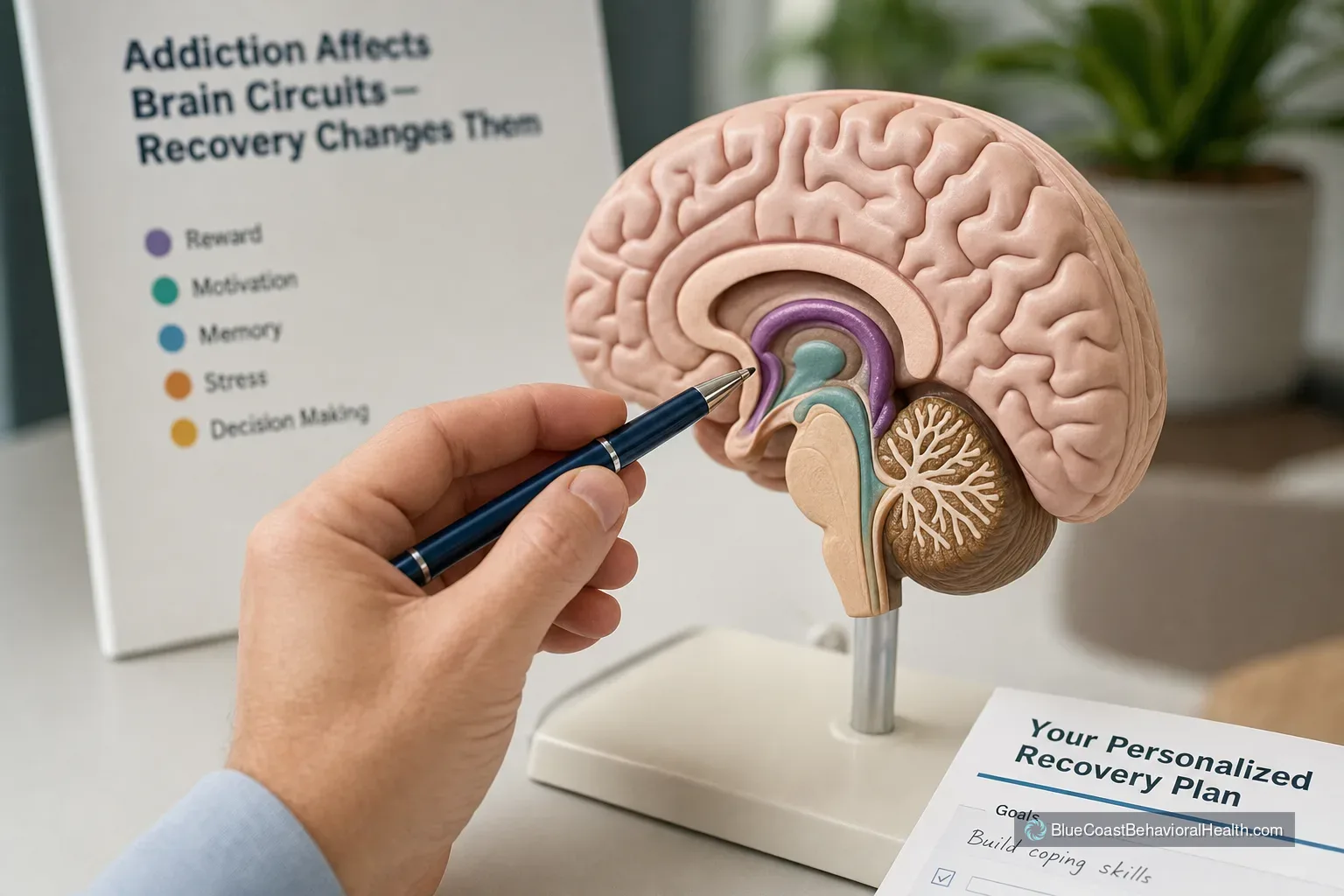
When alcohol or drug use begins to feel difficult to control, it is common to ask, “Why can’t I just stop?” That question can come with fear, frustration, or shame. But addiction is not a moral failure or proof that a person lacks willpower. It is a treatable health condition that can affect the brain systems involved in reward, stress, memory, habits, and decision-making.
Understanding how addiction affects the brain can make the next step feel clearer. It can also explain why caring people may continue using even when they genuinely want to change. For individuals and families in Orange County, Irvine, Huntington Beach, and surrounding Southern California communities, a clinical assessment can help determine whether outpatient treatment, medical detox, or a more structured level of support is appropriate.
How Does Addiction Affect the Brain?
Alcohol and drugs can affect the brain in different ways, depending on the substance, the amount used, how often it is used, a person’s health history, and many other factors. Still, many substances influence several of the same brain systems: the reward system, the stress response, memory and learning pathways, and the areas that help people pause, plan, and make decisions.
At first, using a substance may feel voluntary. Someone may drink to relax after work, use a drug to feel more energetic or confident, or take a substance to escape emotional pain. Over time, repeated use can teach the brain to associate the substance with relief, reward, connection, or survival. That learning process is one reason addiction and the brain are so closely connected.
The reward system
The brain’s reward system helps people notice and repeat experiences that feel important. Enjoyable activities such as sharing a meal, exercising, reaching a goal, or spending time with people we care about can activate this system. Alcohol and drugs may activate reward pathways more intensely or more directly than ordinary experiences.
With repeated use, the brain can begin to assign the substance a very high priority. Cues connected to use—a certain neighborhood, a stressful Friday afternoon, a group of friends, an argument, a smell, a song, or seeing alcohol in a store—can trigger powerful cravings. This is not simply “wanting it badly.” It is a learned brain-and-body response that can arise quickly, often before a person has fully thought through the consequences.
The stress system
Many people initially use alcohol or drugs to manage stress, anxiety, loneliness, trauma-related symptoms, grief, sleep problems, or emotional overload. The short-term relief can be real, but it may come at a cost. As use continues, the brain may become more reactive to stress and less able to return to a steady baseline without the substance.
This can create a difficult cycle: a person uses to feel better, then experiences more anxiety, irritability, low mood, restlessness, or discomfort when the substance wears off. The substance no longer has to produce pleasure to keep the cycle going. It may be used primarily to avoid feeling worse.
Memory and habit circuits
The brain is designed to learn patterns. Repeated substance use can become closely linked with routines such as driving home, finishing a shift, being alone at night, socializing, managing conflict, or preparing for sleep. Eventually, a person may reach for alcohol or drugs automatically, even when they had decided earlier that day not to use.
Habit is not an excuse for harmful behavior, but it helps explain why promises, regret, and good intentions may not be enough by themselves. Treatment helps people recognize these patterns, interrupt automatic responses, and build alternative routines that are more supportive of recovery.
Decision-making and self-control
Alcohol and drug use can affect concentration, impulse control, judgment, and the ability to weigh immediate relief against long-term goals. In moments of craving, stress, or withdrawal, the part of the brain focused on immediate survival and relief may feel louder than the part focused on consequences.
This is why someone may deeply value their job, family, health, or relationships and still return to use. Their values have not disappeared. Rather, the ability to act consistently with those values may be disrupted by cravings, emotional distress, conditioned habits, and substance-related changes in brain function.
Research from organizations such as the National Institute on Drug Abuse and the National Institute on Alcohol Abuse and Alcoholism supports the understanding of addiction as a chronic but treatable condition. A person does not need to “hit bottom” before seeking help. Difficulty controlling use, worrying about use, or seeing consequences build are all valid reasons to seek an assessment.
Why Alcohol and Drugs Can Become Hard to Stop
People often assume that stopping should be a matter of determination: if the consequences are serious enough, surely someone will stop. In reality, the effects of alcohol and drugs can make stopping more complicated, especially once the brain and body have adapted to regular use.
How alcohol affects the brain
Alcohol slows activity in the central nervous system. It can lower inhibitions, impair coordination and judgment, affect memory, and temporarily reduce feelings of tension for some people. With ongoing heavy or frequent drinking, the brain adapts to alcohol’s presence. When alcohol is suddenly removed, the nervous system may become overactive.
That adjustment can lead to withdrawal symptoms such as anxiety, shakiness, sweating, nausea, trouble sleeping, irritability, headache, or a racing heart. In some situations, alcohol withdrawal can be medically dangerous. Severe symptoms may include confusion, hallucinations, seizures, or delirium tremens. Alcohol withdrawal is not always routine discomfort, and it is not something a person should attempt to manage alone based solely on information online.
People who drink heavily or regularly, have experienced withdrawal before, have had withdrawal seizures, have significant medical conditions, or use other substances should speak with a medical professional promptly before abruptly stopping alcohol. If there are severe symptoms, seizure activity, confusion, hallucinations, chest pain, or immediate safety concerns, call 911 or seek emergency care.
For more information about local considerations and withdrawal support, review alcohol detox options in Orange County. The safest choice depends on the individual’s pattern of drinking, medical history, current symptoms, and access to support.

How drugs affect the brain
Different drugs affect the brain differently. Stimulants may increase energy, alertness, and confidence while also contributing to anxiety, sleep disruption, impulsivity, or a difficult emotional crash. Opioids can alter pain and reward pathways and may lead to strong cravings and physical dependence. Sedatives can slow the nervous system and may carry withdrawal risks when stopped suddenly. Cannabis, prescription medications, and other substances can also affect memory, mood, motivation, sleep, and daily functioning.
Substance use can also become especially risky when people mix alcohol, medications, or other drugs. Combining substances can change how each one affects breathing, alertness, heart rate, coordination, and judgment. A clinical assessment is more reliable than trying to decide alone whether a pattern is “serious enough” for treatment.
Cravings are signals, not instructions
A craving can feel urgent and convincing. It may show up as a physical sensation, intrusive thoughts, restlessness, bargaining, or a sudden belief that using is the only way to get through the moment. In recovery, people learn that cravings are temporary experiences. They can be noticed, responded to safely, and allowed to pass without acting on them.
That process is easier with support. Therapy, peer connection, coping skills, structure, and planning for high-risk moments all reduce the pressure to rely on willpower alone. Recovery is not about never having a craving. It is about developing safer ways to respond when one occurs.
What Brain Changes Can Look Like in Daily Life
Brain changes from addiction may not look the same in every person. Some people continue going to work, caring for children, attending school, or meeting social commitments while privately feeling increasingly dependent on alcohol or drugs. Others may have more visible consequences. Neither situation should be dismissed.
Signs that substance use may be affecting daily life include:
- Using more often, in larger amounts, or for longer than intended.
- Making repeated efforts to cut down but returning to use.
- Thinking about alcohol or drugs frequently or planning the day around use.
- Feeling anxious, irritable, depressed, restless, or physically unwell when not using.
- Needing more of a substance to feel the same effect.
- Continuing use despite relationship strain, work concerns, legal trouble, health effects, or financial stress.
- Giving up hobbies, social events, exercise, or responsibilities that once mattered.
- Using alone, hiding use, or minimizing the amount used when others ask.
- Having blackouts, memory gaps, accidents, risky driving, or other safety concerns.
- Using alcohol or drugs as the main way to cope with trauma, anxiety, grief, anger, or sleep problems.
These signs do not define someone’s character. They indicate that alcohol or drug use may be taking up more space in a person’s brain, routines, and decision-making than they want it to. They are also useful information for treatment planning.
Why shame can make the cycle worse
Shame often tells people they should handle everything privately. It can lead to secrecy, isolation, and delayed care. Unfortunately, isolation can also increase stress and remove sources of accountability and support, making it harder to change.
A more useful question is not, “What is wrong with me?” but “What support would help me regain stability and choice?” Addiction treatment helps people answer that question without judgment. It may address substance use alongside depression, anxiety, trauma, family conflict, or other concerns that are contributing to the cycle.
Co-occurring mental health concerns matter
Substance use and mental health are often connected. A person may use substances in an attempt to cope with panic, unresolved trauma, social anxiety, depression, mood shifts, chronic stress, or painful life events. At the same time, alcohol and drugs can intensify many mental health symptoms over time.
For this reason, effective care often looks beyond the substance itself. Trauma-informed care recognizes that people may have experiences that shape their sense of safety, trust, and coping. Rather than asking only, “Why are you using?” a trauma-informed approach also asks, “What has happened, what do you need, and what would help you feel safe enough to heal?”
Women may also benefit from treatment that acknowledges concerns such as trauma history, caregiving responsibilities, relationship pressures, pregnancy-related considerations, body image, or the effects of stigma. Gender-responsive and women’s addiction and mental health treatment can provide a setting where these concerns are addressed directly and respectfully.
Can the Brain Heal From Addiction?
Can the brain heal from addiction? Many people experience meaningful improvement in their thinking, mood, sleep, stress tolerance, decision-making, and ability to enjoy everyday life after reducing or stopping substance use and receiving appropriate treatment. The brain is capable of adapting and learning throughout life. Recovery is possible.
At the same time, it is important to set realistic expectations. There is no single timeline for brain recovery, and no honest provider can promise that every person’s brain will fully recover by a particular date. Recovery can be influenced by the substance used, the duration and intensity of use, sleep, nutrition, physical health, medications, mental health, trauma exposure, age, social support, and whether a person can maintain a stable recovery environment.
Early recovery can feel uneven
In the first days or weeks after stopping or reducing substance use, some people feel physically better quickly. Others may experience disrupted sleep, emotional sensitivity, low energy, anxiety, poor concentration, irritability, or strong cravings. These experiences do not mean recovery is failing. They can be part of the body and brain adjusting to a new pattern.
For some individuals, symptoms related to withdrawal or mental health require medical attention. This is another reason that a professional evaluation matters. Treatment teams can help distinguish expected adjustment challenges from symptoms that need a higher level of care or medical support.
Recovery involves new learning
Healing is not limited to eliminating a substance from the body. It also involves learning new ways to handle stress, relationships, boredom, social pressure, difficult memories, celebration, and disappointment. Those skills strengthen with repetition.
For example, a person who once drank after every difficult workday may learn to recognize the transition home as a trigger. With treatment, they might create a new routine: calling a support person, attending a group, eating a planned meal, exercising, taking a walk, using grounding skills, or going directly to a recovery-oriented activity. This may sound simple, but repeated practice helps build new associations over time.
A lapse or return to use can be discouraging, but it does not erase progress or mean treatment has failed. It is important to respond quickly, honestly, and safely. A treatment provider can help identify what led to the return to use, adjust the care plan, and strengthen support rather than treating the experience as a reason to give up.
Change often happens in stages
Not everyone begins treatment fully certain they want to stop using. Some people are exploring whether their use has become a problem. Others want to cut back but are unsure about abstinence. Others are ready for immediate change but need a safe plan. Understanding the stages of change in addiction treatment can help people and families see ambivalence as part of the process rather than proof that help will not work.
A compassionate treatment approach meets people where they are while helping them move toward safer, healthier decisions.
How Treatment Supports Brain and Behavioral Recovery
Addiction treatment supports recovery by addressing both the brain-related effects of substance use and the real-life circumstances that keep use going. It is not simply about telling someone to avoid alcohol or drugs. It is a structured process of building insight, skills, accountability, and support.
A clinical assessment guides the plan
The most appropriate treatment plan begins with an assessment, not a guess. A clinician may ask about the substances used, frequency and amount of use, past withdrawal symptoms, medical conditions, mental health symptoms, medications, trauma history, living environment, family responsibilities, work or school schedule, and current safety concerns.
They may also ask about prior attempts to stop and what happened during those attempts. This information helps determine whether outpatient care is an appropriate starting point or whether detoxification, residential treatment, emergency care, or another level of support should come first.
It is safer to let a qualified professional help determine care intensity than to self-select detox, outpatient treatment, or a lower level of support based on convenience alone.
Therapy helps people recognize patterns and build skills
In individual and group therapy, people can learn to identify triggers, challenge unhelpful thoughts, regulate intense emotions, communicate more effectively, and create plans for cravings and high-risk situations. Therapy may also help address grief, trauma, anxiety, depression, or relationship patterns that have become intertwined with substance use.
Behavioral health treatment can be particularly important for people who feel they use substances to escape emotional distress. Treating only the use without addressing underlying mental health needs may leave a person without effective ways to cope.
Outpatient care can provide structured support while people live at home
Outpatient drug and alcohol rehab in Orange County can be a practical option for people who are medically stable and do not need around-the-clock supervision. Outpatient treatment allows many people to continue living at home and, depending on the program and individual needs, maintain work, school, parenting, or family responsibilities.
That flexibility does not mean outpatient care is casual. It can include scheduled therapy, groups, recovery planning, mental health support, drug or alcohol monitoring when clinically appropriate, family involvement, and regular review of progress. The frequency and intensity of services should be based on a person’s needs, not on a fixed template.
For someone in Irvine who needs to keep a job while building recovery skills, or someone in Huntington Beach who needs ongoing support while caring for family, outpatient treatment may provide the structure needed without requiring a full-time residential stay. However, outpatient care is not the right fit for everyone at every stage. Safety and clinical needs come first.
Support outside sessions is part of the work
Recovery is strengthened between appointments as well as during them. A treatment plan may include practical steps such as:
- Removing alcohol, drugs, and related items from the home when safe to do so.
- Identifying people, places, routines, and emotions that trigger cravings.
- Creating a plan for evenings, weekends, celebrations, and stressful events.
- Building a list of people to call before a craving becomes overwhelming.
- Improving sleep, meals, movement, and daily routines.
- Setting boundaries with people who pressure or enable substance use.
- Including trusted family members or partners when appropriate and desired.
- Planning how to respond after a lapse so it becomes a reason to seek support, not hide.
A person does not need to have every answer before beginning treatment. A good program helps them develop the plan step by step.
When Detox, Outpatient Rehab, or More Support May Be Needed
Choosing a level of care is not a test of how “bad” a person’s addiction is. It is a question of safety, stability, withdrawal risk, mental health needs, and the amount of structure needed to begin recovery.
When alcohol detox may be needed
Medical detox is designed to help people withdraw from substances as safely and comfortably as possible when withdrawal risks are significant. For alcohol, a professional evaluation is especially important because withdrawal can become dangerous for some people.
Someone may need medical detox or urgent medical evaluation if they have been drinking heavily or frequently and have signs of withdrawal, a history of severe withdrawal, seizures, hallucinations, confusion, serious medical issues, or co-occurring use of other substances. The same level of caution applies to certain sedatives and other substances that can cause medically significant withdrawal.
Do not delay emergency help if someone is confused, hallucinating, having a seizure, struggling to breathe, experiencing chest pain, unable to stay awake, or at risk of harming themselves or someone else. Call 911 in an emergency.
After detox, ongoing treatment is usually still needed. Detox addresses acute withdrawal; it does not by itself teach coping skills, resolve trauma, repair relationships, or create a long-term recovery plan. Many people transition from detox into outpatient care or another recommended level of treatment.
When outpatient addiction treatment may fit
Outpatient addiction treatment in Orange County may be appropriate when a person is medically stable, has completed detox if needed, can participate reliably in treatment, and has a reasonably safe living situation and support plan. It can help people who are noticing escalating use, returning to use after a period of sobriety, struggling with cravings, or trying to manage substance use alongside work, family, and daily responsibilities.
Outpatient care can also be valuable as a step-down after a higher level of treatment. A person may no longer need 24-hour care but still benefit from regular therapy, accountability, relapse-prevention planning, and behavioral health support as they return to ordinary life.
When a higher level of support may be safer
A more structured setting may be recommended when someone cannot maintain safety outside of care, has repeated overdoses or severe withdrawal concerns, has serious untreated mental health symptoms, lacks a stable environment, is at immediate risk of returning to dangerous use, or has not been able to make progress with a lower-intensity setting.
Needing more support is not failure. It is a clinical decision intended to provide the level of structure and safety that gives recovery a stronger foundation.
Questions to ask during an assessment
If you are comparing programs in Orange County, these questions can help you make a more informed decision:
- Based on my alcohol or drug use and health history, do I need detox or medical clearance first?
- What level of outpatient support do you recommend, and why?
- How will treatment address cravings, triggers, and relapse prevention?
- Can the program also help with anxiety, depression, trauma, or other mental health concerns?
- How might treatment fit around my work, school, parenting, or caregiving responsibilities?
- What happens if my needs change or I need a higher level of care?
- How will the program support a transition after treatment?
A program should be able to explain its recommendation in clear, respectful language. You deserve to understand why a certain level of care is being suggested and how it relates to your safety and goals.
Getting a Clear Next Step in Orange County
Whether you live in Orange County, Irvine, Huntington Beach, or another nearby Southern California community, it is okay to seek help before consequences become more severe. You do not need a label, a perfect plan, or someone else’s approval to ask questions about your use.
If alcohol or drugs are taking more control than you want, a conversation with a treatment professional can help you understand your options. Blue Coast Behavioral Health provides drug and alcohol addiction treatment in Orange County with an approach that recognizes recovery as personal, practical, and possible.
The first conversation can focus on immediate questions: Is withdrawal a concern? Is outpatient treatment appropriate? What support is available for co-occurring mental health symptoms? How can treatment fit into daily life? A clinical assessment can provide more useful answers than trying to compare yourself to someone else’s experience.
Frequently Asked Questions About Addiction and the Brain
Does addiction permanently damage the brain?
Not necessarily. Alcohol and drugs can cause significant changes in brain function, and some substances or patterns of use can lead to serious, lasting health effects. However, many people experience meaningful improvement with sustained recovery, medical care when needed, therapy, healthy routines, and support. The degree and pace of improvement vary from person to person. Rather than assuming either permanent damage or a guaranteed full recovery, seek an individualized assessment and treatment plan.
Why can’t someone just stop using alcohol or drugs if they want to?
Wanting to stop matters, but addiction can affect reward, stress, memory, habit, and decision-making systems in ways that make stopping difficult. Cravings, withdrawal symptoms, emotional distress, environmental triggers, and learned routines can all overpower intentions in the moment. Treatment helps people work with these factors directly instead of relying only on determination.
How long does it take for the brain to recover from addiction?
There is no fixed timeline. Some improvements may begin early in recovery, while other changes can take longer. The timeline depends on the substance involved, duration and pattern of use, physical health, sleep, mental health, trauma history, treatment engagement, and support system. Recovery is best viewed as an ongoing process of healing and skill-building rather than a countdown to a single finish line.
Do I need medical detox before starting outpatient addiction treatment?
Maybe, but not everyone does. Detox needs depend on the substance used, how much and how often a person uses, past withdrawal experiences, medical conditions, mental health concerns, and current symptoms. Alcohol withdrawal can be dangerous in some cases, as can withdrawal from certain sedatives. A clinical assessment is the safest way to decide whether detox, outpatient treatment, emergency care, or another level of support should come first.
How can I find the right addiction treatment program in Orange County?
Start by looking for a program that completes a thorough assessment, explains its treatment recommendations clearly, addresses both substance use and mental health when appropriate, and considers your real-life needs. Ask whether the program can support work, school, family obligations, trauma-related concerns, and transitions between levels of care. The right program is not necessarily the most intensive option; it is the one that matches your current safety and clinical needs.
A Supportive Next Step Can Begin With One Question
Learning how addiction affects the brain can replace blame with understanding, but understanding does not mean you have to manage this alone. If you are unsure whether you need detox, outpatient care, or another level of support, would it help to speak with someone who can give you a practical, confidential next step? Start your sobriety journey today by calling for confidential help 24/7 at 949-776-2127.