

Recovery Coach vs Sponsor vs Therapist: Different Types of Support After Rehab
Loneliness can be one of the most difficult parts of early recovery. A person may have stopped drinking or using, completed detox, or stepped down from an intensive outpatient program, yet still feel disconnected when the workday ends or the weekend arrives. That feeling does not mean recovery is failing. It often means a person’s old routines, relationships, and coping strategies have changed faster than their support system has.
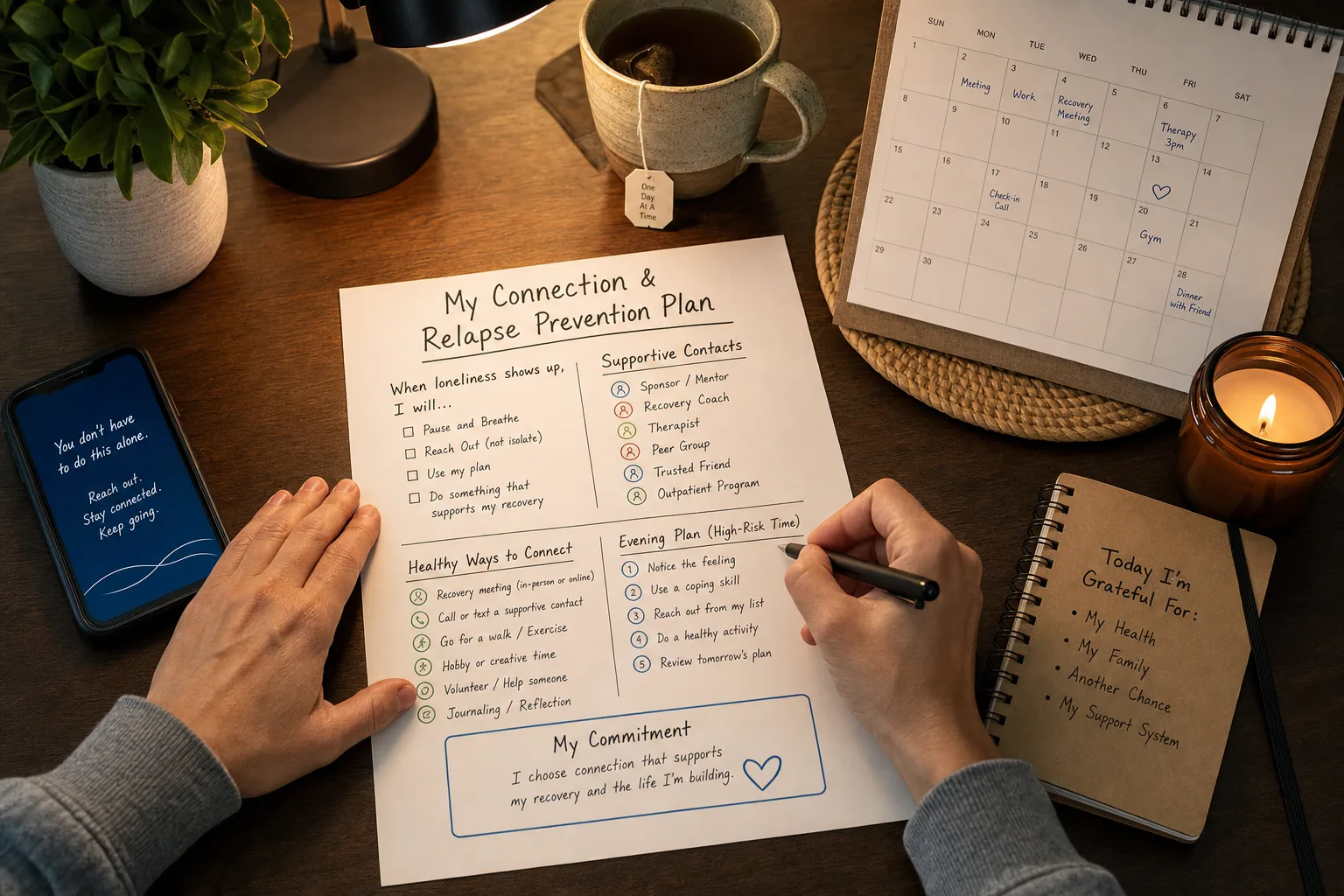
A practical relapse prevention plan accounts for loneliness as a real vulnerability. It also identifies the kind of help that fits the moment: a sponsor, recovery coach, therapist, peer group, trusted family member, or structured outpatient care. Each can serve a different purpose. Understanding those roles can make it easier to ask for support before cravings, isolation, or pressure from old social circles becomes more serious.
Why Loneliness Can Feel So Intense in Early Recovery
Substance use can become connected to nearly every part of daily life: winding down after work, socializing, coping with conflict, getting through boredom, celebrating, sleeping, or avoiding difficult emotions. When alcohol or drugs are removed, the person is not only leaving a substance behind. They may also be stepping away from familiar people, places, and routines.
This can be especially noticeable for working adults in Orange County. Someone may spend a full day managing responsibilities, commuting, caring for children, or answering emails, then arrive home to the same time of day when they used to drink or use. Another person leaving detox may feel physically better but unsure how to fill the long, unstructured hours that follow. A person finishing IOP may miss the regular contact and accountability of scheduled groups.
Loneliness in early recovery may show up as:
- Feeling left out when former friends post about bars, parties, or substance-centered events.
- Thinking, “No one understands what I am dealing with.”
- Avoiding calls or messages because explaining recovery feels exhausting.
- Having more cravings during evenings, weekends, holidays, or after relationship conflict.
- Feeling ashamed about lost trust, past behavior, or strained family relationships.
- Missing the familiarity of an old social circle, even when it was unsafe.
These experiences are common and treatable; they are not a personal failure. Loneliness is also not proof that someone must return to every old relationship or immediately become highly social. Early recovery support can begin with small, predictable points of contact and a plan for the times when disconnection feels strongest.
How Isolation Can Affect a Relapse Prevention Plan
Isolation does not automatically lead to a return to substance use. However, it can reduce the number of pauses between a craving and an impulsive decision. When someone is alone with stress, shame, boredom, or a strong urge, there may be no one nearby to help them reality-check the thought, leave an unsafe setting, or remember why they chose recovery.
That is why relapse prevention planning should cover more than substances themselves. A useful plan looks at the situations, emotions, thoughts, and relationship patterns that can increase vulnerability. Loneliness deserves a specific place in that plan.
Build a plan for the lonely moments, not just the ideal days
Instead of writing “call someone if I have a craving,” make the plan more detailed. Consider the questions below:
- When am I most likely to isolate? For example: Friday after work, after an argument, on Sunday mornings, or when I feel behind at work.
- What are my early warning signs? Examples include skipping meetings or therapy, staying in bed, ignoring supportive texts, romanticizing past drinking or drug use, or driving by former hangouts.
- Who are two or three people I can contact? Include names and numbers, not only a vague intention to reach out.
- What can I do in the first 20 minutes? Take a walk, make tea, shower, attend an online or in-person peer meeting, sit in a public place, or call a support person.
- What places should I avoid when I am vulnerable? This might include a bar, a former dealer’s neighborhood, a party where substances will be present, or an unstructured evening with people who pressure you to use.
The goal is not to eliminate all risk or promise that connection alone prevents relapse. The goal is to make safer choices more available when a person’s judgment feels strained. People who have recently completed detox may also benefit from learning why stopping drugs or alcohol can feel so hard after detox, including the role cravings, withdrawal, tolerance, and continuing support can play.
Know when isolation is becoming more urgent
Loneliness deserves prompt attention when it becomes persistent or begins to affect safety. Seek professional support if a person is withdrawing from nearly everyone, missing work or treatment, experiencing worsening depression or anxiety, having frequent cravings, returning to risky locations, or using “just once” thinking to cope.
If there is immediate danger, risk of self-harm, severe withdrawal symptoms, confusion, seizures, chest pain, or concern that someone may overdose, call 911 or seek emergency medical care. For urgent mental health support in the United States, call or text 988. Detox and medical safety needs should be assessed by qualified medical professionals; peer support is not a substitute for emergency or clinical care.

Separate Missing People From Missing the Old Routine
It is possible to genuinely care about people from the past and still need distance from the role they played in substance use. This distinction can reduce guilt and make boundaries easier to set.
Try asking: “What exactly am I missing right now?” The answer may not be the person. It may be the routine around them: spontaneous plans, a place to go after work, a sense of belonging, the confidence that came from being disinhibited, or the temporary escape from stress.
For example, someone may say they miss meeting friends at a bar near the office. What they may really miss is having a reliable transition between work and home. In a relapse prevention plan, the replacement does not need to be expensive or dramatic. It could be a weekly coffee with a supportive colleague, a walk at a local park or coastal path, a fitness class, a recovery meeting, a call during the commute, or a standing dinner with a family member.
A person in a relationship may miss the old pattern of drinking together to avoid conflict or feel close. Couples affected by substance use often need new ways to communicate, spend time, and set expectations. For partners who want structured guidance, couples rehab in Orange County can help clarify how each person’s recovery needs and relationship boundaries can be addressed without undermining either partner’s progress.
Women seeking trauma-informed addiction treatment may face an additional challenge: old relationships or settings can activate memories, fear, people-pleasing patterns, or a sense of obligation. In those cases, “reconnecting” should never mean ignoring emotional or physical safety. A therapist and treatment team can help a person identify what safe connection looks like at a pace that respects their history.
Practical Ways to Build Sober Connection One Step at a Time
“Make new friends” can feel like an impossible assignment when someone is anxious, tired, grieving old relationships, or uncomfortable in groups. Building sober support works better when it is approached as a series of low-pressure actions rather than a test of personality.
Use a connection ladder
Start with the least intimidating form of contact and move gradually as it feels manageable:
- Be around safe people without pressure to talk. Attend a recovery meeting, take a class, visit a library, walk in a public area, or sit with a supportive family member.
- Send one direct message. Try, “I’m having a quiet night and wanted to check in. Do you have ten minutes to talk this week?”
- Choose one recurring activity. A weekly peer group, therapy appointment, hobby class, volunteer shift, faith community event, or exercise group creates familiarity over time.
- Practice a short conversation. You do not need to explain your full history. “I’m focusing on my health right now, so I’m keeping things low-key,” may be enough.
- Make a specific invitation. Ask a peer or supportive acquaintance to get coffee, walk, attend a meeting, or try an activity that does not center on alcohol or drugs.
A person who does not feel comfortable in groups yet can begin with one-on-one contact, an online meeting, or simply staying for a few minutes after an outpatient group. Consistency matters more than instant closeness. Sober friendships are often built through repeated, ordinary contact rather than intense personal disclosure on the first day.
Create a realistic evening plan
For many working adults, the high-risk period is not the workday. It is the gap after work when fatigue, hunger, stress, and loneliness all arrive at once. Build a simple sequence before the day begins:
- Eat a planned meal or snack before cravings become stronger.
- Go somewhere other than the usual drinking or using environment.
- Schedule one check-in by text or phone.
- Choose one activity that occupies both time and attention: a workout, meal preparation, show, book, meeting, errand, or hobby.
- Set a bedtime routine that reduces late-night scrolling, isolation, and impulsive outreach to unsafe contacts.
Family members can support this process without policing it. Instead of repeatedly asking, “Are you going to use?” a family member might ask, “What part of tonight tends to be hardest?” or “Would it help to have company for dinner or a ride to your meeting?” Support is most useful when it is steady, respectful, and paired with clear boundaries.
How to Set Boundaries With Old Social Circles Without Cutting Yourself Off From Everyone
A boundary is not a punishment or a debate. It is a clear statement about what a person will and will not participate in to protect their recovery. Some relationships may become safer over time. Others may need more distance, particularly when people dismiss recovery, bring substances around, pressure someone to use, or contact them only when they want to party.
It can help to decide boundaries before receiving an invitation. These scripts are brief by design:
- “I’m not drinking or using right now, so I’m skipping bars and parties. I’d be open to coffee or lunch another day.”
- “Thanks for inviting me, but I can’t be around that tonight.”
- “I’m focusing on my health and need some space from that scene.”
- “Please don’t offer me alcohol or drugs. If that is part of the plan, I’ll head out.”
- “I care about you, but I’m not available for late-night calls when people are using.”
Not everyone will respond well. A negative reaction can be painful, but it also provides information about whether the relationship is currently safe. A person does not have to explain, defend, or negotiate every boundary. Blocking numbers, leaving group chats, changing routes, or declining invitations may be appropriate when repeated pressure is increasing cravings or putting recovery at risk.
At the same time, avoiding old drinking friends should not turn into avoiding every relationship. Consider identifying people who can be part of a safer circle: a sibling, colleague, neighbor, partner, recovery peer, sponsor, therapist, or mentor. The aim is selective connection, not total isolation.
Recovery Coach vs Sponsor vs Therapist: Who Can Help With Loneliness?
People often ask whether they need a sponsor, recovery coach, or therapist after detox or IOP. The answer depends on the problem they need help solving. These supports can work alongside one another, but they are not interchangeable.
Sponsor
A sponsor is generally a peer in a mutual-help recovery program who shares lived recovery experience and offers guidance within that program’s framework. A sponsor may be especially helpful when someone wants peer accountability, support working program steps, encouragement to attend meetings, or a person to call during an urge to isolate or use.
A sponsor is not a licensed mental health clinician and should not be expected to provide trauma therapy, diagnose depression, manage withdrawal, or address an immediate safety crisis. The fit matters. A person should feel respected and safe, and they can seek a different sponsor if the relationship is not helpful.
Recovery coach
A recovery coach is a nonclinical support person who may help with practical recovery goals, navigating resources, strengthening routines, identifying barriers, and building community connection. Depending on the setting and the coach’s role, they may support transition planning after treatment, employment or education goals, transportation, recovery meeting options, and day-to-day accountability.
Recovery coaching can be valuable for a person who understands the need for recovery but needs help translating intentions into a workable weekly structure. It is not a replacement for therapy, medical care, detox, or treatment for significant mental health symptoms. As SAMHSA’s guidance on peer support emphasizes, peer roles are valuable parts of recovery systems but should be integrated with appropriate clinical services when those are needed.
Therapist
A therapist is a licensed or otherwise qualified mental health professional who can help a person address emotional, behavioral, and relationship concerns that may be tied to substance use. Therapy may be particularly important for worsening depression, anxiety, trauma symptoms, grief, family conflict, shame, compulsive coping patterns, or repeated relapse-related thoughts.
For women who want trauma-informed care, therapy can provide a confidential place to understand triggers and develop grounding, communication, and safety skills without being pushed to disclose before they are ready. Therapy may also support couples who are trying to rebuild trust while maintaining clear individual recovery boundaries.
Peer group or outpatient program
A peer group offers shared experience and regular connection. Outpatient treatment adds clinical structure, facilitated groups, individual support, education, and relapse prevention planning. It may be a strong fit when loneliness is connected to frequent cravings, a recent return to use, untreated mental health symptoms, conflict at home, or difficulty maintaining the recovery routine after detox or IOP.
For many people, the best answer is not choosing only one form of support. A person might work with a therapist for trauma or depression, attend an outpatient program for clinical relapse prevention work, and use a sponsor or recovery peer for everyday connection.

When Outpatient Relapse Prevention Support May Be the Right Next Step
Structured outpatient care can help when a person is technically “doing okay” but feels increasingly disconnected and unstable. This is often a useful time to seek help because the concern can be assessed before it becomes a crisis.
Consider outpatient addiction treatment in Orange County when any of the following are happening:
- Cravings are becoming more frequent, more intense, or harder to interrupt alone.
- You are missing recovery meetings, therapy, medications, work, or responsibilities.
- You are spending more time with people who drink or use, even though it feels risky.
- You are isolating after detox, residential treatment, or IOP and do not know how to rebuild a routine.
- Your relationship is becoming tense around recovery, trust, or boundaries.
- Depression, anxiety, trauma symptoms, or loneliness are making it difficult to function.
- You need care that can fit around work, family obligations, or school.
Outpatient care is not only for someone at their worst point. It can offer a place to identify patterns, practice coping skills, strengthen sober support, and make a more detailed plan for high-risk times. Depending on a person’s needs, that may include individual counseling, group support, family involvement, trauma-informed care, relapse prevention education, and coordination with medical or mental health providers.
Blue Coast Behavioral Health can help people explore outpatient addiction treatment options in Orange County based on their current substance use, recent treatment history, work schedule, home environment, mental health needs, and available support. The appropriate level of care should be based on an honest assessment, not on whether someone believes they “should” be able to manage alone.
Frequently Asked Questions
Is loneliness in early recovery a warning sign of relapse?
Loneliness can be a relapse vulnerability, particularly when it leads to isolation, cravings, romanticizing old substance use, or reconnecting with unsafe social circles. It is not a prediction that relapse will happen. Treat it as useful information: update the relapse prevention plan, add contact points, and get professional support if the pattern is worsening.
How can I make sober friends when I do not feel comfortable in groups yet?
Start small. Attend a peer meeting without pressure to speak, ask one person a simple question afterward, or choose a recurring sober activity that matches an existing interest. One-on-one coffee, a walk, a volunteer activity, or a brief check-in before leaving an outpatient group can feel more manageable than trying to form a whole friend group at once.
Do I need a sponsor, recovery coach, or therapist after detox or IOP?
You may benefit from one, two, or all three depending on your needs. A sponsor provides peer recovery guidance in a mutual-help setting. A recovery coach can assist with practical recovery goals and connection to resources. A therapist can address mental health, trauma, relationship patterns, and emotional concerns. If cravings, depression, or instability are increasing, a clinical outpatient program may provide the added structure needed.
What should I do if old friends keep inviting me to drink or use?
Use a brief boundary, decline the invitation, and avoid arguing about your decision. Suggest a substance-free alternative only if you genuinely feel safe doing so. If invitations continue or the person pressures you, reduce contact, leave group chats, block numbers if necessary, and contact someone in your sober support network. Your recovery does not require you to keep proving your boundaries to people who do not respect them.
Can outpatient addiction treatment in Orange County help if I am working and feel isolated after rehab?
Yes. Outpatient treatment is often designed to help people continue living at home and managing work or family responsibilities while receiving structured recovery support. A treatment provider can discuss scheduling, current symptoms, recent treatment, relapse risks, and whether outpatient care is appropriate for your situation.
A Clear Next Step When Connection Feels Less Stable
Loneliness, cravings, isolation, and pressure from old social circles are problems worth addressing early, not private burdens to carry alone. A relapse prevention plan is stronger when it includes specific people to call, realistic boundaries, safer routines, and the right mix of peer and clinical support.
If recovery feels less stable because you are pulling away from support, missing the old scene, or struggling to stay connected after detox or IOP, contact Blue Coast Behavioral Health or call 949-776-2127. The next step is to talk through what is driving the isolation and determine whether an individualized outpatient relapse prevention plan in Orange County can help address it before it gets worse.