

What Is an IOP Program for Addiction Recovery and Who Is It Best For?
An intensive outpatient program, often called an IOP, is a structured form of addiction treatment that allows many people to continue living at home while attending therapy and recovery services several days a week. For adults in Orange County, this can be a practical option when work, school, parenting, or other responsibilities make residential treatment difficult.
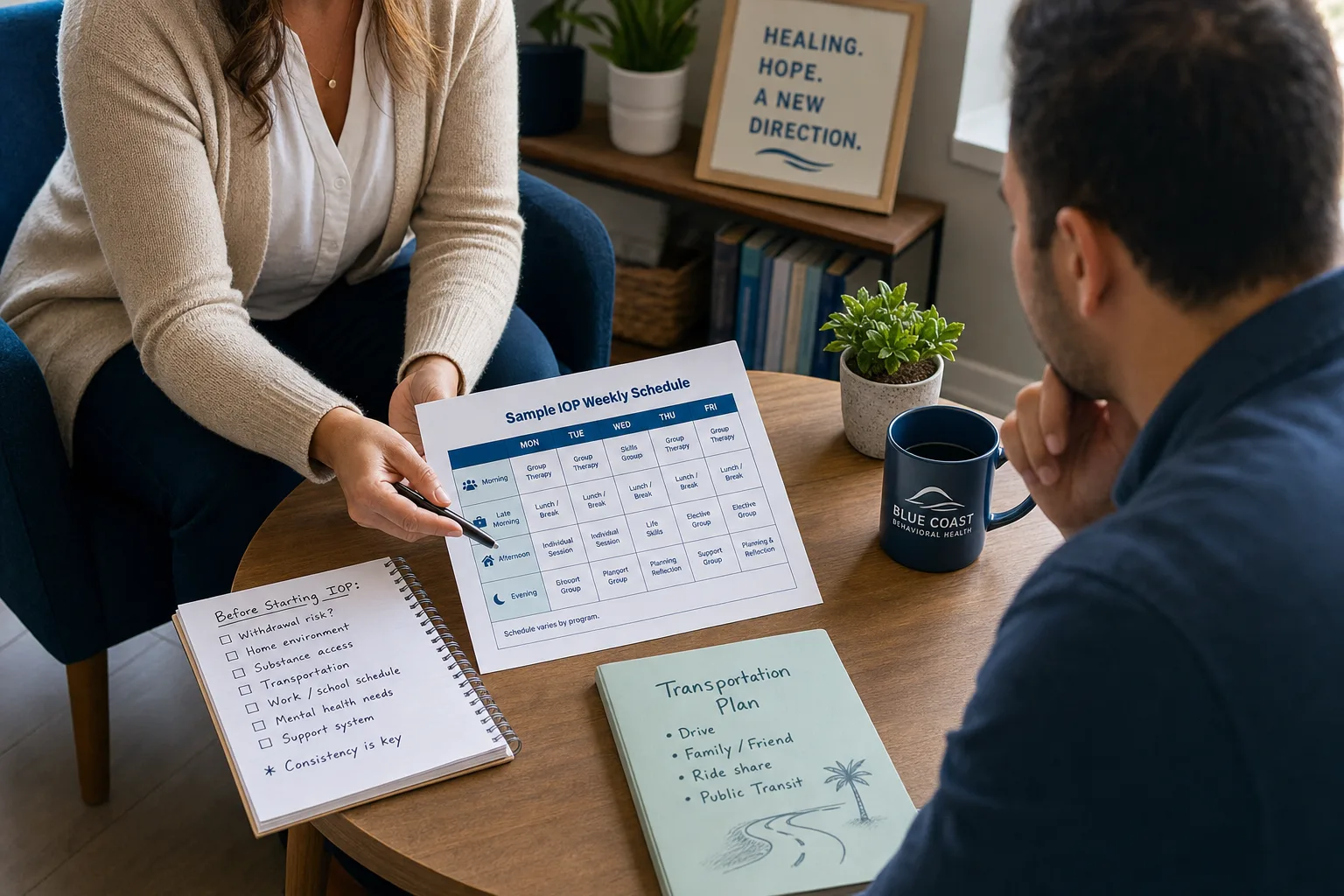
However, an IOP program while living at home is not the right or safest starting point for everyone. Whether it is appropriate depends on withdrawal risk, physical and mental health needs, substance access at home, transportation, relationships, and the ability to attend consistently. A confidential clinical assessment can help clarify whether outpatient care, detox, inpatient treatment, or another level of support is the most appropriate next step.
Can You Start an IOP While Living at Home?
Yes. Many people attend an intensive outpatient program while living at home. IOP is designed for people who need more structure and clinical support than standard weekly counseling but do not necessarily need 24-hour residential supervision.
In an IOP, a person may attend treatment sessions during the day or evening and return home afterward. This arrangement can make it possible to maintain a job, care for children, attend school, or remain connected to supportive family members. It can also allow someone to practice recovery skills in real situations: managing stress after work, navigating family conflict, declining invitations where alcohol or drugs may be present, and building a sober routine in the community.
Still, living at home only works when home is reasonably safe and stable for recovery. For example, IOP may be a realistic fit for someone who has completed detox, has a reliable ride to treatment, lives with supportive people, and can avoid alcohol or drugs in the home. It may be less suitable for someone who is currently experiencing dangerous withdrawal, is using heavily every day, has frequent overdoses or medical concerns, or returns each night to a home where substances and unsafe relationships are present.
A good level-of-care decision is individualized. It is not a judgment about motivation or willpower. It is a practical safety decision based on what support a person needs right now.
What an Intensive Outpatient Program Involves
IOP addiction treatment provides a consistent weekly schedule of clinical services without requiring a person to live at a treatment facility. Programs differ, but IOP commonly involves multiple sessions each week and may include several hours of treatment on each treatment day. The exact schedule, length of participation, and services should be tailored to clinical needs and progress.
Common components of IOP
- Group therapy: Structured groups can help participants learn from others, practice communication skills, discuss relapse prevention, and reduce isolation.
- Individual counseling: One-on-one sessions provide space to address personal goals, triggers, trauma history, family concerns, work stress, and barriers to attendance.
- Education about substance use and recovery: Treatment may cover cravings, withdrawal, relapse warning signs, coping skills, sleep, emotional regulation, and the effects of substances on mental and physical health.
- Family involvement when appropriate: Family sessions or education can help loved ones understand recovery boundaries, communication, and how to support treatment without taking over.
- Medication support: Some people benefit from medication-assisted treatment or psychiatric care as part of a broader recovery plan. A clinical team can assess whether medication is appropriate.
- Recovery planning: Participants work on an actionable plan for high-risk situations, peer support, follow-up care, and a return to responsibilities outside treatment.
The purpose of IOP is not simply to fill time. It is to create enough structure for a person to stabilize, develop skills, and receive accountability while continuing to live in their regular environment. Learn more about an Intensive Outpatient Program (IOP) in Newport Beach and the role it can play in a step-down or outpatient recovery plan.
Can you work or go to school during IOP?
Often, yes. Many outpatient programs offer schedules intended to accommodate work or school commitments. But IOP still requires a real time commitment. Before enrolling, it is important to consider commute time, traffic between Irvine and Newport Beach or other Orange County areas, childcare, court dates, medical appointments, and time needed for sleep and recovery activities.

A person who works full-time may need an evening schedule or may need to speak with an employer about temporary flexibility. Someone in school may need to reduce extracurricular obligations during the early stages of recovery. Trying to maintain every existing responsibility while also attending IOP can become overwhelming. A sustainable plan is more useful than an ideal-looking schedule that cannot be kept.
When Living at Home Can Support Recovery
Home-based recovery with structured outpatient care can be a strong option when a person has a stable setting and enough support outside program hours. It can be especially helpful for people who are ready to apply what they learn in treatment to their everyday life.
Signs outpatient rehab while living at home may be workable
- Withdrawal has been assessed, managed, or is not expected to require medically supervised withdrawal management.
- The person can remain physically safe between treatment sessions.
- Alcohol, drugs, unused prescriptions, and other triggering substances can be removed or secured at home.
- Household members are willing to respect recovery boundaries and avoid using substances around the person.
- There is dependable transportation to and from sessions, whether through a personal vehicle, a trusted support person, rideshare, or public transit that is realistic for the schedule.
- The person can attend regularly and participate without repeated disruptions.
- There is a plan for cravings, conflict, loneliness, and other high-risk moments outside treatment hours.
- The person has at least one reliable source of support, such as a family member, friend, recovery peer, therapist, or community support group.
For example, a Newport Beach resident who recently completed medical detox may return home to a partner who does not drink, can store medications safely, and is willing to help protect therapy time. That person may be able to use IOP as a structured transition back to daily life.
Another person may live in Irvine, work during the day, and attend evening treatment. If their workplace stress is a trigger, IOP can provide a place to process that stress and build healthier responses while they are still actively navigating it.
Family support can be valuable, but it does not mean family members must become therapists, monitors, or enforcers. Clear roles tend to work better: loved ones can offer encouragement, help protect appointment time, and follow agreed-upon boundaries, while clinicians provide treatment.
Signs You May Need Detox or a Higher Level of Care First
IOP is not a substitute for medically supervised withdrawal management when withdrawal may be dangerous. Stopping alcohol, benzodiazepines, or other substances abruptly can cause serious symptoms for some people. Withdrawal risk depends on the substance, amount and frequency of use, past withdrawal experiences, medical history, and other medications.
Before beginning outpatient treatment, a clinician should assess whether detox is needed. Medical detox can provide monitoring and medical support during the withdrawal period. After stabilization, a person may step down to IOP, outpatient counseling, or another recommended level of care. For more context on continuing treatment after withdrawal management, read what happens after detox.
Situations that may call for detox, inpatient care, or more support
- Current or expected severe withdrawal symptoms, including confusion, hallucinations, seizures, severe shaking, or serious physical illness.
- A history of complicated withdrawal, seizures, or delirium during past attempts to stop drinking or using drugs.
- Heavy or frequent substance use that makes it difficult to stay sober between outpatient sessions.
- Recent overdose, repeated emergency care, or urgent medical concerns.
- Thoughts of self-harm, inability to care for basic needs, severe depression, mania, psychosis, or other acute mental health symptoms.
- A home with ongoing violence, coercion, threats, severe conflict, or no safe place to sleep.
- Easy and ongoing access to alcohol or drugs in the household, especially when others are unwilling to change that environment.
- Repeated attempts at outpatient care that have not provided enough structure to interrupt continued use.
If someone is in immediate danger, having a medical emergency, or at risk of harming themselves or another person, call 911 or seek emergency care immediately.
Higher levels of care are not a failure and do not mean outpatient treatment will never be appropriate. They may simply provide the stability needed before someone can successfully participate in an IOP program while living at home.
When sober living may be worth considering
Sober living can be an added support for some people who are appropriate for IOP clinically but do not have a recovery-supportive home environment. It may offer distance from substance exposure, greater daily structure, and connection with peers who are also working toward recovery.
It is not mandatory for all IOP clients. A person with a safe and supportive home may do well living with family or independently. But for someone whose home includes active substance use, frequent visitors who bring drugs or alcohol, or relationships that make recovery difficult, sober living may be one option to discuss during an assessment.
Questions to Ask About Your Home, Schedule, and Support System
If you are wondering, “Is IOP right for me?” it can help to look beyond the program itself. The hours outside treatment matter just as much as the hours spent in counseling.
Questions about the home environment
- Can alcohol, drugs, paraphernalia, and unneeded medications be removed, locked up, or kept out of my immediate environment?
- Does anyone in my home use substances around me or pressure me to use?
- Do I have a private, safe place to sleep and decompress after treatment?
- Are there household conflicts, abusive dynamics, or relationships that could put my recovery at risk?
- Can my family or roommates respect basic boundaries, such as not offering substances or bringing them into shared spaces?
Questions about schedule and transportation
- Can I consistently get to every treatment session, including during Orange County traffic or unexpected work demands?
- Do I have a backup transportation plan if my vehicle is unavailable?
- Can I make room for treatment, sleep, meals, medical appointments, and recovery support without becoming exhausted?
- Would a day or evening schedule make attendance more realistic?
- Who can help with childcare or family responsibilities during sessions if needed?
Questions about support and triggers
- Who can I call when I have a craving or feel close to using?
- What places, people, online contacts, paydays, social events, or emotional situations most often lead to use?
- What will I do if a family gathering includes alcohol or someone offers me drugs?
- Am I willing and able to participate honestly in treatment, even when the subject is uncomfortable?
- What changes would make the first few weeks at home safer?
Families can use these questions, too. Rather than asking only, “Can my loved one stay home?” it may be more productive to ask, “What would need to change at home for treatment to be safer and more consistent?”
What to Expect From IOP in Orange County
People comparing an IOP in Orange County may find different schedules, treatment approaches, and locations. The most useful program is one that matches the person’s clinical needs and is practical enough to attend consistently.
An admission process generally begins with a confidential conversation and assessment. The care team may ask about substance use patterns, withdrawal history, medications, medical conditions, mental health symptoms, previous treatment, living circumstances, work and family responsibilities, and goals for recovery. This information helps determine whether IOP is a safe starting point or whether medical detox, inpatient detox, residential treatment, medication-assisted treatment, or another service should come first.
Once enrolled, participants can expect a regular treatment schedule, discussions about confidentiality and group expectations, and a recovery plan that changes as needs change. A program should also address what happens outside sessions: how to handle cravings at home, how to respond to a lapse, what supports to use on weekends, and when to request more care.
For readers comparing options across the region, Blue Coast Behavioral Health provides information about outpatient rehab in Orange County. You can also review Blue Coast Behavioral Health locations when considering travel time and the practical fit of care near Irvine, Newport Beach, or other nearby communities.
How to Choose the Right Next Step
The right treatment setting is the one that provides enough support for safety and progress without creating unnecessary barriers to participation. For some people, IOP is an appropriate first level of treatment. For others, it is the next step after detox or inpatient care. And for some, a more intensive setting is needed before returning home.

A clinical assessment should consider several areas together: withdrawal potential, physical health, mental health, current substance use, past treatment experiences, relapse risk, motivation and ability to attend, and the recovery environment at home. These are the kinds of factors reflected in widely used level-of-care frameworks, including guidance from the American Society of Addiction Medicine.
Do not assume that being employed, having children, or appearing functional means a person does not need detox or a higher level of care. At the same time, do not assume that living at home automatically rules out meaningful treatment. The details matter.
Frequently Asked Questions About IOP While Living at Home
Can I live at home while attending an IOP for alcohol or drug addiction?
Yes, many people do. IOP is specifically structured to allow participants to attend treatment while continuing to live at home. It is most appropriate when withdrawal is not medically dangerous, the home environment is stable, substances can be avoided or secured, and the person can reliably attend and engage in treatment.
Do I need detox before starting an intensive outpatient program?
Not everyone needs detox, but anyone at risk for significant withdrawal should be assessed before starting outpatient treatment. Alcohol and some drugs can produce dangerous withdrawal symptoms. If medically supervised withdrawal management is needed, detox should come first; IOP may be recommended afterward as part of continuing recovery support.
How many hours a week does IOP usually require, and can I work or go to school?
IOP generally requires multiple treatment sessions per week and more time than standard outpatient therapy. Many people work or attend school while enrolled, especially when a program offers day or evening options. The best schedule is one you can realistically maintain, including transportation, sleep, family obligations, and recovery activities.
What if alcohol, drugs, or unsafe relationships are present in my home?
Tell the treatment provider during your assessment. Ongoing access to substances, pressure to use, violence, threats, or severe conflict can make outpatient rehab living at home unsafe or ineffective. A clinician may recommend a higher level of care, sober living, changes to the home environment, or a different safety plan. Sober living can be helpful for some people, but it is not required for everyone in IOP.
How do I know whether IOP or inpatient rehab is the better fit?
IOP may be a fit when you are medically stable, can remain safe outside sessions, and have a workable recovery environment. Inpatient or residential care may be more appropriate when withdrawal, mental health symptoms, continued use, medical concerns, or home instability require 24-hour structure. A professional assessment is the most reliable way to compare these options.
Talk Through What Is Realistic for Your Situation
Choosing between detox, rehab, and an IOP does not have to be a decision you make alone. If you are in Orange County and are unsure whether living at home is workable in your specific situation, call Blue Coast Behavioral Health at 949-776-2127 to discuss whether detox, rehab, or an intensive outpatient program may be the appropriate next step.