
What Happens After Detox for Alcohol Use Disorder?
Finishing detox can be a major first step, but it is rarely the end of the recovery process. Many people in Orange County, Irvine, Huntington Beach, and nearby Southern California communities are surprised by what comes next: cravings may still appear, sleep and mood may take time to settle, and everyday triggers can feel more intense without alcohol or drugs.
Understanding tolerance, cravings, withdrawal, and physical dependence can make this period less confusing and less shame-filled. These are not signs of weak character or a lack of effort. They are common effects of repeated substance use and the brain and body’s attempts to adapt. With the right safety assessment and continuing support, people can move from simply getting through withdrawal to building a more stable recovery.
Why Quitting Drugs or Alcohol Can Feel Harder Than Expected
Many people begin with a clear intention: “I am done drinking,” “I will stop using tomorrow,” or “I can get through this weekend without it.” The intention may be sincere, yet stopping can become much harder than expected. That gap between wanting to stop and being able to stop consistently is often where fear, guilt, and isolation grow.
Alcohol and other drugs can become connected to the routines of daily life. A person may drink after work in Irvine to quiet stress, use a substance before social events in Huntington Beach to feel less anxious, or rely on alcohol at night to fall asleep. Over time, use can become linked to specific places, people, emotions, times of day, or physical sensations. A difficult conversation, a drive past a familiar store, an unpaid bill, loneliness, pain, or even a celebration can trigger an urge.
There may also be physical factors. Someone who drinks heavily or frequently may start to feel shaky, sweaty, anxious, nauseated, or unable to sleep when alcohol wears off. In that situation, drinking again may feel less like a choice for pleasure and more like a way to stop feeling unwell. This cycle can make it difficult to see where alcohol use ends and withdrawal relief begins.
Substance use can also affect responsibilities and relationships in ways that create more pressure. A person may be trying to keep up with a job, parenting, school, caregiving, housing demands, or family expectations while managing a growing dependence. They may worry that asking for help will disrupt their routine or expose a problem they have worked hard to hide. Outpatient treatment can be a practical option for some people because it provides structured clinical support while allowing them to continue living at home and meeting appropriate daily obligations.
The important point is that difficulty stopping does not mean recovery is out of reach. It means the situation deserves an honest clinical look. A professional assessment can help determine whether a person is experiencing cravings, active withdrawal, a high risk of withdrawal complications, a co-occurring mental health concern, or a need for a different level of care before outpatient treatment begins.
Tolerance: How the Brain and Body Adapt to Substance Use
Tolerance means that a person needs more of a substance to feel the effect they once felt with a smaller amount. For example, someone may notice that two drinks no longer produce the same calming, numbing, or social effect that they did earlier in their drinking. They may begin drinking larger amounts, drinking more often, or choosing stronger forms of alcohol.
Tolerance can develop with alcohol, prescription medications, and other drugs. It is one way the brain and body adapt to repeated exposure. It does not, by itself, tell the full story of whether someone has an addiction. However, increasing tolerance can be an important warning sign, especially when it is paired with unsuccessful attempts to cut down, escalating use, cravings, withdrawal symptoms, or consequences at home, work, school, or in relationships.
Alcohol Tolerance and Dependence Are Not the Same Thing
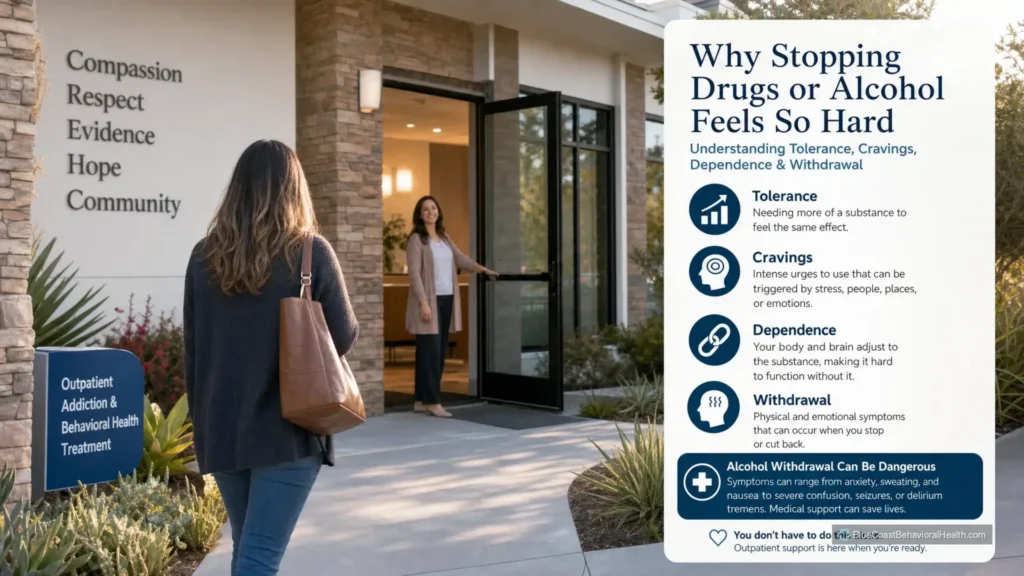
It is easy to confuse alcohol tolerance and dependence, but they describe different experiences:
- Tolerance is needing more alcohol or drugs to get the desired effect.
- Physical dependence means the body has adapted to the substance and may react when its level drops or use stops.
- Cravings are powerful urges or a strong mental and physical pull to use.
- Withdrawal is the set of symptoms that can happen when someone who is physically dependent reduces or stops use.
These experiences can overlap. A person may have tolerance without obvious withdrawal. Another person may have intense cravings even after the acute physical withdrawal period has passed. Someone can also have a substance use disorder with varying levels of physical dependence. This is why a careful assessment is more useful than trying to place yourself into a label based on one symptom alone.
Tolerance also creates an important safety issue: a person’s tolerance can decrease after detox or a period without using. Returning to a previous amount of alcohol or drugs after abstinence may carry serious risks. With opioids especially, reduced tolerance can increase overdose risk if a person resumes the amount they used before stopping. This is one reason ongoing treatment, relapse-prevention planning, and support after detox matter.
Signs That an Assessment May Be Helpful
Consider speaking with an addiction treatment professional if you have noticed that you:
- Need more alcohol or drugs than before to feel the same effect.
- Use for longer periods or in greater amounts than intended.
- Have tried to stop or cut down but could not maintain it.
- Plan your day around drinking, using, recovering, or avoiding withdrawal.
- Continue use despite problems with health, work, finances, relationships, or safety.
- Feel ill, anxious, shaky, restless, or unable to sleep when you do not use.
None of these signs requires a person to decide their entire future immediately. They are reasons to ask for a clinical evaluation and understand the safest next step.
Cravings: Why Urges Can Feel So Powerful
A craving is more than simply wanting a drink or drug. Cravings can feel urgent, distracting, physical, emotional, or all of these at once. Some people describe a racing mind that will not let the idea of using go. Others feel tension in the body, restlessness, irritability, a sudden low mood, or a strong sense that using is the only way to feel normal again.

For anyone asking, “Why are cravings so strong?” the answer is not that they lack motivation. Repeated substance use can train the brain to associate alcohol or drugs with relief, reward, comfort, energy, sleep, confidence, or escape. When a trigger appears, the brain may rapidly anticipate the substance and the temporary change it has produced in the past.
Triggers are personal. Common examples include:
- Stress, conflict, anxiety, anger, grief, or loneliness.
- Physical discomfort, chronic pain, fatigue, or poor sleep.
- Bars, restaurants, parties, concerts, holidays, or work events where alcohol is present.
- Certain friends, neighborhoods, routes home, music, scents, or social media content.
- Paydays, weekends, evenings, or the end of a demanding work shift.
- The thought that “one drink” or “one time” will solve a difficult feeling.
Cravings can rise and fall rather than staying at the same level indefinitely. Still, the early period after detox can be especially vulnerable because the person is adjusting physically and emotionally while trying to change established routines. Cravings do not have to disappear before someone can begin recovery. Treatment can help people identify patterns, prepare for high-risk situations, respond to urges without acting on them, and address the issues that alcohol or drugs may have been masking.
How Long Do Drug or Alcohol Cravings Usually Last After Detox?
There is no single timeline for cravings. Acute withdrawal may improve over days, but cravings can continue for weeks, months, or longer in changing forms. Their frequency and intensity can be influenced by the substance used, amount and duration of use, stress, sleep, trauma history, mental health symptoms, social environment, physical health, and access to recovery support.
A craving may be brief and intense, or it may feel like a background pull that returns in specific situations. A difficult day does not necessarily mean treatment is failing, and a craving does not mean that a return to use is inevitable. It is information: something in the environment, body, or emotional world may need attention.
During an assessment, a clinician can ask practical questions about when cravings happen, what tends to come before them, what has helped in the past, and whether anxiety, depression, trauma-related symptoms, sleep disruption, or other behavioral health concerns are making recovery harder. This information helps shape a realistic continuing-care plan rather than assuming every person needs the same approach.
Withdrawal: What Happens When Substance Use Stops
Withdrawal occurs when a person’s body has adapted to a substance and the amount in the body decreases substantially or use stops. The body may react as it tries to regain balance without the substance. Withdrawal is not always present, and the type and severity of symptoms depend greatly on the substance, pattern of use, health history, and other factors.
Common drug and alcohol withdrawal symptoms may include anxiety, irritability, sweating, shaking, nausea, vomiting, headache, sleep problems, restlessness, low mood, muscle aches, fatigue, or difficulty concentrating. Some people feel emotionally raw or unusually sensitive. Others may feel physical discomfort that creates a strong urge to use again.
It is important not to assume that all symptoms are mild or safe to manage alone. Alcohol withdrawal can be medically dangerous. Withdrawal from certain sedative medications can also be dangerous, and opioid withdrawal, while often not life-threatening on its own, can be intensely uncomfortable and may require medical attention depending on the person’s condition, dehydration risk, pregnancy, co-occurring illness, or other circumstances.
How Long Do Withdrawal Symptoms Last?
People often ask, “How long do withdrawal symptoms last?” The honest answer is that the timeline varies. Symptoms can begin at different times depending on the substance and a person’s individual pattern of use. Some acute symptoms may improve over several days, while sleep changes, anxiety, low mood, concentration problems, and cravings can persist longer.
For alcohol, withdrawal symptoms can begin after drinking stops or drops significantly, and severe symptoms may emerge as withdrawal progresses. The risk is not determined only by the number of drinks someone had on one day. A person’s regular drinking pattern, history of withdrawal, prior seizures or delirium, age, medical conditions, medications, and use of other substances all matter.
Rather than using an online timeline to decide what is safe, it is better to discuss the specific situation with a qualified professional. A clinical team can evaluate recent use, withdrawal history, current symptoms, medical needs, and the safest care setting.
Detox and Outpatient Treatment Address Different Needs
Detox, also called withdrawal management, focuses on the immediate period when alcohol or drugs are leaving the body and withdrawal risk needs to be evaluated or monitored. The goal is stabilization and safety. Detox is not designed to resolve every reason a person used substances or to provide all of the skills needed to maintain recovery over time.
Outpatient addiction treatment focuses on what happens after the immediate stabilization phase, or on treatment for people who do not need medical detox. Depending on clinical needs, outpatient care may include individual therapy, group therapy, relapse-prevention work, behavioral health support, trauma-informed care, family involvement when appropriate, and help addressing co-occurring mental health concerns.
For many people, the transition from detox into treatment is a critical point. Physical symptoms may be improving, but triggers, cravings, difficult emotions, relationship stress, and unstructured time can still be present. Continuing care creates a place to talk honestly about those challenges before they become reasons to return to use.

If you are unsure whether detox is needed, read more about Alcohol Detox Orange County and speak with a treatment professional about your recent use and symptoms. It is safer to ask before stopping abruptly if physical dependence may be involved.
When Alcohol or Drug Withdrawal Can Be Dangerous
Do not try to “push through” severe or worsening withdrawal symptoms alone. Alcohol withdrawal can become a medical emergency, particularly for people who drink heavily or regularly, have previously experienced serious withdrawal, have a seizure history, use sedatives along with alcohol, or have significant medical conditions.
Seek emergency medical care immediately by calling 911 or going to the nearest emergency department if you or someone else experiences:
- Seizures or convulsions.
- Confusion, severe disorientation, or inability to stay awake.
- Hallucinations, including seeing, hearing, or feeling things that are not present.
- Severe agitation, extreme fear, or behavior that creates an immediate safety concern.
- Fever, severe sweating, a very rapid heartbeat, chest pain, or trouble breathing.
- Persistent vomiting, inability to keep fluids down, or signs of serious dehydration.
- Fainting, severe weakness, or a sudden major change in mental status.
- Thoughts of suicide, self-harm, or harming someone else.
This list is not a substitute for medical judgment. If you are concerned about withdrawal, especially after daily or heavy alcohol use, contact a medical professional or addiction treatment provider promptly. Waiting to see whether symptoms become severe can be risky.
Who May Need Medical Detox or a Higher Level of Care?
An assessment may indicate that a person needs medical detox, emergency evaluation, residential care, or another level of support before outpatient services are appropriate. Factors that can affect this decision include:
- Current withdrawal symptoms and how quickly they are changing.
- History of alcohol-withdrawal seizures, hallucinations, confusion, or severe withdrawal.
- Frequent, heavy, or long-term alcohol use.
- Use of alcohol with benzodiazepines, opioids, stimulants, or other substances.
- Pregnancy, significant medical conditions, or complex medication needs.
- Recent overdose, serious injury, or an inability to stay safe at home.
- Active suicidal thoughts, severe psychiatric symptoms, or a need for more intensive stabilization.
- A home environment that does not provide adequate safety or support during an unstable period.
Asking for help does not lock someone into a predetermined program. It allows a clinician to understand the safety picture and recommend an appropriate next step. For some people, that begins with medically supervised detox. For others, outpatient addiction treatment may be appropriate from the start. The decision should be based on individual risk and needs, not pressure or guesswork.
What Happens After Detox: Building Support for Ongoing Recovery
After alcohol detox, many people feel relief that the most acute physical symptoms have eased. They may also feel tired, uncertain, emotionally vulnerable, or worried about how they will manage ordinary life without alcohol. These reactions are common. Detox removes the substance from the immediate equation; recovery treatment helps a person develop support for the life that follows.
Ongoing addiction treatment can help address questions such as:
- What situations are most likely to trigger cravings?
- How can I respond when I feel overwhelmed, anxious, angry, or lonely?
- What should I do if someone offers me alcohol or drugs?
- How do I rebuild trust with family, a partner, or coworkers over time?
- How can I improve sleep, daily routine, and stress management without returning to use?
- Are trauma, depression, anxiety, grief, or another mental health concern connected to my substance use?
A clinically informed outpatient plan may include therapy that focuses on substance use patterns, emotional regulation, coping skills, relapse prevention, and co-occurring behavioral health needs. Trauma-informed care is particularly important for people whose alcohol or drug use has been connected to traumatic experiences, ongoing stress, or a need to cope with painful memories. Effective trauma-informed support does not force someone to disclose before they are ready. It emphasizes safety, choice, trust, and collaboration.
Recovery Is More Than Avoiding a Substance
Early recovery often involves practical rebuilding. A person may need to change routines, set boundaries, avoid or plan for certain social settings, find supportive people, and create structure around work, meals, sleep, transportation, appointments, and family responsibilities. These changes may sound simple, but they can be difficult while the brain and body are still adjusting.
For women, treatment may also need to address concerns such as caregiving demands, relationship pressure, trauma, body image, depression, anxiety, or fear of judgment. Men may face their own barriers, including pressure to appear self-sufficient, difficulty discussing emotional pain, or social norms that normalize heavy drinking. Compassionate behavioral health treatment makes room for the realities behind substance use rather than reducing someone to a diagnosis.
It can help to view recovery as a series of decisions and supports, not one dramatic promise. A person may begin by accepting an assessment, attending sessions consistently, learning how to manage an evening craving, being honest after a difficult day, or returning to treatment after a lapse. Read about the stages of change in addiction treatment to understand why readiness can shift and why support can still be valuable at every stage.
What If a Craving Leads to a Return to Use?
A return to use can be dangerous, especially after detox when tolerance may be lower. It should be treated seriously and compassionately. Shame often pushes people away from the support they need most. Instead of deciding that recovery is over, reach out for help, assess immediate safety, and discuss what happened with a qualified provider.
A clinician can help identify what contributed to the return to use: untreated withdrawal symptoms, exposure to alcohol or drugs, conflict, isolation, lack of sleep, trauma symptoms, pressure from others, unrealistic expectations, or another factor. That information can guide changes to the treatment plan and level of support.

Finding Outpatient Addiction Treatment in Orange County
For men and women in Orange County, outpatient treatment can offer a structured next step after detox or a starting point for people who have been assessed and do not need medical withdrawal management. It may be especially useful for someone who needs regular therapeutic support but can safely live at home, participate in treatment, and manage daily responsibilities with appropriate clinical guidance.
Blue Coast Behavioral Health provides support for people seeking Drug and Alcohol Addiction Treatment in Orange County. The first step is not to decide on a label or promise that you will never struggle again. It is to share what has been happening so a treatment team can help identify the right level of care.
What to Expect From an Addiction Treatment Assessment
An addiction treatment assessment is a confidential conversation designed to understand your needs, safety concerns, and treatment goals. It is not a test that you can fail. You may be asked about:
- The substances you use, how often you use them, and when you last used.
- Any current symptoms, including shaking, sweating, nausea, insomnia, anxiety, confusion, or cravings.
- Past attempts to stop, prior detox experiences, and any history of seizures or severe withdrawal.
- Medical conditions, medications, mental health symptoms, and history of trauma.
- Home environment, transportation, work or school demands, and available support.
- Your goals, concerns about treatment, and what has made it difficult to seek help until now.
The information helps determine whether you need urgent medical evaluation, alcohol detox, outpatient services, or a different level of care. It also helps clinicians plan support around your real life rather than offering generic advice. If insurance is a concern, reviewing an addiction treatment health insurance guide can help you prepare questions about coverage and benefits.
Do I Need Detox Before Starting Outpatient Addiction Treatment in Orange County?
Not everyone needs detox before outpatient treatment, but some people do. The safest answer depends on the substance used, current symptoms, recent use pattern, medical history, withdrawal history, and mental health or safety concerns. Someone who has not developed physical dependence may be able to begin outpatient care without detox. Someone at risk for serious alcohol withdrawal should receive appropriate medical evaluation and stabilization first.
This is why it is important to avoid making the decision based solely on whether you believe you can tolerate discomfort. Withdrawal risk is not a measure of willpower. A professional can help distinguish between a situation appropriate for outpatient care and one that needs medical detox or emergency attention.
For people who are medically stable and appropriate for outpatient care, outpatient drug and alcohol rehab in Orange County can provide an ongoing place to work on cravings, triggers, mental health, relationships, and the routines that support sobriety. Treatment can be shaped around the person’s clinical needs and the realities of life in communities such as Irvine, Huntington Beach, and throughout Southern California.
Frequently Asked Questions
What is the difference between tolerance, dependence, cravings, and withdrawal?
Tolerance is needing more of a substance to experience the same effect. Physical dependence means the body has adapted to the substance and may react when use stops or decreases. Cravings are strong urges to use that can be triggered by emotions, stress, people, places, or routines. Withdrawal is the physical and psychological reaction that can occur when a physically dependent person reduces or stops substance use. A person may experience one or several of these at the same time.
Can alcohol withdrawal be dangerous if I stop drinking suddenly?
Yes. Alcohol withdrawal can be dangerous and, in some cases, life-threatening. Severe symptoms can include seizures, hallucinations, confusion, fever, severe agitation, chest pain, trouble breathing, or a rapid heartbeat. If these symptoms occur, call 911 or seek emergency medical care. If you drink heavily or regularly, have had serious withdrawal before, or are unsure about your risk, speak with a medical or addiction treatment professional before trying to stop on your own.
How long do drug or alcohol cravings usually last after detox?
Cravings vary widely. Acute withdrawal may resolve over days, while cravings can continue for weeks, months, or longer, often becoming less frequent or easier to manage with time and support. Stress, sleep problems, social situations, mental health symptoms, and exposure to substances can make cravings stronger. Continuing addiction treatment can help you understand your triggers and develop a plan for responding safely.
Do I need detox before starting outpatient addiction treatment in Orange County?
Possibly, but not always. Whether detox is needed depends on withdrawal risk, the substance used, recent and long-term use, medical history, current symptoms, and other safety factors. A professional assessment is the right place to make that decision. Outpatient treatment may be appropriate after detox or as the initial level of care for people who can safely begin treatment without medical withdrawal management.
What should I expect from an addiction treatment assessment?
Expect questions about substance use, last use, withdrawal symptoms, health history, mental health, previous treatment, home support, and recovery goals. The purpose is to identify urgent risks and recommend an appropriate level of care. An assessment is a chance to get clear information about detox needs, outpatient options, behavioral health support, and practical next steps.
A Safer Next Step After Detox or During Withdrawal Concerns
If alcohol or drug use has become harder to control, if cravings are pulling you back toward use, or if you are worried that stopping could cause withdrawal, you do not need to sort out the risk alone. The right next step is an honest clinical assessment of your recent use, current symptoms, medical needs, detox needs, and options for ongoing care.
Call Blue Coast Behavioral Health 24/7 at 949-776-2127 to discuss what is happening. A conversation can help clarify whether you may need urgent medical attention, alcohol detox, outpatient addiction treatment, or another level of recovery support in Orange County. Requesting an evaluation is a safe way to understand the problem before it gets worse and does not commit you to a predetermined treatment path.