
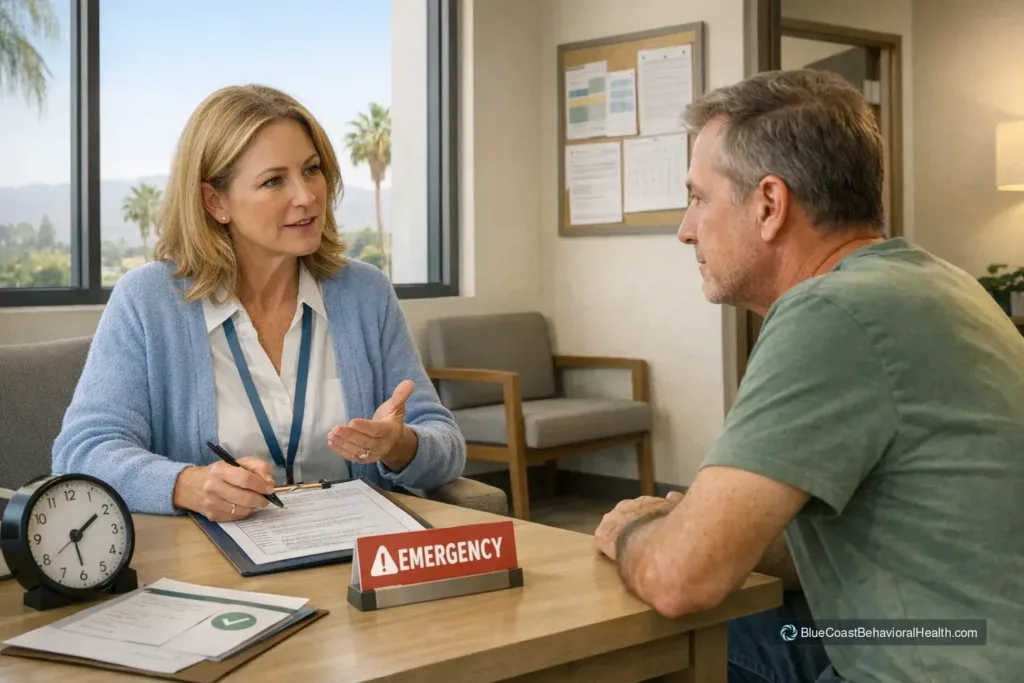
When Alcohol Withdrawal Is an Emergency
If you have been drinking heavily and are thinking about stopping, it is important to know that alcohol withdrawal can sometimes become a medical emergency. Many people in Orange County wait too long because they hope they can sleep it off, taper on their own, or see how they feel tomorrow. In some cases, that delay can be dangerous. The key question is not just whether you drank all day. The real question is whether your body may be at risk for severe withdrawal, intoxication-related complications, or symptoms that need emergency care before detox.
For people looking at detox centers in Orange County, the safest next step is a real-time professional assessment. Blue Coast Behavioral Health helps men and women in Irvine, Huntington Beach, and nearby Southern California communities understand whether they may need the ER, medical detox for alcohol, or a different level of care.
Can you go to detox if you have been drinking all day?
Yes, many people can still seek help even if they have been drinking all day. In fact, waiting until things get worse is often the bigger risk. A person does not need to be perfectly sober before reaching out. What matters most is getting evaluated quickly and honestly.
People often delay calling because they think one of the following:
- “I need to stop first and prove I can do it on my own.”
- “I was drinking today, so no one will take me seriously.”
- “I should wait until tomorrow morning.”
- “If I am not shaking yet, I must be okay.”
Those assumptions can be risky. Someone may still be intoxicated and also be close to withdrawal, especially if they drink heavily every day or have had withdrawal symptoms before. In many cases, the decision about when to go to detox for alcohol should be based on risk factors and current symptoms, not on whether the person has already made it through several hours without drinking.
If someone has been drinking all day, the right destination may be:
- The ER right away if they have chest pain, trouble breathing, seizures, severe confusion, hallucinations, repeated vomiting, are hard to wake up, or may have injured themselves.
- A same-day detox assessment if they have a long pattern of heavy alcohol use, prior withdrawal, increasing shakes, panic, sweating, nausea, or fear that stopping will become dangerous.
- A structured treatment screening if they are stable right now but know they cannot safely keep repeating the cycle.
This is why calling for a same-day detox assessment Orange County can be so important. The goal is not to judge how much you drank today. The goal is to determine what level of care is safest right now.
If you are comparing options, Blue Coast Behavioral Health offers guidance on alcohol detox in Orange County and can help you understand what should happen next based on symptoms, drinking history, and immediate safety concerns.
Why stopping after heavy drinking can become dangerous
Alcohol affects the brain, nervous system, heart rate, blood pressure, sleep, and body chemistry. With repeated heavy drinking, the body can begin to adapt to alcohol’s constant presence. When alcohol drops suddenly, the nervous system may become overactive. That is why withdrawal can involve much more than feeling miserable or anxious. For some people, it can escalate into severe symptoms that need urgent medical supervision.
This is one reason recent heavy drinking can raise withdrawal risk. A person may think, “I drank today, so withdrawal is not the issue yet.” But heavy, frequent, or prolonged alcohol use can set the stage for withdrawal symptoms to begin not long after the last drink. In some cases, early symptoms begin within several hours. For others, risk builds over the first day or two.
Why recent heavy drinking matters
- The body may be physically dependent on alcohol even if the person is still functioning day to day.
- Withdrawal risk may be higher if drinking has increased recently in amount or frequency.
- Past withdrawal symptoms often matter. If someone has had shakes, seizures, hallucinations, or severe agitation before, future withdrawal may be more dangerous.
- Using other substances, poor nutrition, dehydration, sleep deprivation, or underlying medical issues can make the situation more unstable.
Alcohol withdrawal is not always predictable by willpower or appearance. Someone may seem “fine enough” and still be at risk. That is why medically informed screening matters. References such as NIAAA, SAMHSA, ASAM, and major hospital systems consistently emphasize that alcohol withdrawal can range from mild to life-threatening and that severe cases require immediate medical attention.
How quickly can alcohol withdrawal start?
A common question is how quickly withdrawal can begin after the last drink. Symptoms can start within hours for some people, especially if they drink heavily and regularly. Early symptoms may include anxiety, restlessness, sweating, nausea, shakiness, headache, and trouble sleeping. More severe symptoms can develop later and may include hallucinations, seizures, or delirium tremens.
That is why waiting to “see if it passes” can be dangerous. The safest path is often to get evaluated before symptoms become severe rather than after.

Signs you may need immediate medical help instead of waiting
One of the most important parts of this topic is recognizing an alcohol withdrawal emergency. If you are unsure whether symptoms are serious, it is better to treat the situation as urgent and get professional guidance right away.
Emergency red flags that need immediate evaluation
- Seizure activity or any convulsions
- Seeing, hearing, or feeling things that are not there
- Severe confusion, disorientation, or inability to answer basic questions
- Extreme agitation, panic, or behavior that suddenly seems out of character
- Chest pain, severe shortness of breath, or collapse
- Repeated vomiting or inability to keep fluids down
- Blue lips, slowed breathing, or trouble waking the person
- High fever, severe sweating, and rapidly worsening symptoms
- A serious fall, head injury, or possible overdose situation
- Thoughts of self-harm, suicidal statements, or extreme hopelessness
These are not symptoms to monitor casually at home. They require emergency evaluation.
Signs of severe alcohol withdrawal that should not be ignored
Even before a full emergency develops, there are signs of severe alcohol withdrawal that suggest professional detox assessment is needed as soon as possible:
- Shaking that is getting worse
- Racing heart or feeling like the heart is pounding
- Rising anxiety that feels unmanageable
- Heavy sweating not explained by heat or activity
- Severe insomnia after stopping alcohol
- Nausea and vomiting along with tremors and agitation
- A history of withdrawal seizures or delirium tremens
- Need to drink again quickly just to stop feeling sick
If a family member is unsure whether symptoms are dangerous, they should not wait for certainty. If the person is confused, hallucinating, seizing, collapsing, hard to wake, or medically unstable, call 911 or go to the ER immediately. If the symptoms are concerning but not clearly life-threatening, call for a professional assessment without delay.
What happens when you call a detox center in Orange County
Many people imagine that calling detox will be complicated or confrontational. In reality, the first conversation is usually focused on safety, urgency, and fit. For someone seeking alcohol detox Orange County options, a clinically informed phone screening can help determine whether they should go to the ER first, whether medical detox for alcohol is appropriate, and what level of care may come next.
What the assessment usually covers
- How much and how often the person has been drinking
- When they had their last drink
- Whether they have had withdrawal symptoms before
- Any history of seizures, hallucinations, or delirium tremens
- Current symptoms such as shaking, sweating, vomiting, confusion, or panic
- Any co-occurring drug use, medications, or health concerns
- Whether the person is alone, with family, or in immediate danger
This is also where the question “If someone has been drinking all day, should they go straight to detox or to the ER?” gets answered in a practical way. If the symptoms suggest medical instability or an emergency, the guidance may be to go directly to emergency care. If the person appears appropriate for detox placement, the next step may be arranging admission or transfer.
For Orange County residents and families, local relevance matters. Travel time, safe transport, current symptoms, and whether the person is in Irvine, Huntington Beach, or another nearby area can affect how quickly the next step should happen.
You can also review more about alcohol detox Orange County California and how detox fits into a broader recovery plan.
What to expect during alcohol detox and early stabilization
People often hesitate because they do not know what detox actually involves. They may assume it means being left alone to suffer through withdrawal, or they may think detox is the same as full rehab. Detox is the early stabilization phase. Its purpose is to help someone withdraw from alcohol as safely as possible under the appropriate level of medical oversight.
What detox is meant to do
- Evaluate current symptoms and risk factors
- Monitor for worsening withdrawal
- Support physical stabilization
- Reduce the risk of dangerous complications
- Help plan the next level of treatment after detox
The exact setting can vary depending on symptom severity and overall health status. Some people need hospital-level care. Others may be appropriate for a dedicated detox setting. The important point is that medical detox for alcohol is not just about getting through discomfort. It is about safety during a period that can become unpredictable.
What happens after detox?
Detox is usually only the first step. Once a person is medically stable, ongoing treatment helps address the patterns behind the drinking. That may include therapy, behavioral health support, trauma-informed care, women’s treatment, outpatient services, or step-down programming depending on the person’s needs.
Blue Coast Behavioral Health is an outpatient drug and alcohol rehab and behavioral health treatment center, so the larger treatment conversation matters too. Many people who complete detox benefit from continuing care through alcohol rehab centers in Orange County or structured outpatient drug and alcohol rehab in Orange County once they are safe to do so.
Common mistakes people make when trying to detox at home
When people are afraid, embarrassed, or hoping to avoid disruption, they often try to manage withdrawal by themselves. That decision can delay care until the situation becomes much harder to control.

Common and dangerous delays
- Waiting for obvious crisis signs. Severe withdrawal may escalate quickly. It is safer to get assessed early.
- Assuming youth or general health means low risk. People of different ages can still have serious withdrawal.
- Using “I can still function” as the test. A person can be working, driving, or caring for others and still be physically dependent on alcohol.
- Trying to hide symptoms from family. Secrecy can increase the risk of being alone during a medical emergency.
- Believing past mild withdrawal guarantees future mild withdrawal. That is not always true.
- Focusing only on cost while ignoring medical risk. A professional assessment can help clarify options, including insurance questions, before the situation worsens.
Another mistake is thinking detox should only happen once someone is fully committed to lifelong recovery. In reality, immediate withdrawal evaluation is a safety step. It does not require having every future decision figured out first. If the issue right now is whether withdrawal could become dangerous, that is reason enough to call.
What families should do if they are unsure
Families often notice the risk before the person drinking does. If you are watching someone shake, sweat, vomit, panic, become confused, or seem unable to stop drinking without getting sick, trust that concern. Do not wait for a dramatic event to prove the problem is real.
If they are in immediate danger, call 911 or go to the ER. If they are not clearly in immediate danger but the pattern is alarming, call for a professional detox screening. Be ready to describe:
- How much they have been drinking
- When they last drank
- Whether they have had prior withdrawal problems
- What symptoms you are seeing right now
- Whether they are safe, awake, oriented, and able to travel
How to decide the safest next step right now
If you are reading this because you or someone you love has been drinking heavily, the safest next step is based on current risk, not hope. Ask these practical questions:
Go to the ER or call 911 now if:
- The person has had a seizure
- They are hallucinating or severely confused
- They are hard to wake, breathing poorly, or may have alcohol poisoning
- They have chest pain, collapse, or a serious injury
- They are violently agitated or may harm themselves or others
Call for a same-day detox assessment if:
- They drink heavily every day or nearly every day
- They feel sick, shaky, sweaty, panicked, or unable to stop safely
- They have had withdrawal symptoms before
- They keep drinking mainly to avoid feeling worse
- They are trying to decide between waiting at home and getting help now
Do not let these thoughts delay action
- “I only need to make it through tonight.”
- “I’m not as bad as other people.”
- “I can call tomorrow if it gets worse.”
- “I’ve stopped before, so this time will be fine.”
The difference between starting detox safely and waiting too long is often timing. Early evaluation may help prevent a dangerous escalation. Waiting can turn a manageable intervention into an emergency.
FAQs about alcohol withdrawal emergencies
If someone has been drinking all day, should they go straight to detox or to the ER?
It depends on current symptoms and medical risk. If there is severe confusion, seizures, hallucinations, trouble breathing, chest pain, repeated vomiting, collapse, or the person is hard to wake, they should go to the ER or call 911. If they are not in immediate medical crisis but are at risk for withdrawal, call for an urgent detox assessment to determine the safest placement.
What symptoms mean alcohol withdrawal could be life-threatening?
Seizures, hallucinations, severe confusion, delirium-like behavior, extreme agitation, unstable vital signs, and rapidly worsening symptoms may indicate a life-threatening situation. A history of severe withdrawal also raises concern.
Can a detox center admit someone who is still intoxicated?
In many cases, a person can still be assessed even if they have been drinking recently. The main question is whether they are medically stable enough for that setting or whether they need emergency or hospital-based care first. A phone screening helps determine that.
How quickly can alcohol withdrawal start after the last drink?
For some people, symptoms can start within several hours. Others may worsen over the first day or two. Because timing and severity vary, it is important not to assume you are safe just because severe symptoms have not started yet.
Will insurance help cover alcohol detox in Orange County?
Coverage varies by plan and level of care. The most practical step is to call and ask for help verifying benefits and determining what type of detox or treatment may fit your situation. It is better to clarify coverage while getting a safety assessment than to delay needed care because of uncertainty.
Take the next step before symptoms get worse
If you are searching for detox centers in Orange County because you have been drinking heavily, feel withdrawal coming on, or are worried about what happens when you stop, do not wait for a crisis to make the decision for you. Alcohol withdrawal can become dangerous quickly, and the safest answer often starts with a real-time assessment of symptoms, drinking history, and immediate medical risk.
Blue Coast Behavioral Health can help you figure out whether the next step should be the ER, medical detox, or transition into the right level of care. Call 949-776-2127 for 24/7 help. A qualified team member can talk through what is happening right now, help identify urgent warning signs, and guide you toward the safest option so the problem gets assessed before it gets worse. Start your sobriety journey today by getting clear, immediate guidance.